
Our system detected that your browser is blocking advertisements on our site. Please help support FoxesTalk by disabling any kind of ad blocker while browsing this site. Thank you.
Jump to content
  • kushiro
    kushiro

    The Most Under-Rated Manager in Leicester City History

    I reckon it's Gordon Milne, whose autobiography is just out. The title is 'Shankly, My Dad and Me', which is itself instructive. He had an incredibly distinguished career, but it's Shanks who gets top billing. 


    I've been speaking to Gordon this week, and I'll put the results of that interview on here shortly.  As a taster for that, here's a brief run through of the highlights of that amazing career as a player and manager.  After that, a brief chat with Steve Younger, who helped Gordon write the book.


    1) England v Brazil, Wembley 1963.


    We'll start with his England debut. Let's freeze the action just 12 seconds into the game. Bobby Charlton is in possession wide on the left, and that man with his hands in the air, keen to get his first touch in international football, is Gordon Milne of Liverpool. Bobby decides to give him the ball.
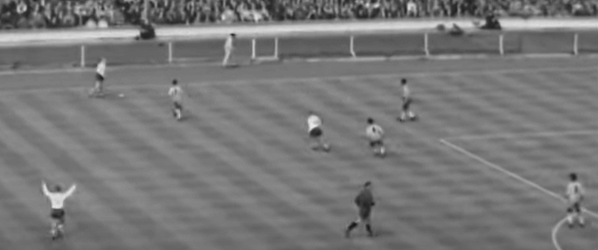
     

    debut-arns-2.png.cf2d494e14b164432d5801467e659035.png


    Look at what happened next - his first three touches in an England shirt:


    Had the shot gone in, it would have been the most sensational start to any England career.


    That was the first England XI chosen by Alf Ramsey. Milne was his type of player - a man who plays for the team, a hard worker (notice how quickly he tried to get back in position when the Brazilian keeper saved that shot), but with the technical ability to perform at the top level. After this impressive debut (it finished 1-1), he became a regular, winning 14 caps in the next year and a half. He must have been dreaming of glory in 1966.


    But it didn't happen. Players such as Alan Ball and Martin Peters moved ahead of him, and like Paul Gascoigne in 1998, he suffered the heartbreak of being one of those chosen for the pre-tournament squad but left out of the final 22.


    Is it any consolation that he later enjoyed a more successful managerial career than any of the 22 players Ramsey selected?


    2)  April 3rd 1974  


    Alf Ramsey's last game as England manager finishes in a dull goalless draw in Portugal. What should have been vital preparation for the World Cup Finals in West Germany was in the end just a meaningless friendly. We'd been knocked out in the qualifiers by Poland.  At the end of the month, Ramsey was sacked.


    Who would replace him?
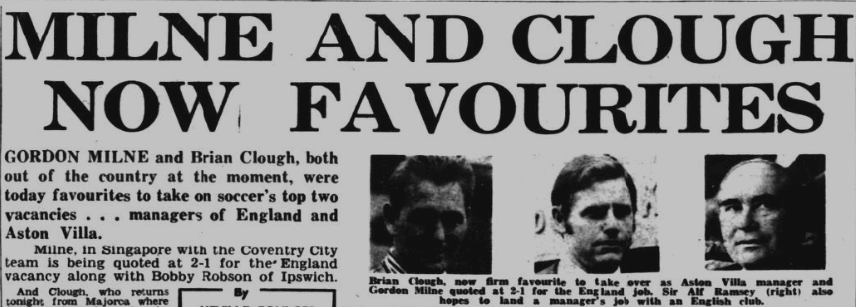
     

    may-13-74-CET.png.015ca33f5da591cedc54173d199d5b2d.png


    The bookies had Coventry boss Milne and Ipswich's Bobby Robson as joint favourites to take over (with Clough fancied to take over at Villa Park). It was later revealed that Milne (but not Robson) was indeed on a shortlist drawn up by the FA - along with Leicester City's Jimmy Bloomfield.  But when Revie threw his hat in the ring, it was he that the FA turned to, and Milne stayed at Highfield Road.


    Let's go back and see how his managerial career began, at the start of the 70s:


    3)  June 5th 1971


    It's the Football League's AGM, and Wigan Athletic are waiting to discover their fate. Milne had taken over at the ambitious non-League club a year earlier, and had already enjoyed spectacular success, taking them to the Northern Premier League title. Their dream was to enter the Football League,  but there was no automatic promotion then. It all depended on the vote at the AGM. The previous season, Bradford Park Avenue had been the first club voted out in a decade - replaced by Cambridge United, who employed a PR company to devise a slick campaign to gather the necessary votes. This year, Wigan decided to employ the same company. 


    It all went disastrously wrong.


    They had been promised 35 votes, which would have got them in.  But when Len Shipman, Football League President and Chairman of Leicester City, announced the results, there was astonishment from the Wigan party. They received the support of just 14 clubs. What on earth had happened?


    Prior to the vote, the PR company had arranged for an expensive Parker pen to be presented to representatives of each of the Football League clubs. According to newspaper reports at the time, this backfired spectacularly, taken as a crass gesture, akin to bribery.  


    Gordon Milne was stranded in non-League football. But the following season, success in his other job, manager of the England Youth team, got him his position in the First Division at Coventry (see previous thread about the Wallace/Milne connection).


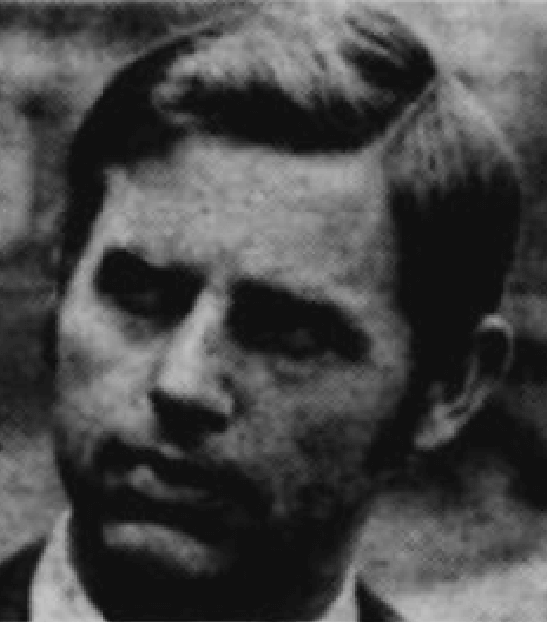
    Here he is at the time of his appointment - not the highest quality photo, but it captures a young, suave and successful Gordon, looking for all the world as though he's about to announce his candidacy for Presidency of the United States,
     

    a1.png.4b350474d81cf8fa819880583bba9bc3.png


    4) March 28th 1964


    Gordon had played for three clubs before taking over at Wigan - Preston, Liverpool and Blackpool. When asked about the most memorable games of that career, he would point to Easter 1964, and a key game at Filbert Street. 


    Under Bill Shankly, Liverpool were chasing their first title in almost two decades. Three games in four days, from Good Friday to Easter Monday, would be decisive:


    Tottenham (a) April 27th

    Leicester (a)  April 28th

    Tottenham (h) April 30th


    Tottenham were chasing the title too - they didn''t come this close again until 2015/16. Liverpool got a crucial 2-0 win at White Hart Lane, but Gordon Milne picked up an injury and was doubtful for the game at Filbert Street 24 hours later. Trainer Bob Paisley worked furiously on the injury when they arrived that evening at their hotel in Leicester.


    Also in the city that evening were Liverpool fans who'd arrived early, desperate not to miss the game. Some of them broke into the ground overnight with tins of red paint, and when the groundsman turned up first thing next morning, he found red goal posts, and LFC graffiti at the back of the Main Stand Enclosure:
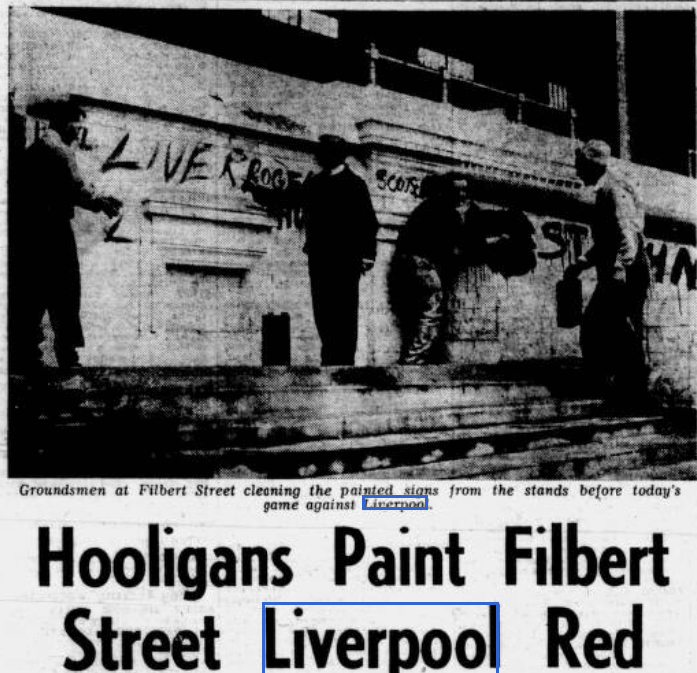
     

    St-John-graffiti.png.47892a02beeefc4dd09fb1c4f9c629a4.png


    The graffiti was removed in time for the game, but as the Mercury reported, the goalposts still had a 'pinkish hue'. 


    Milne was declared fit, and he played a key role in Liverpool's 2-0 win that kept them on course. Here he is, centre of shot, celebrating the second goal:
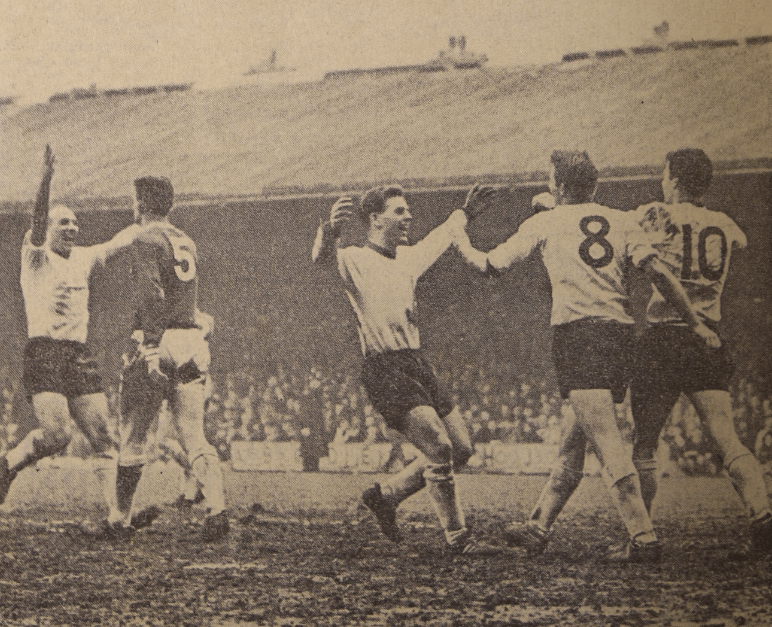
     

    Mar-28-64.png.5da3d51dfaf1cfd6842dae4852fb51b5.png


    Two days later Liverpool completed a perfect Easter, beating Spurs at Anfield to condemn them to decades of also-ran status, and a few days later Liverpool clinched the title to kick off the Reds' dominance of the next 25 years.


    5) April 30th 1965


    A year later and Liverpool are in the FA Cup Final v Leeds United, looking to break the spell and bring the trophy to Anfield for the very first time. For Milne, it''s a chance to claim the winners' medal that eluded his father Jimmy in 1938 when he missed Preston's triumph due to injury. 


    But incredibly, Gordon suffered the same heartbreak, injured against Chelsea just two weeks before the big game. This photo says everything - taken the day before the final as his teammates get the feel of the Wembley turf.
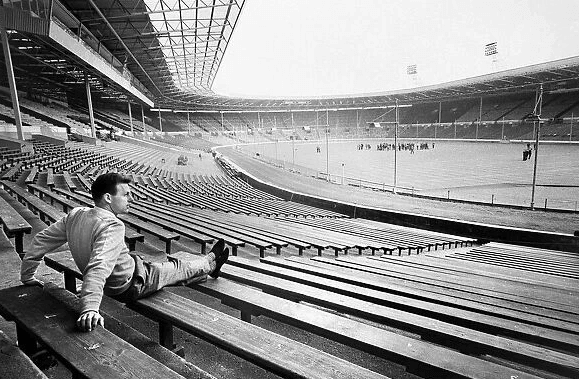
     

    apr-30-65.png.2e57e231cd03cb660efba6e73f773814.png


    6) Autumn 1977


    Anyone remember Brian Clough's message to Forest fans before a match at the City Ground?
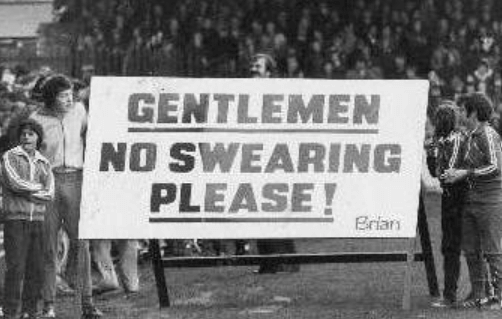
     

    swearing.png.17e58f3b32f7977a37820b85b7bfba7f.png


    This was actually a two-man campaign. A few days later, Gordon Milne made this appeal to Coventry City fans:
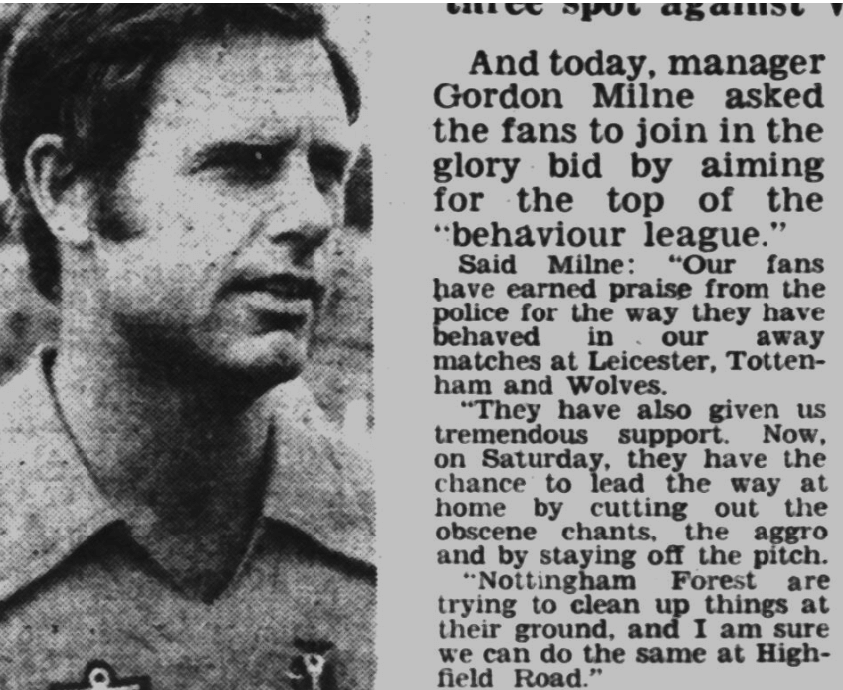
     

    no-swearing.png.b7bc018fd71ff919a36e28564ed310db.png


    At Highfield Road two days later, Coventry beat West Ham 1-0 and fans sang 'We are not allowed to swear' (to the tune of 'Bread of Heaven' -  you know - the 'we'll support you evermore' melody), and also sang 'you're a bounder, you're a bounder, you're a bounder referee!' and 'What the flip, what the flip, what the flippin hell was that?'


    And we can't leave Gordon's Coventry years without a quick mention of this notorious moment four seasons later when Clive Allen's shot came back off the stanchion at the back of the net:


    Wonderful line that from Terry Venables: 'If the ref's saying we've got to hit some particular part of the net to get a goal....'  Milne was sympathetic, 'I have no doubt it was a goal', he said.


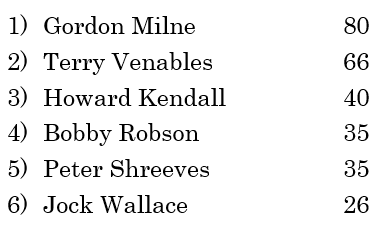
    7)  Gordon Milne and Terry Venables, in opposition here too -  at the top of this list:
     

    lineker-goals.png.9b32ce446d99e89733d4e74a9bf3fee5.png


    What's that stat about?  Several bonus points for anyone who can guess the answer before I tell you. 


    The presence of Jock there is a pretty big clue.


    OK - it's the managers Gary Lineker scored most goals for,  whether for club or county. 


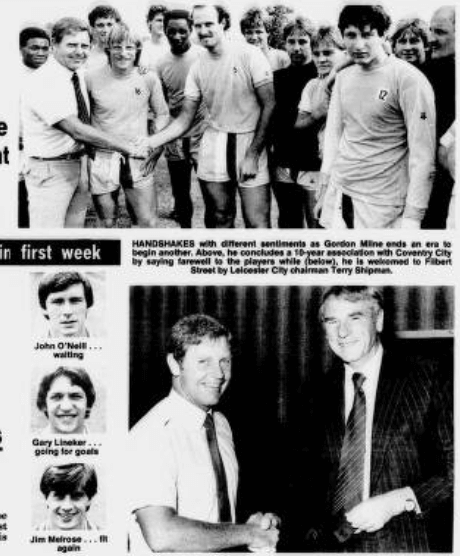
    Gordon's glorious first season at Filbert Street was covered recently on here, and there'll be more Leicester talk in the forthcoming interview.  For the time being, here's the day he joined the club - saying farewell to players at Coventry, then shaking hands with Terry Shipman (eleven years after the Parker pens incident with father Len).
     

    CET-aug.png.bf1b461d42b389eb7ff1f188a14fffb8.png


    The presence of Tommy English in the top picture is ominous.


    8) Besiktas May 1990


    Gordon moved to Istanbul just after his 50th birthday, and enjoyed six years of remarkable achievement. Look at the reception the players get on the day they won the title -  the first of three in a row under Gordon's guidance.


    Gordon has god-like status among Besiktas fans, and I hope the book will bolster his legacy in this country -  not least among Leicester fans.

    User Feedback

    Recommended Comments

    So here's that brief chat wth Steve Younger, who helped Gordon write the book (published by PItch, the company that put out Of Fossils And Foxes).


    Hi Steve. It's great to have the chance to talk to you about this book. Could you first of all give us some background. How did you meet Gordon and how did this book come about?


    Up until a couple of years ago I was working for Pitch International, a sports marketing agency based in London. When I left the company, Jon Owen, a founding partner of Pitch (and one of my oldest friends) and sports TV doyen Trevor East (former Pitch Chairman and also a great friend) put it to me that Gordon was looking to write his story; both have known Gordon a long time, Trevor in particular. I think they approached me because prior to leaving Pitch I ran their production department for more than a decade, producing and directing sports documentaries and writing and editing the scripts. So, when the idea of Gordon’s book was floated, I suppose they saw me as a good fit for such a project. I also had time on my hands. Trev, Jon, Gordon, and I got together, along with Andy Sterling (a Pitch associate and another long-time friend of Gordon’s). And that was all it took; Gordon and I hit it off – he’s such a lovely man, it’d be nigh on impossible not to get on with him – and we were up and running.

    I must give great credit here to Jon, Trev, and Andy; without their help and support, this book would never have been written – at least not by me, anyway! Given my background, it felt like a natural progression to go on to write a book, though having said that, I’m not sure how it would’ve come about if the opportunity hadn’t landed in my lap! Much like several moments in Gordon’s career I was, to pinch his line, in the right place at the right time. I’m very fortunate, and very grateful.


    Bill Shankly was a scrapbook man. Was Gordon too? Have he and his family kept a detailed record of his career, and if so, did that make the writing of the book easier? 


    Gordon’s home office is like a museum; nearly every inch of wall space is covered with a framed photograph or another item of memorabilia, and there are also several scrapbooks in the house (along with the numerous other photos, press cuttings, letters and so forth, which never made it into said scrapbooks), the curation of which is largely – if not completely – the handiwork of Gordon’s wife, Edith. There’s so much stuff that I, particularly as a Liverpool supporter, found fascinating, but interestingly, it didn’t really affect the writing of the book; we could’ve easily become bogged down in the minutiae of Gordon’s career but neither he nor I wanted that. We agreed at the outset – and still agree – that often, sports biographies full of stats, facts and figures are not the most entertaining of reads and these days, such stats are readily available on-line anyway, to anyone who wants to search for them. I’m not for a minute suggesting Shankly, My Dad and Me is more entertaining than such books, but we didn’t want to go down that road. This book was always intended to be about memories, moments, and people.


    Gordon had an incredibly long and varied career in the game, stretching over more than 50 years. How difficult was it to decide what to leave in and leave out of the book? How does Leicester City fit into that?


    It was very difficult – the first draft was twice as long as the final version! Gordon had handwritten much of the material, but the rest came from multiple Zoom calls – often just simple chats which we found triggered further memories which perhaps would not have arisen had we worked any other way. I then transcribed these chats and attempted to hammer then into some sort of shape. So much of what came out of those conversations concerned other people, and Gordon’s encounters with them, but ultimately this book had to be centred on Gordon himself so, acting upon the advice of the publishers regarding how long the book should be, several passages unfortunately had to go; not always though, as there were so many memories, so in terms of what we felt had to stay in, there was a lot of time spent cutting, trimming, and re-writing.

    Leicester City FC obviously plays a huge part in Gordon’s story. When he arrived at Filbert Street, he’d already been a top-flight manager for the best part of a decade, and he continued in that vein at Leicester for another five years or so. It’s a period which introduced more big names too, such as Gary McAllister, Gary Lineker, and Alan Smith. For Gordon it was an incredibly important time of his life. I hope the book reflects that.


    In the online preview of the book, it says 'this enthralling account spans six decades of an incredible journey through the game and his encounters along the way'. You've obviously worked very closely with Gordon over a long period to prepare this book. How has that encounter affected you? 


    It’s been extremely fulfilling. As this process was entirely new to both of us, I’m pretty sure our method of work was not as efficient as it could have been, but that didn’t concern us too much – we just went about it naturally and, in a way, muddled through. I always looked forward to the next zoom call with Gordon, and have always enjoyed writing too, so none of it was ever a chore. It’s something I would like to continue, most certainly.


    Please tell us about Steve Younger the football fan. Where are you from? When did you start going to matches yourself? Can you recall your first game? Who did you support as a boy? Was your own father, like Gordon's, a big influence? Do you go to games now?


    I’m from Formby, about 10 miles north of Liverpool. My first visit to Anfield (I’ve always been a Liverpool supporter) was in November 1980. Coventry City were the visitors, at that time managed by…Gordon Milne! (Liverpool won 2-1, though Gordon claims not to remember...!) I was 8 years old at the time, and my dad took me, though as a born and bred Geordie he supported Newcastle so wasn’t quite as excited as me! In truth, my dad was more of a rugby fan, having played to a decent standard in his youth. I’m sure he was somewhat disappointed in my allegiance to Liverpool though (my two brothers, my mum, my grandparents, all supported Newcastle), but there was never any pressure on me to join their Magpies gang. My dad was a massive influence on me, yes, but not when it came to football.

    When I can, I still go to games with Jon; as I mentioned earlier, he’s one of my oldest friends and he and I have been going to Liverpool matches together since we were kids. There are loads of other lads in our group too, and win, lose, or draw, we always have a ball. On top of that, some of these lads’ kids are now joining us as well – not just at Anfield, but away too, and that includes Europe. It’s fantastic – the next generation is coming through strong!


    Link to comment
    Share on other sites


    Join the conversation

    You can post now and register later. If you have an account, sign in now to post with your account.
    Note: Your post will require moderator approval before it will be visible.

    Guest
    Unfortunately, your content contains terms that we do not allow. Please edit your content to remove the highlighted words below.
    Add a comment...

    ×   Pasted as rich text.   Paste as plain text instead

      Only 75 emoji are allowed.

    ×   Your link has been automatically embedded.   Display as a link instead

    ×   Your previous content has been restored.   Clear editor

    ×   You cannot paste images directly. Upload or insert images from URL.

    Loading...

×
×
  • Create New...