


kushiro
-
Posts
1,913 -
Joined
-
Last visited
-
Days Won
15
Article Comments posted by kushiro
-
-
More on 'When You're Smiling'.
In the months before Louis Armstrong arrived in Leicester in 1934, a recent release of his was being reviewed in the press - a medley of recent hits:
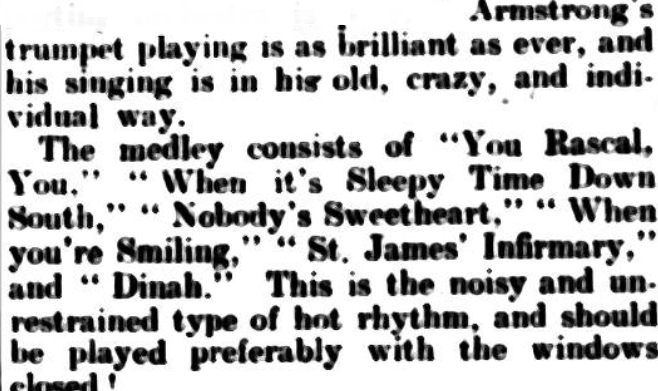
That could well have been one of the records featured in the 'recital' in Kingstone's Clock Tower store mentioned above. And it gives you a good idea of what his set-list would have been at the Opera House in Silver Street.
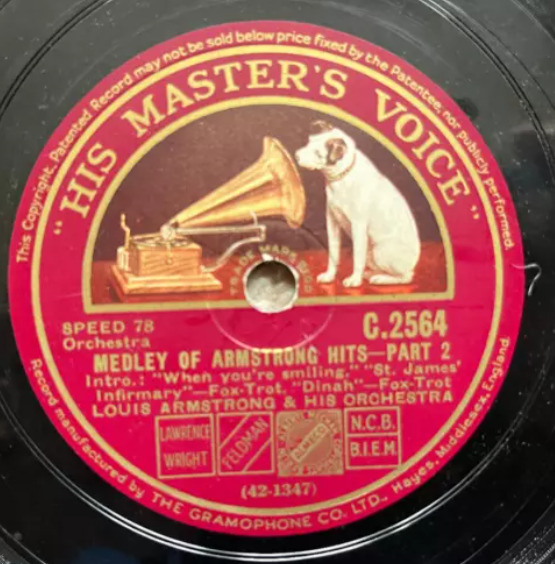
It's an incredibly rare record now, but fortunately it's on youtube - uploaded seven years ago, only 15 views.
It's magnificent:
The version of When You're Smiling is great, though he does it fairly straight. The other two tracks give you an idea of why he was such an original. Ripping up the old melodies and replacing them with his own in-yer-face scat-rap. It's as shocking as Elvis in 56 or Johnny Rotten in 76. He just blew everyone else away.
This is the lyric to St. James' Infirmary:
I went down to St. James Infirmary,
Saw my baby there,
Stretched out on a long white table,
So cold, so sweet, so fair.
Let her go, let her go, God bless her,
Wherever she may be,
She can look this wide world over,
But she'll never find a sweet man like me. -
And while we're at it, here's the most joyous track he (or anyone) ever recorded. Johnny Dodds' clarinet solo followed by his famous stop-time solo on trumpet.
-
The forgotten parade?
Do you remember Monday evening after the 2000 League Cup Final? I was there near the Clock Tower as the bus came past. I've been trying to find photos of it online and drew a total blank. How weird. Maybe I was looking in the wrong place.
Then I remembered - there might be something in the programme from the game the following Saturday. And there was indeed a nice two page spread.
Here's a few shots cribbed from there on my phone:


On the next one you can see that old Dean and Dawson building mentioned above (on the right):

And here too:

-
More on the last Saturday of the season:
After Fulham lost at Derby they protested to the Football League that the match should be replayed. With Derby fans lining the pitch in the last few minutes, the referee had blown the final whistle early, shortly after Fulham's Robert Wilson had been kicked by a Derby fan. You can see what happened in this interview with Macdonald after the game:
The Football League met two days later but decided that the result should stand. Macdonald's reaction was to lodge an appeal with the FA. He said, with a typical sense of proportion: 'The game as we know it died today. The way is now open for soccer anarchy. The mob can take over. We may never see a game of any importance finish again'. Yes, he really said that.
Contrary to his fears, in the following weeks, the FA Cup Final and several other important matches were played successfully to a conclusion.
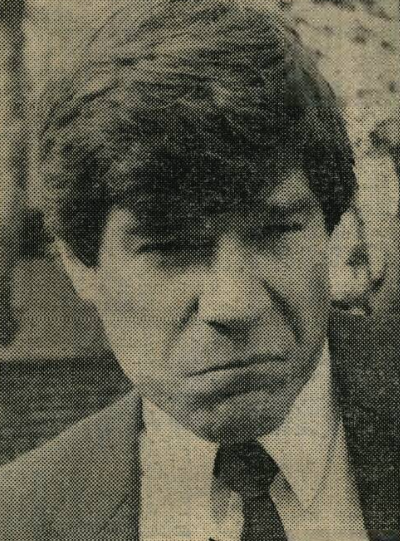
Macdonald leaves the Football League hearing on May 16th.
That appeal to the FA went ahead, but no-one seriously thought they would overturn the decision, and on May 25th it was confirmed. Macdonald had not allowed his players to disperse for the close season - he'd kept them in training hoping for a replay. When Fulham heard the FA decision they considered an appeal to the High Court, but then finally accepted that the game was up.
So Milne could look forward to Division One. He had completely silenced the doubters. No doubt his mailbag had been bulging with letters from angry fans. But unlike O'Neill in 1996, he would not have stored those letters away, waiting for the day he could call them up and ask 'What have you got to say for yourself now?' That wasn't in his character.
So what happened next?
Milne kept us in Division One for three seasons, before 'moving upstairs' to become General Manager. After he left, he enjoyed an astonishingly successful time as boss of Besiktas in Turkey, something to be covered in a forthcoming thread about his career before and after Leicester City.
What about Malcolm Macdonald? Well that wasn't such a happy tale.
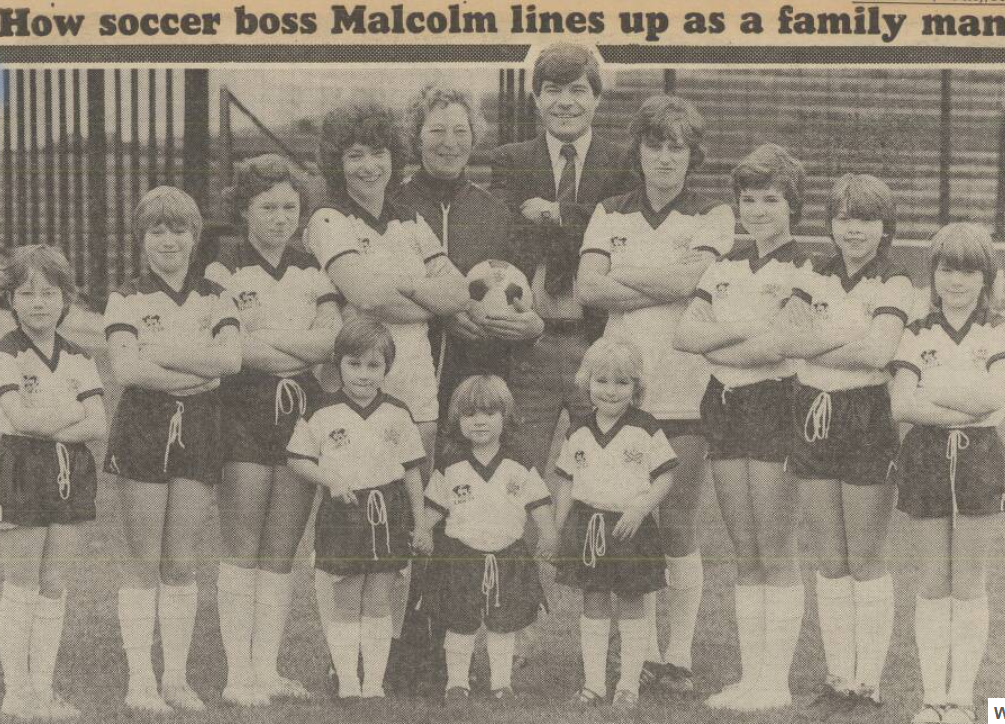
Here's another of those wacky photo opportunities from 1982/83:
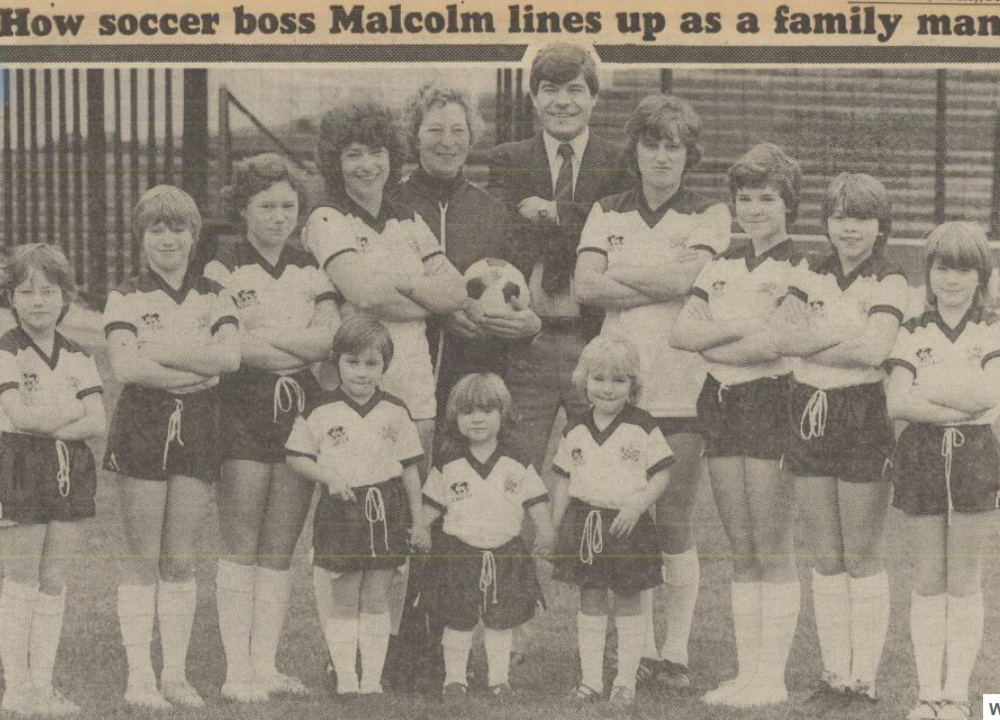
What a heart-warming scene that is, with his wife Julie, five daughters and several other female family members in Fulham kit. But just like that Christmas 'Division One' photo, it soon backfired, and that wholesome image of domestic contentment was shattered.
When the photo was taken, Macdonald had already met a young hotel manageress called Nicky Thompson. They became lovers, and a few months later, in March 1984, he told his wife he was leaving her to live with his new girlfriend. The Daily Mirror now turned on him, columnist Anne Robinson writing a blistering character assassination, calling him 'a prize bully' and quoting his wife’s tales of his dominating behaviour. Fulham had been on a great run, but suddenly lost three in a row, including a 4-0 defeat at Stamford Bridge, Chelsea fans no doubt having great fun at Macdonald's expense. Shortly after that he quit, saying his affair had 'put additional pressure on the club'.
Macdonald was out of management for three years, but in October 1987 he took over at Huddersfield, then struggling in Division Two. Just three weeks into his reign the club suffered their heaviest ever defeat - 10-1 at Manchester City. Things didn't improve much after that and their relegation was confirmed in April. He quit shortly afterwards, his last ever game as a manager being a 3-0 defeat at Filbert Street.
-
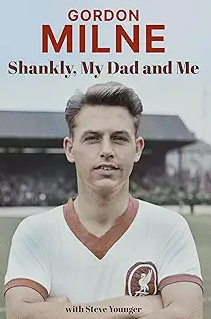
Gordon Milne's book is out soon. It'll be fascinating to see how much of it is devoted to his five years ar Filbert Street. He had a long and distinguished career, so don't be surprised if there's just a single chapter - rather like last year's Martin O'Neill book. Still - it should be well worth reading.
Malcolm Macdonald published his life story many years ago. The cover picture was pretty interesting:
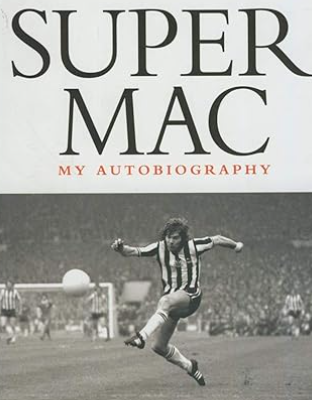
That's from the 1974 FA Cup Final when Newcastle were outclassed by Liverpool 3-0. Typically, Supermac had spent the days leading up to the final saying just what he was going to do to Liverpool. But on the day he completely misfired.
Here's that moment from a different angle:
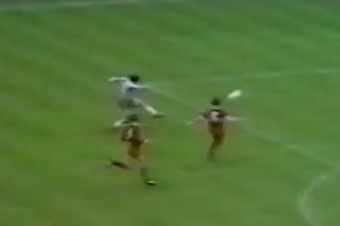
That's a still from a video.
And if you watch the video, you can see how good that shot was:
That was the cover of his autobiography!
Here's Gordon's forthcoming book:
-
There's a few more extras to post on this topic.
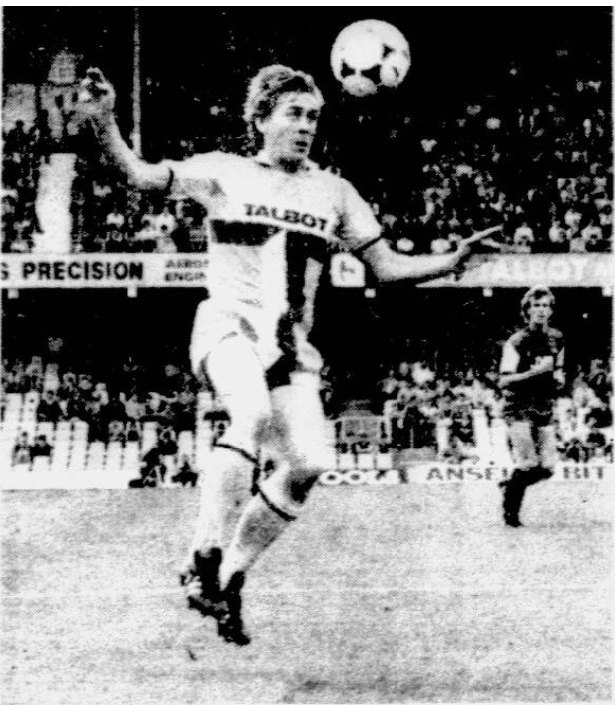
When the Melrose-English swap happened, English had to give up his Sky Blue Talbot Solara that all the squad had been given in a sponsorship deal Jimmy Hill had signed. Hill wanted the club to change its name to Coventry Talbot, but they didn't get permission. There was also the kit, which had a massive T design. Here's Gerry Daly wearing it:
I presume Jim Melrose got English's car because just after the move, this advert appeared in the Mercury:
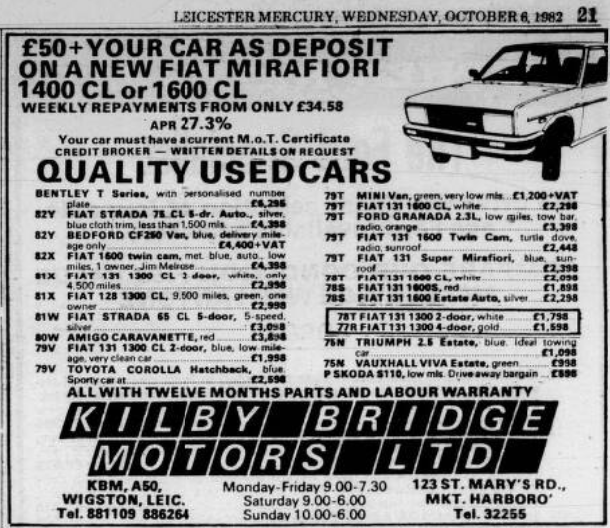
Zoom in on that and you see this:

The advert kept appearing in the paper's motoring section every week, and two months later it still hadn't been sold.
So - does anyone know who bought Melrose's motor?
-
That season was also very special for Nigel Pearson.
At New Year in 1982/83, if anyone was going to chase down Fulham for the thrid promotion spot it looked like it would not be us, but Shrewsbury Town. The Shrews went to Craven Cottage on January 3rd knowing that a win would take them level on points with Fulham. Steve Cross even put them ahead - but then Fulham came back to win 2-1. That's where the Shrews' challenge ended. They didn't win again until March, and the chase was taken up by Leicester City instead.
Here''s Pearson on the day he first caught people's attention, in September 1982.
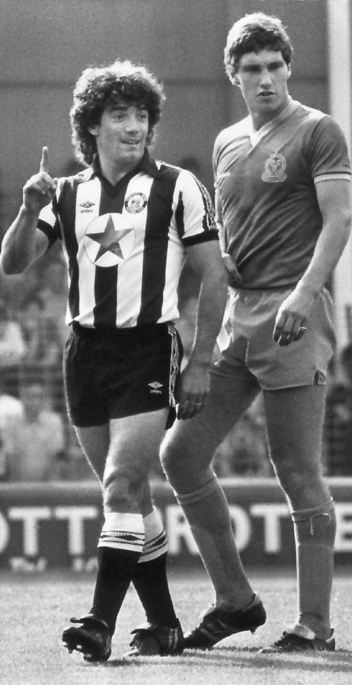
It's a great story. Here's a reminder:
-
1980/81. The only time Gordon Milne and Jock Wallace faced each other as managers, with Milne's Coventry beating Jock's Leicester twice, helping to send us down.
In that season, which player scored most goals against us?
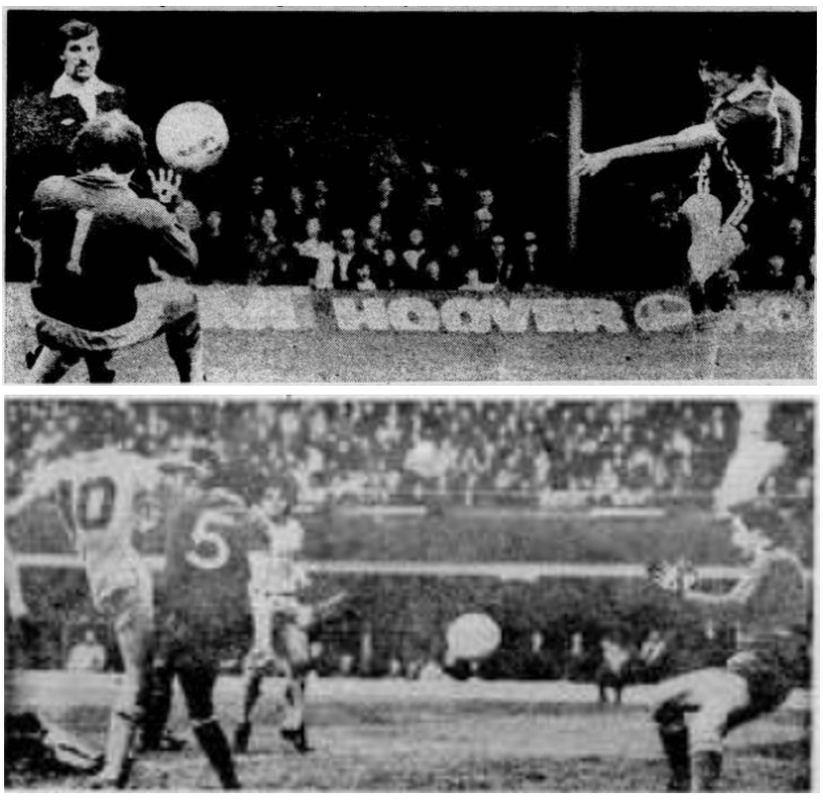
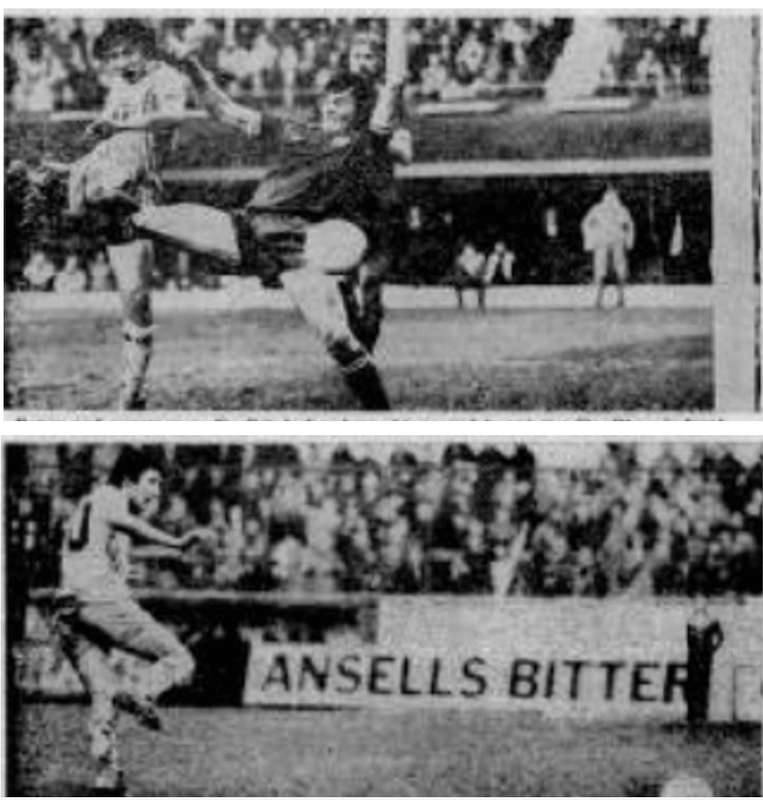
It was one of Milne's Sky Blues, and you might recognise him in the photos below. Here are the four goals he scored against us:
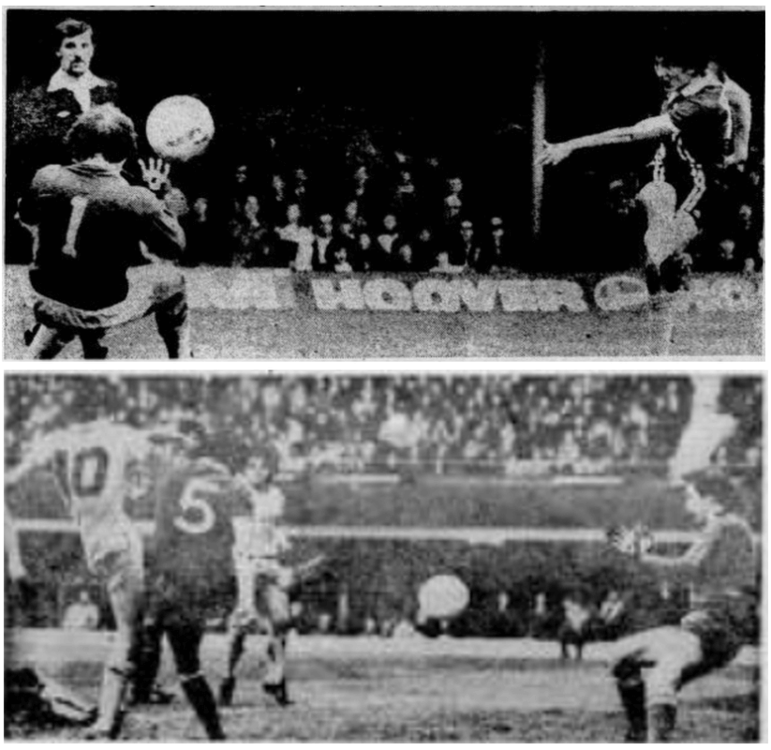
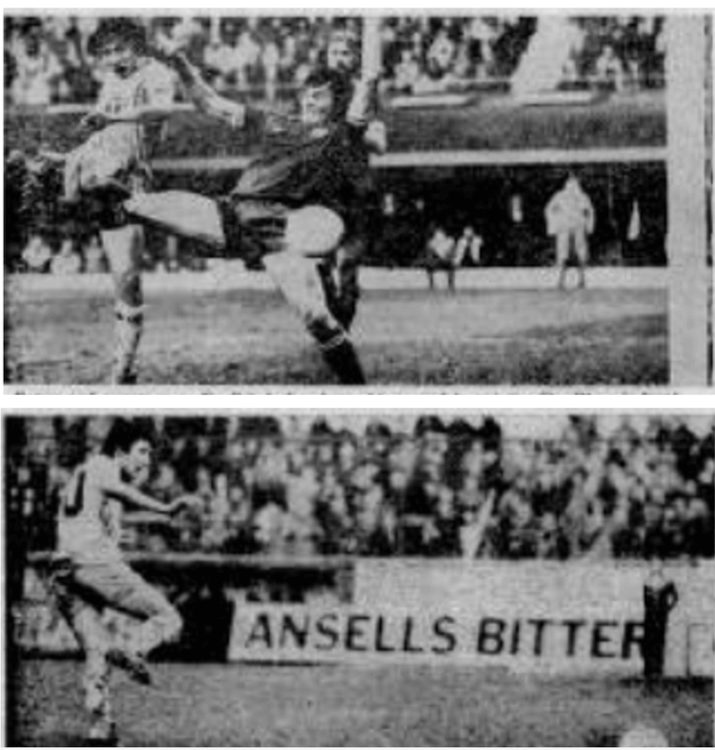
Recognise the Leicester players failing to stop him? Mark Wallington, Larry May, Tommy Williams and John O'Neill.
The sharp shooter is of course Tommy English, the man Milne brought to Leicester two seasons later, swapping him for Jim Melrose.
The top picture is him scoring at Filbert Street in a 3-1 win in October, and he's wearing not sky blue but the famous brown kit, the next three are his hattrick at Highfield Road in a 4-1 win in March.
Here's the video of the first game, which also includes Gary Lineker's first ever goal in the top flight:
-
I didn't mention in the 1982/83 thread last week that the man responsible for that attacking formation was not Milne, but his assistant Gerry Summers. When he joined the staff in October 1982, ‘He saw the potential in Alan, Gary and myself and we adapted a way of playing, geared to attack’. That's Lynex speaking.
Summers should get more recognition for that. Though he was no doubt happy that an earlier moment in his career also went largely unnoticed.
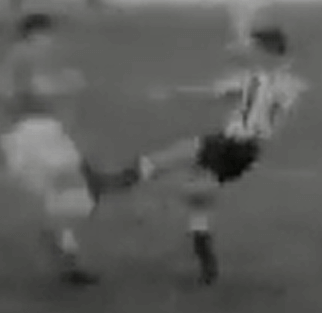
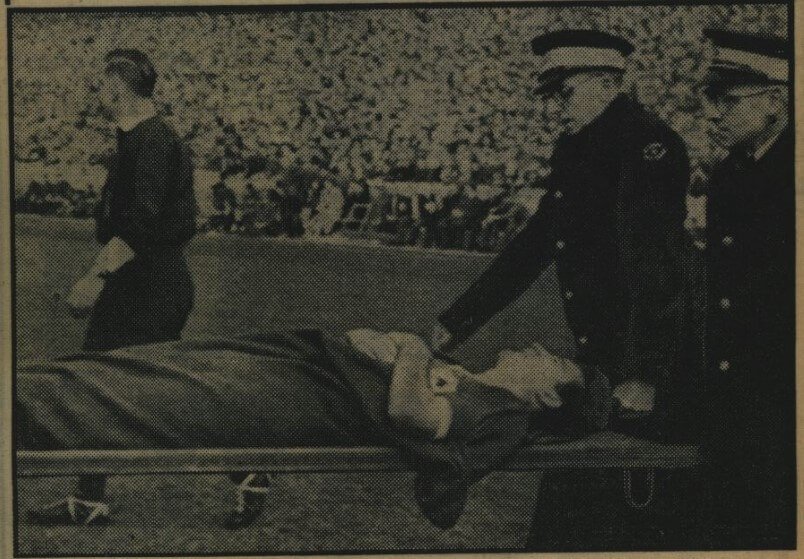
He was the villain in 1961 when playing for Sheffield United against us in the FA Cup Semi-Final. His awful challenge on Gordon Wills led to him being stretchered off and missing the Cup Final v Spurs. His culpability wasn't reported on at the time. It's only later analysis of the match highlights that brought it to light.
Here's the tackle (with the ball nowhere to be seen), and the aftermath:
-
This needs an update following the publication of Gordon's book.
I didn't know when I posted this that Gordon and Jock were really good friends, and Jock would often head over to Highfield Road with Assistant Manager Ian MacFarlane for a chat when he was boss at Filbert Street.
Gordon recalls Jock's knock on his door as 'like a sledgehammer' and that his two guests would then enter the room, making him feel 'like the KGB were in town'. Then Jock would shake Gordon's hand and he'd feel like he'd got 'three broken fingers'.
Marvelous stuff.
It brings to mind that character from the 80s TV series 'Boys From The Blackstuff' - 'Shake Hands':
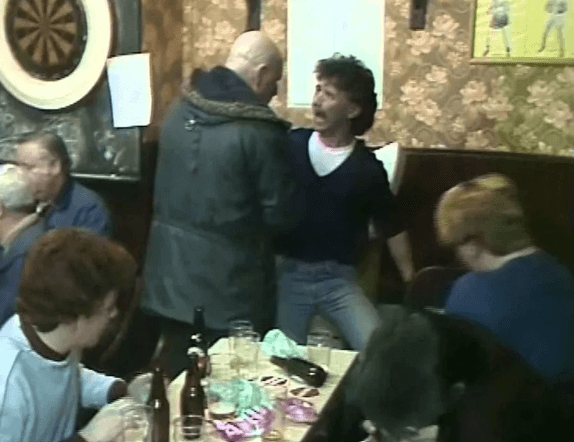
The book's full of great passages like that (it's an excellent choice for a Christmas present for those struggling for ideas).
-
 1
1
-
-
So here's that brief chat wth Steve Younger, who helped Gordon write the book (published by PItch, the company that put out Of Fossils And Foxes).
Hi Steve. It's great to have the chance to talk to you about this book. Could you first of all give us some background. How did you meet Gordon and how did this book come about?
Up until a couple of years ago I was working for Pitch International, a sports marketing agency based in London. When I left the company, Jon Owen, a founding partner of Pitch (and one of my oldest friends) and sports TV doyen Trevor East (former Pitch Chairman and also a great friend) put it to me that Gordon was looking to write his story; both have known Gordon a long time, Trevor in particular. I think they approached me because prior to leaving Pitch I ran their production department for more than a decade, producing and directing sports documentaries and writing and editing the scripts. So, when the idea of Gordon’s book was floated, I suppose they saw me as a good fit for such a project. I also had time on my hands. Trev, Jon, Gordon, and I got together, along with Andy Sterling (a Pitch associate and another long-time friend of Gordon’s). And that was all it took; Gordon and I hit it off – he’s such a lovely man, it’d be nigh on impossible not to get on with him – and we were up and running.
I must give great credit here to Jon, Trev, and Andy; without their help and support, this book would never have been written – at least not by me, anyway! Given my background, it felt like a natural progression to go on to write a book, though having said that, I’m not sure how it would’ve come about if the opportunity hadn’t landed in my lap! Much like several moments in Gordon’s career I was, to pinch his line, in the right place at the right time. I’m very fortunate, and very grateful.
Bill Shankly was a scrapbook man. Was Gordon too? Have he and his family kept a detailed record of his career, and if so, did that make the writing of the book easier?
Gordon’s home office is like a museum; nearly every inch of wall space is covered with a framed photograph or another item of memorabilia, and there are also several scrapbooks in the house (along with the numerous other photos, press cuttings, letters and so forth, which never made it into said scrapbooks), the curation of which is largely – if not completely – the handiwork of Gordon’s wife, Edith. There’s so much stuff that I, particularly as a Liverpool supporter, found fascinating, but interestingly, it didn’t really affect the writing of the book; we could’ve easily become bogged down in the minutiae of Gordon’s career but neither he nor I wanted that. We agreed at the outset – and still agree – that often, sports biographies full of stats, facts and figures are not the most entertaining of reads and these days, such stats are readily available on-line anyway, to anyone who wants to search for them. I’m not for a minute suggesting Shankly, My Dad and Me is more entertaining than such books, but we didn’t want to go down that road. This book was always intended to be about memories, moments, and people.
Gordon had an incredibly long and varied career in the game, stretching over more than 50 years. How difficult was it to decide what to leave in and leave out of the book? How does Leicester City fit into that?
It was very difficult – the first draft was twice as long as the final version! Gordon had handwritten much of the material, but the rest came from multiple Zoom calls – often just simple chats which we found triggered further memories which perhaps would not have arisen had we worked any other way. I then transcribed these chats and attempted to hammer then into some sort of shape. So much of what came out of those conversations concerned other people, and Gordon’s encounters with them, but ultimately this book had to be centred on Gordon himself so, acting upon the advice of the publishers regarding how long the book should be, several passages unfortunately had to go; not always though, as there were so many memories, so in terms of what we felt had to stay in, there was a lot of time spent cutting, trimming, and re-writing.
Leicester City FC obviously plays a huge part in Gordon’s story. When he arrived at Filbert Street, he’d already been a top-flight manager for the best part of a decade, and he continued in that vein at Leicester for another five years or so. It’s a period which introduced more big names too, such as Gary McAllister, Gary Lineker, and Alan Smith. For Gordon it was an incredibly important time of his life. I hope the book reflects that.
In the online preview of the book, it says 'this enthralling account spans six decades of an incredible journey through the game and his encounters along the way'. You've obviously worked very closely with Gordon over a long period to prepare this book. How has that encounter affected you?
It’s been extremely fulfilling. As this process was entirely new to both of us, I’m pretty sure our method of work was not as efficient as it could have been, but that didn’t concern us too much – we just went about it naturally and, in a way, muddled through. I always looked forward to the next zoom call with Gordon, and have always enjoyed writing too, so none of it was ever a chore. It’s something I would like to continue, most certainly.
Please tell us about Steve Younger the football fan. Where are you from? When did you start going to matches yourself? Can you recall your first game? Who did you support as a boy? Was your own father, like Gordon's, a big influence? Do you go to games now?
I’m from Formby, about 10 miles north of Liverpool. My first visit to Anfield (I’ve always been a Liverpool supporter) was in November 1980. Coventry City were the visitors, at that time managed by…Gordon Milne! (Liverpool won 2-1, though Gordon claims not to remember...!) I was 8 years old at the time, and my dad took me, though as a born and bred Geordie he supported Newcastle so wasn’t quite as excited as me! In truth, my dad was more of a rugby fan, having played to a decent standard in his youth. I’m sure he was somewhat disappointed in my allegiance to Liverpool though (my two brothers, my mum, my grandparents, all supported Newcastle), but there was never any pressure on me to join their Magpies gang. My dad was a massive influence on me, yes, but not when it came to football.
When I can, I still go to games with Jon; as I mentioned earlier, he’s one of my oldest friends and he and I have been going to Liverpool matches together since we were kids. There are loads of other lads in our group too, and win, lose, or draw, we always have a ball. On top of that, some of these lads’ kids are now joining us as well – not just at Anfield, but away too, and that includes Europe. It’s fantastic – the next generation is coming through strong!
-
I'll add a few extra bits that may be of some interest to Bobbie's grandson:
This is from August 16th 1949:
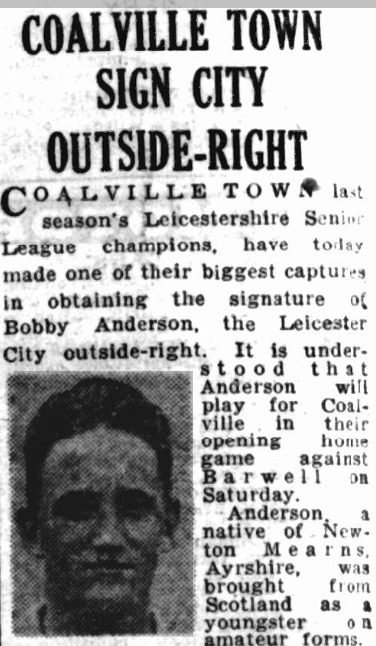
Then a few months later he went for a trial at Ipswich Town, who were then bottom of Division Three South (and would escape having to apply for re-election at the end of the season by just one point).
He made at least one appearance for their reserves. This is from January 7th 1950:
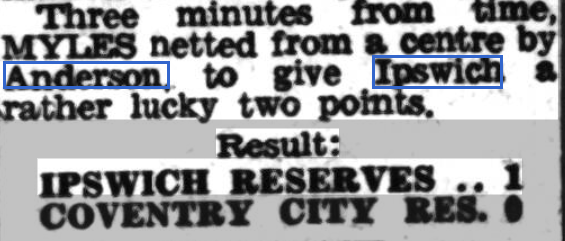
It seems that trial didn't work out.
Then after spells at Whitwick Colliery and Third Lanark in Scotland, he made his most significant move, to Kilmarnock. A game from his time at Leicester may have had some influence on that signing. Bobbie's first game of 1947/48 was not until December 27th, when Brentford came to Filbert Street. These were the teams:
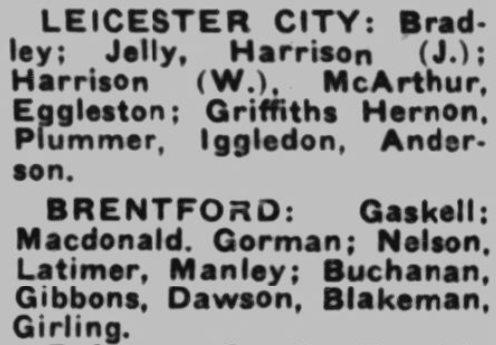
Bobbie is there at outside left for City, which means his direct opponent would have been the Brentford right back - the number two. You can see that's a player called Macdonald. That was Malky Macdonald, the man who, four years later as manager of Kilmarnock, signed Bobbie. Here they are together in the match report from that Brentford game:
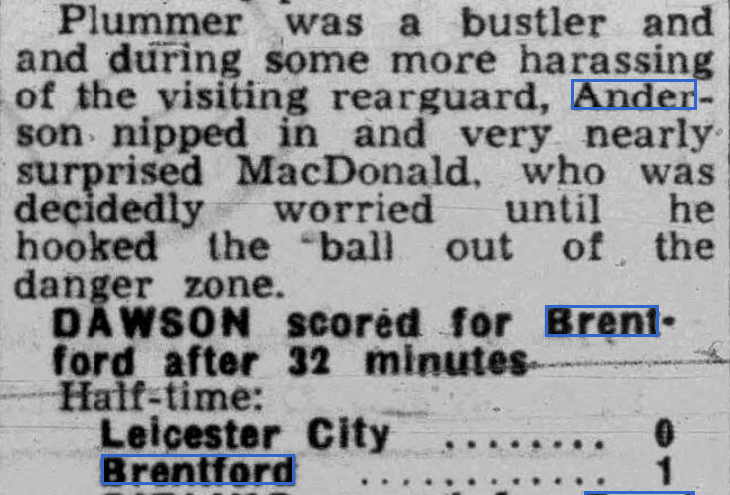
The final score was 2-1 to Brentford, and no doubt Malky Macdonald remembered his fellow Scot from that game when the chance came to sign him for Killie.
While at Kilmarnock, he was involved in a League Cup run that had echoes of Leicester's FA Cup exploits in 1949, though in this case, Bobbie actuallly got some playing time.
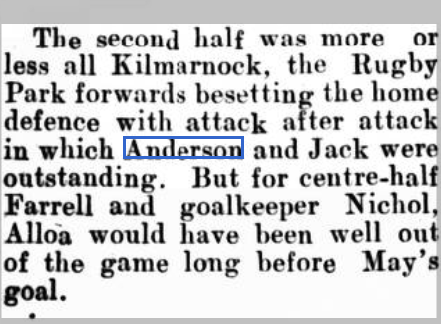
At the start of that season, it seems he was playing the best football of his career, repeatedly singled out for prasie as Killie made it through the group stage to reach the League Cup quarter-finals:
August 9th Kilmarnock 3 Alloa Athletic 1
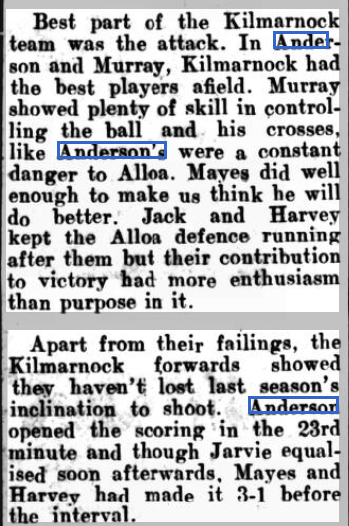
Four days later, Dunfermline 3 Kilmarnock 4:
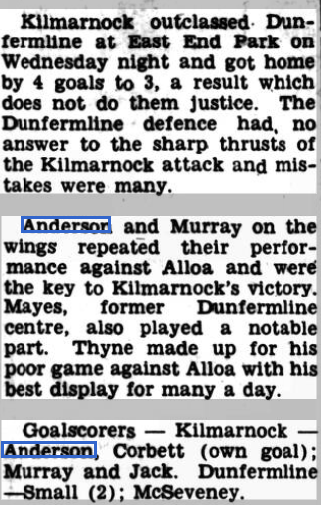
August 23rd Alloa 0 Kilmarnock 1:
Then in the quarter finals they got past St. Johnstone. This from the 2nd leg, September 17th:
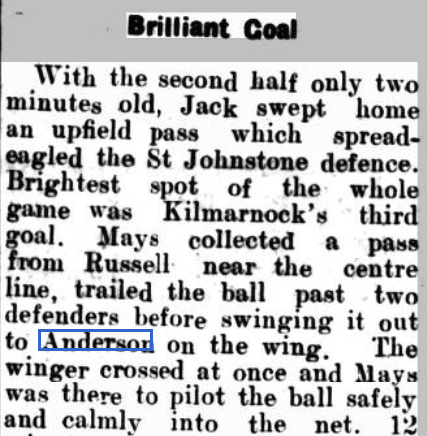
That put them in the semi-final v Rangers, a similar scenario to the Leicester v Portsmouth SF in 1949 - the eventual champions against the underdogs from the second tier (Killie would finish 4th in Division Two that season).
Killie pulled off a famous giant killing act, winning 1-0 at Hampden. But for reasons I haven't been able to uncover, Bobbie wasn't in the line-up that day, nor did he play in the final, which they lost 2-0 to Dundee.
Here's an excellent article about Malky Macdonald's career - he was a Celtic legend:
-
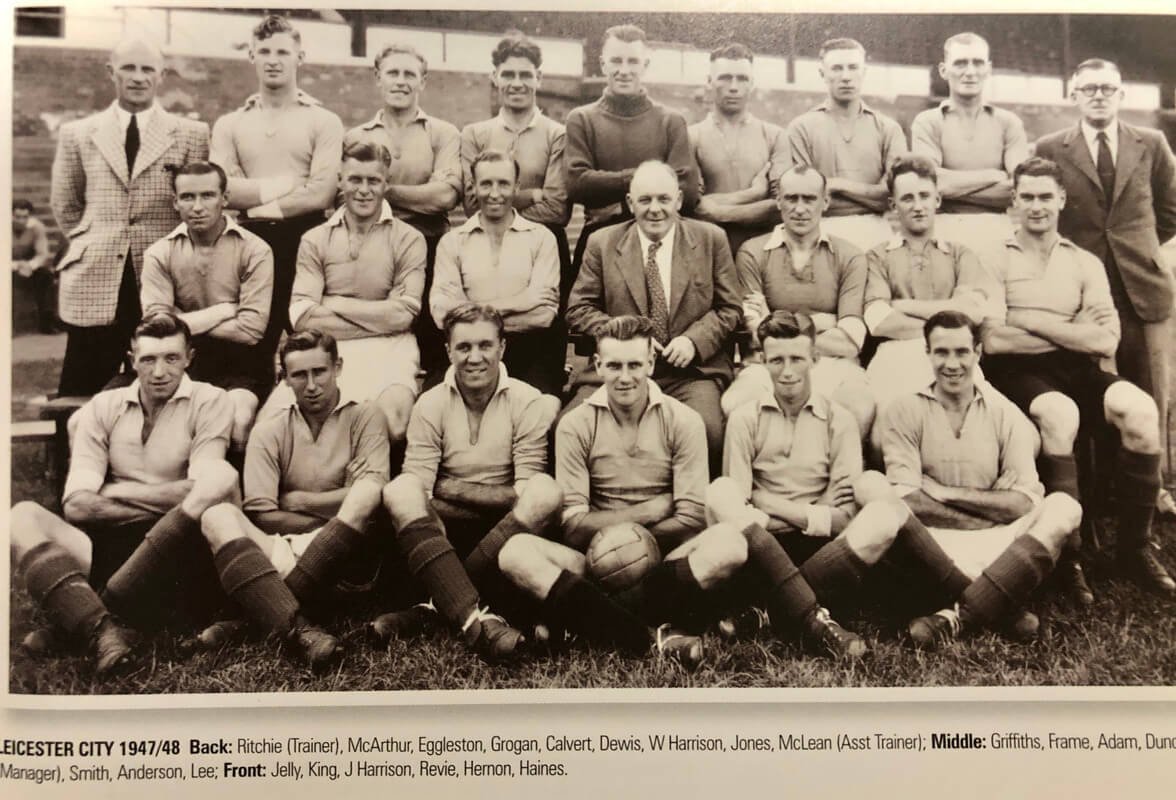
Here's the two team photos Bobbie was in:
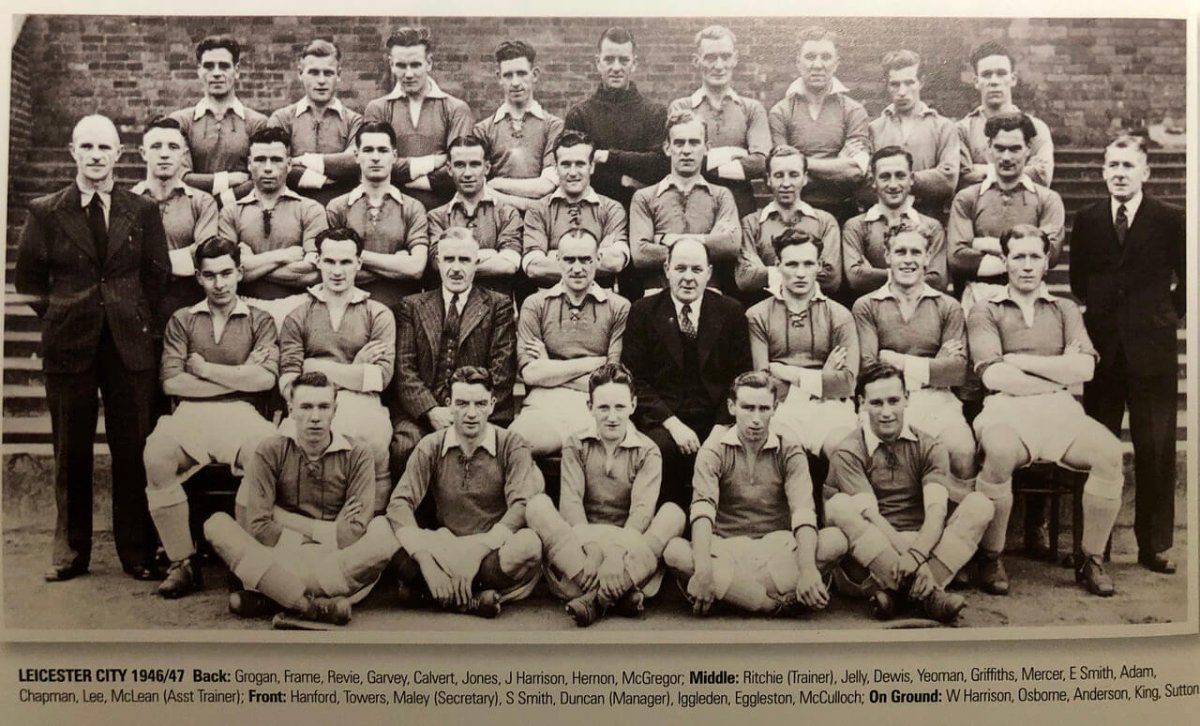
1946/47: He really is at the feet of the masters here - in front of Sep Smith and Johnny Duncan.
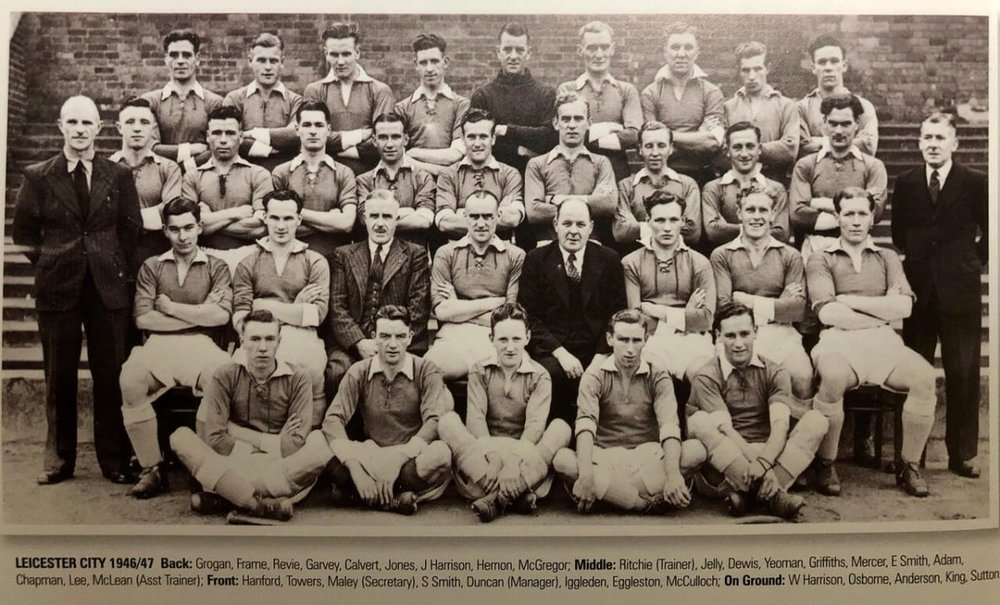
1947/48: Don Revie now taking Bobbie's position - with a ball! Post-war austerity meant they couldn't afford one the previous year.
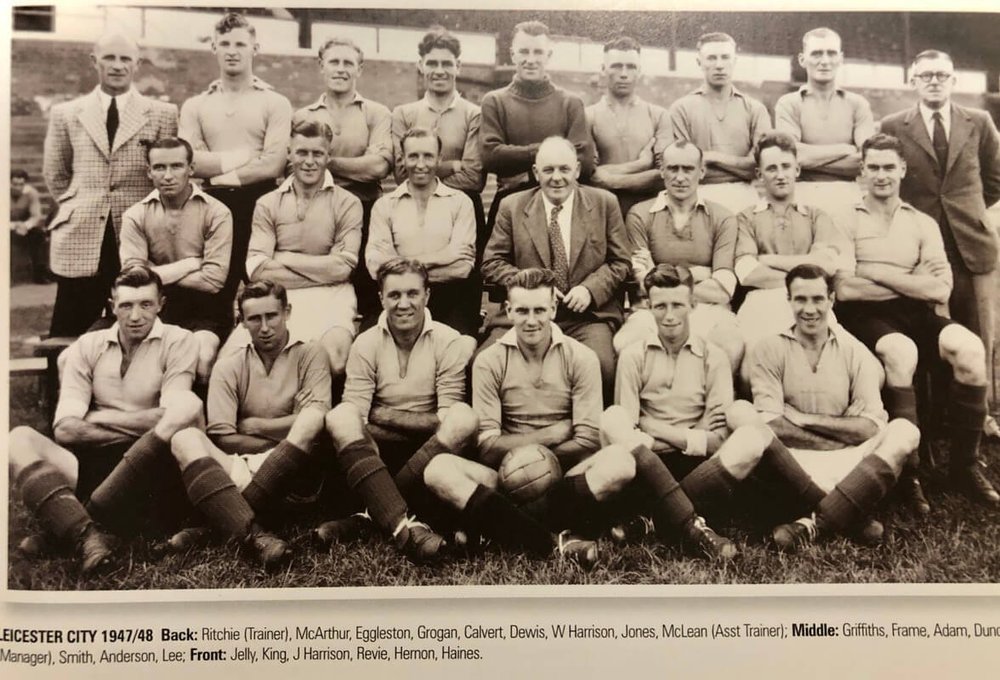
Both taken from Of Fossils and Foxes (by far the greatest football book the world has ever seen).
-
A few more bits and pieces.
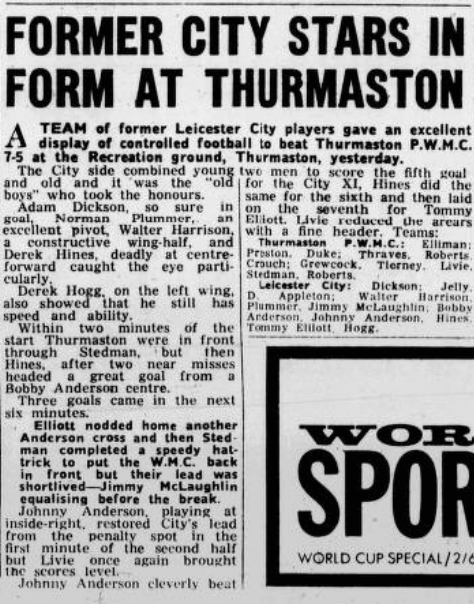
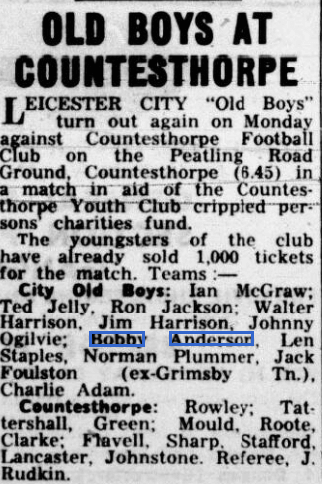
In the 60s Bobbie turned out for a Leicester City Old Boys XI.
This was June 27th 1966, as the England squad were preparing for the World Cup. Bobbie is still getting those crosses in, and Johnny Anderson, legendary city keeper from the 40s and 50s, is playing up front:
And this was three years earlier. I wonder if the ref was any relation:
Here's a couple more pics from his wedding day in 1949:
Leicester Evening Mail:
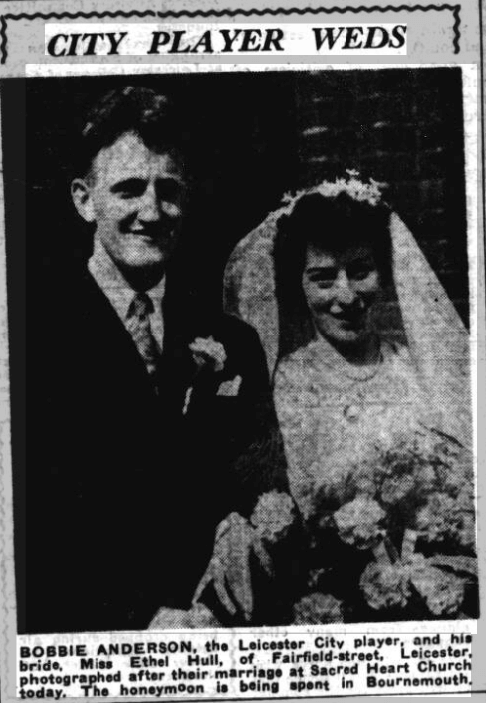
Merc:
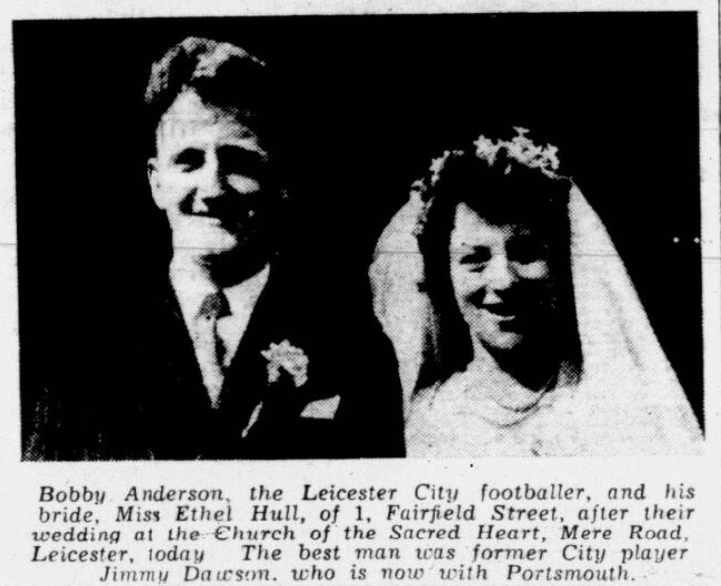
-
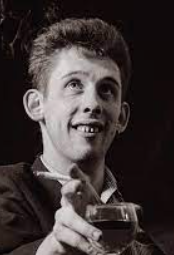
You probably know that there used to be a full Football League programme on Christmas Day. Leicester City's last ever fixture on December 25th was in 1957 - we lost 5-1 at Blackpool, with 42 year-old Stanley Matthews running riot on the right wing.
Guess who was born on that very day.
This fellow:
-
Let's not forget Kirsty MacColl.
Just like Roly Colahan, she was tragically killed in a boating accident, though the details were very different.
https://en.wikipedia.org/wiki/Kirsty_MacColl#Death
I hadn't realised that shortly before that accident, she'd written a song called 'England 2 Colombia 0', using that World Cup game in 1998 as a way to tell another story about unreliable blokes.
-
When 'Fairytale Of New York' first entered the charts in December 1987 and made its bid for Christmas Number One, events at Filbert Street were providing an amusing counterpoint.
On the weekend of December 5th / 6th, the single shot up from number 40 to number 19, with Shane McGowan singing this:
Got on a lucky one
Came in eighteen to one
I've got a feeling
This year's for me and you
So Happy Christmas
I love you baby
I can see a better time
When all our dreams come true
That weekend, Leicester City drew 0-0 at home to Middlesbrough, a result that left us 15th in Division Two, with just 23 points from 21 games. Our manager was Bryan Hamilton, another Irishman. His team may have been in the gutter, but like Shane, he was looking at the stars. He told the Mercury's Bill Anderson:
We can still get promotion
If we put a run together we can still go up
I saw enough positive signs to be optimistic
Sadly, Terry Shipman, playing the Kirsty MacColl role, decided to pour cold water all over Hamilton's delusions. On the Thursday after that Boro game, the Leicester chairman called him and asked if they could sit down and have a chat about the club's plight.
The next day, news broke that Hamilton had been sacked.
The following weekend, with caretaker boss Peter Morris in charge, we lost 2-0 at Oldham, and 'Fairytale of New York' climbed to number eight.
As speculation grew about who our new boss would be, we faced a blank weekend on December 19th, a consequence of the Second Division that season having an odd number of teams - twenty three. Meanwhile, Shane and Kirsty's song shot up from number eight to number two - just missing the Christmas Number One (beaten by The Pet Shop Boys' Always On My Mind).
"It was Christmas Eve, babe..."
On December 24th, the story reached its conclusion - Terry Shipman stood in front of the Filbert Street Christmas tree with our new man: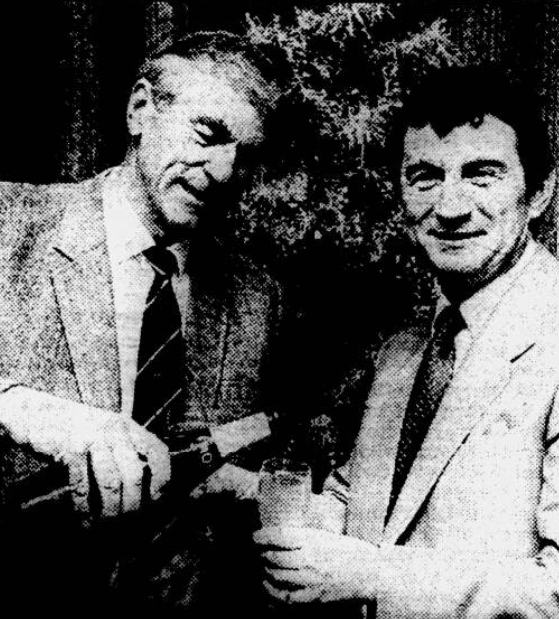
-
One final thing to say on this story, and it takes us almost back to the start. Not to Barrie Pierpoint, the man we left standing in a field in Aylestone, but his nemesis.
In Galway Bay, the song Dr. Colahan wrote in Leicester, you find these words:
The winds that blow across the bogs from Ireland
Are perfumed by the heather as they blow
And the menfolk in the uplands digging praties
Speak a language that the English do not know.And yet they come and try to teach us their ways
They blame us just for being what we are
But they might as well go chasing after moonbeams
Or light a penny candle from a star.
When the song became a hit for Bing Crosby, those lyrics were changed to take away the political edge - it was not 'the English' who came to teach us their ways, but a more ambiguous 'the strangers'.
You can't hear those original lyrics without thinking of a struggle that raged in Ireland throughout much of the twentieth century - the struggle to fight off the influence of Association Football. The English really did 'come and teach us their ways' - introducing the game in Ireland as they did around the world. But nowhere was that influence resisted more than in Ireland. Association football was seen as a symbol of oppression, and people who took part, even as spectators, were banned from particiapting in Gaelic football, under the famous 'Rule 27' of the GAA (Gaelic Athletic Association). This presented a serious dilemma for those who enjoyed both codes.
Two of the most successful managers in Leicester's history were impacted by this dilemma, in very different ways.
Frank O'Farrell, the man who took us to promotion in 1971 before being headhunted by Manchester United, was brought up in Cork, and he knew that when he turned out for his local soccer team, he risked being ostracised by the other sport he loved. Fortunately for him, the GAA in Cork turned a blind eye.
Things were different in Belfast.
Martin O'Neill excelled at both sports - and he was aware that if he kept turning out for Distillery FC in the Irish League he risked upsetting his Gaelic football team, St. Malachy's College, holders of the Ulster GAA crown.
Martin's case became something a sensation in Ulster in 1971. In the end, a crucial semi-final for St. Malachy's was switched from the famous Casement Park in Belfast to Omagh, 70 miles away, because the Antrim GAA, in control of Casement Park, would not countenance an appearance on the ground by the man who was creating so many headlines (and attracting so many English scouts) with his fine performances for Distillery.
Shortly after that, two things happened. O'Neill left Ireland - signed by Matt Gillies for Nottingham Forest. And Rule 27 was finally done away with. It's ancient history now. Casement Park, the ground that was named after the Irish revolutionary executed for his role in the Easter Uprising of 1916, has now been selected as one of the venues for Euro 2028.
-
Well, this story has become a bit like an Advent Calendar, with a new perspective to open up every day.
It's surprising that it's so difficult to find details of this tale elsewehere. You often read that Dr.Colahan was from Leicester, but it's very rare to find mention of his role in capital trials, or the circumstances of Roly's death.
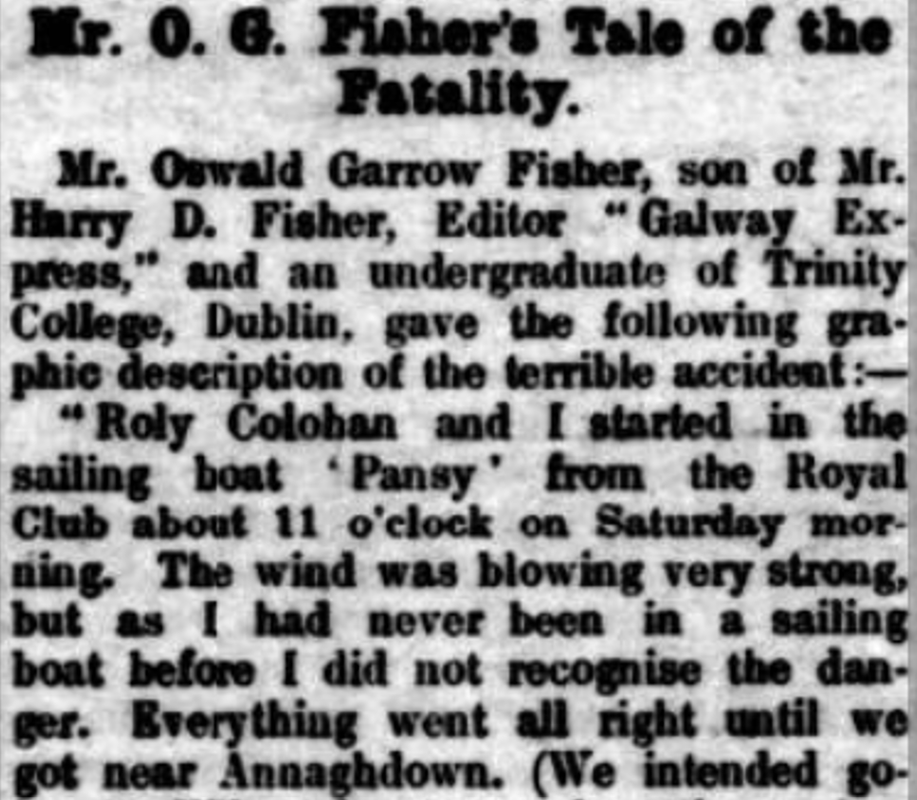
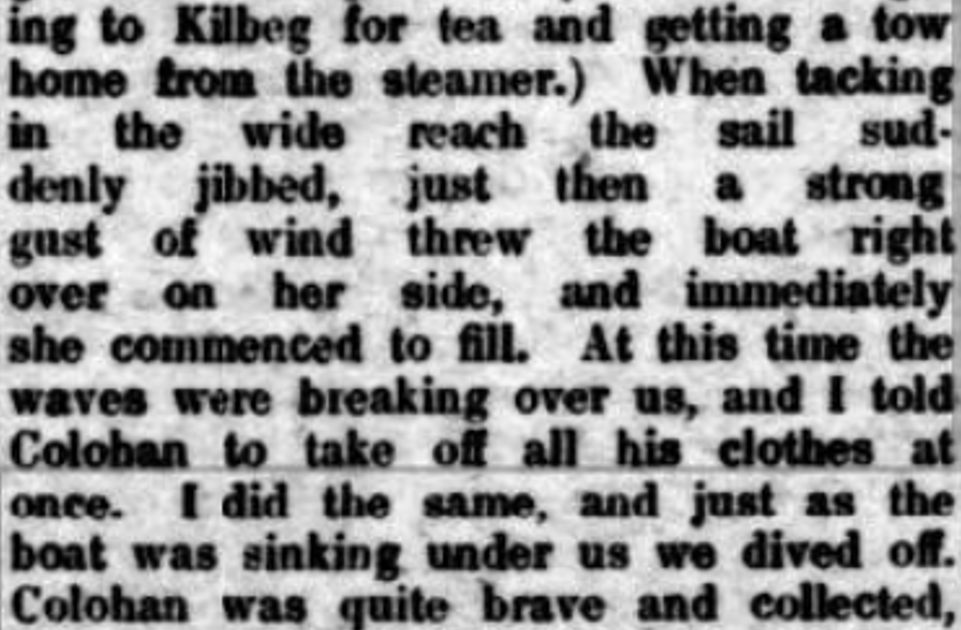
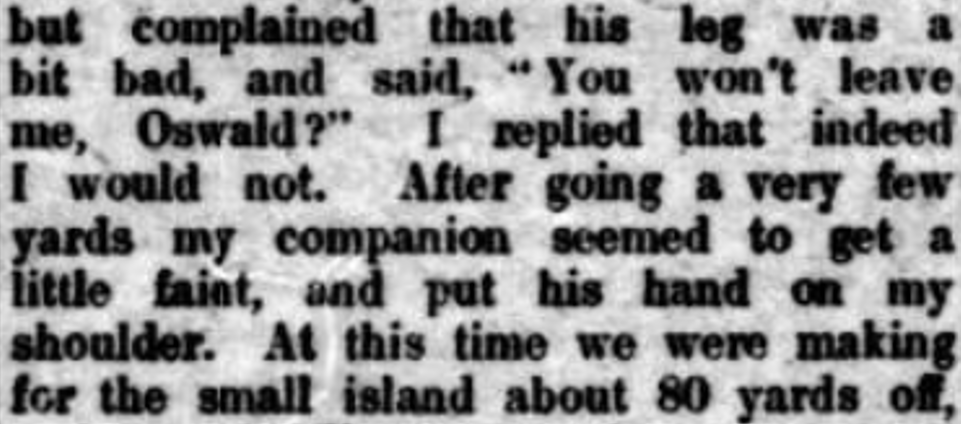
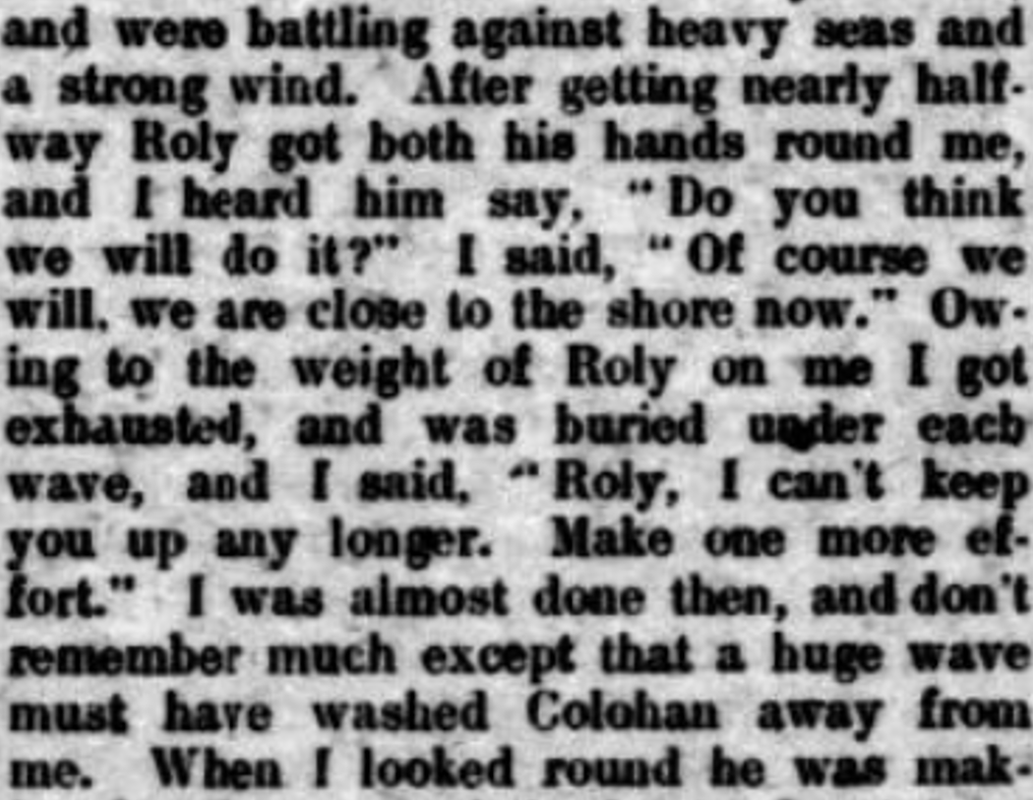
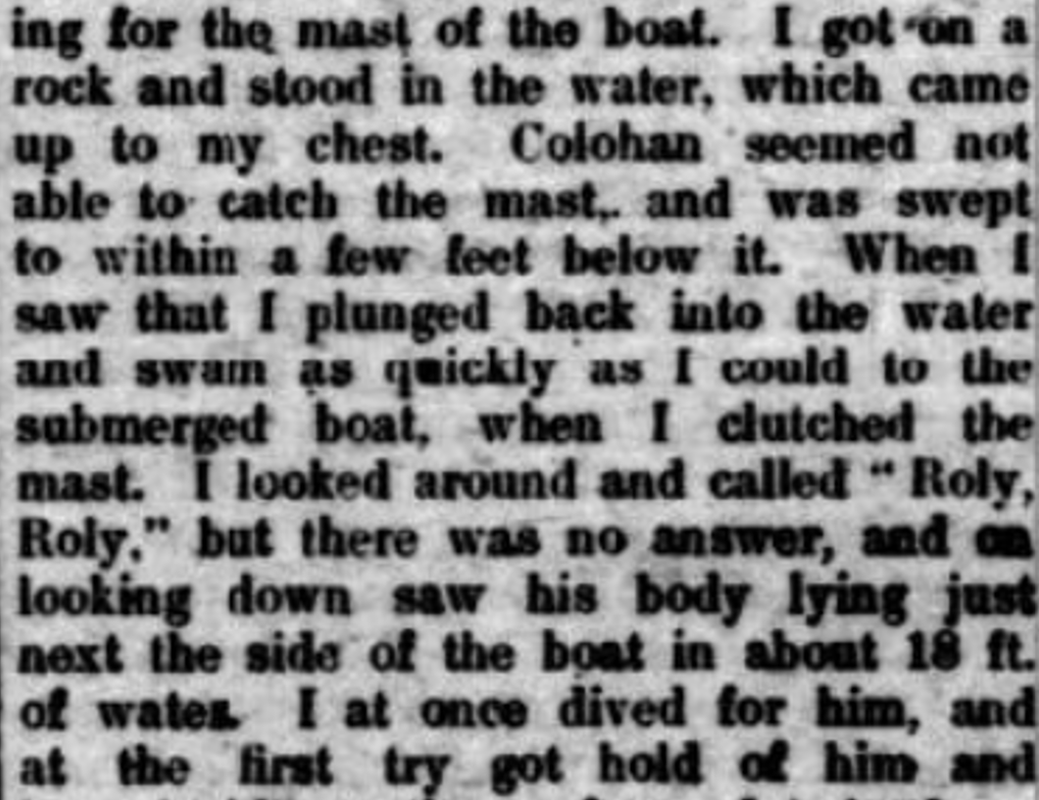
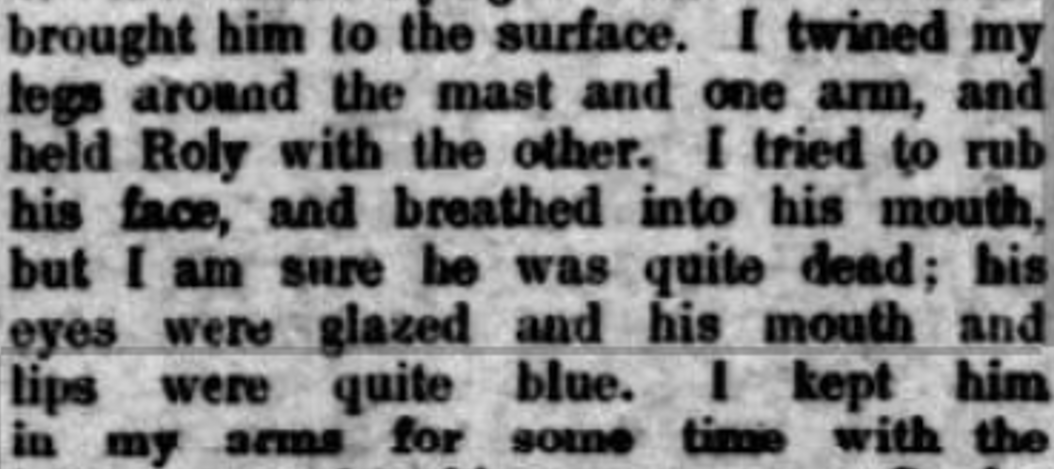
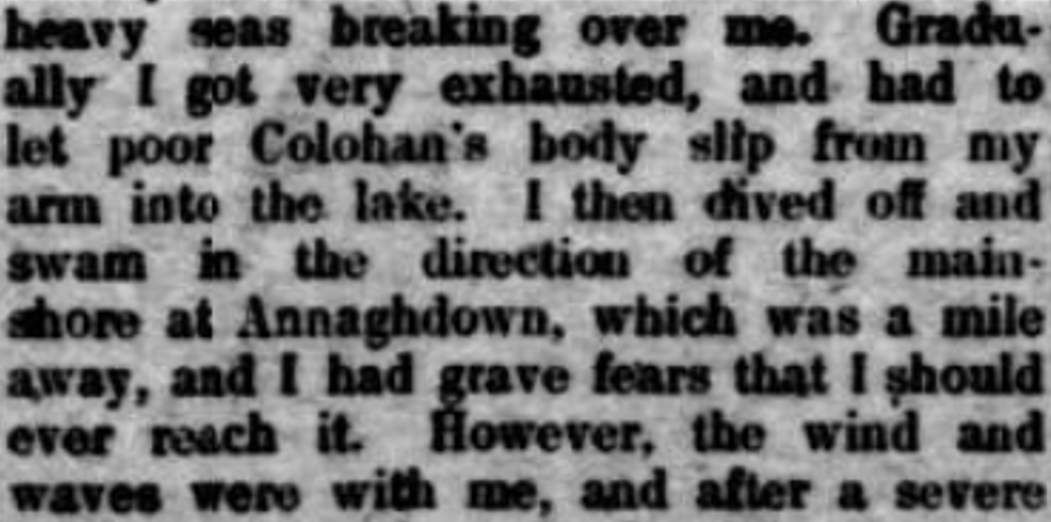
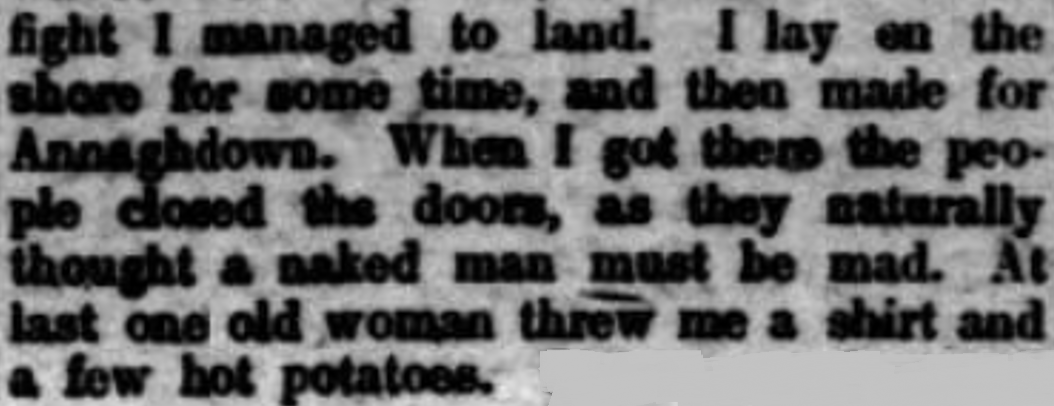
Roly's fellow sailor that day, who tried to save his life, was called Oswald Fisher. I posted a brief excerpt above from the article in the Galway Express in which he told what happened on Lough Corrib. Oswald was actually the son of the paper's editor, so the story was told, and published, in some detail. It's worth posting the whole thing:
-
And the final word goes to Barrie Pierpoint, whose father was so keen to distance himself from the UK's most famous executioner.
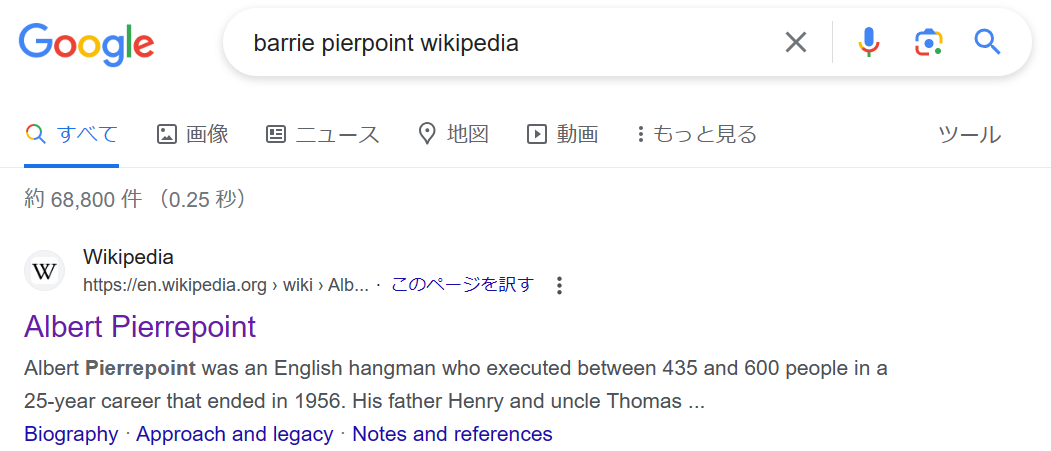
Despite being in the news so much in the 1990s, Barrie does not have his own wikipedia page.
I tried to Google 'Barrie Pierpoint wikipedia', and guess what the the first result was:
Merry Christmas everyone.
-
On 14/11/2023 at 13:19, Sampson said:
Not sure but was one of those collecting the trophy at the end Billy Wright from Wolves beating us in the 1949 final?
Close. Yeah Billy lifted it in 49 when they beat us. The shot they show here is Bill Slater when they won it in 1960.
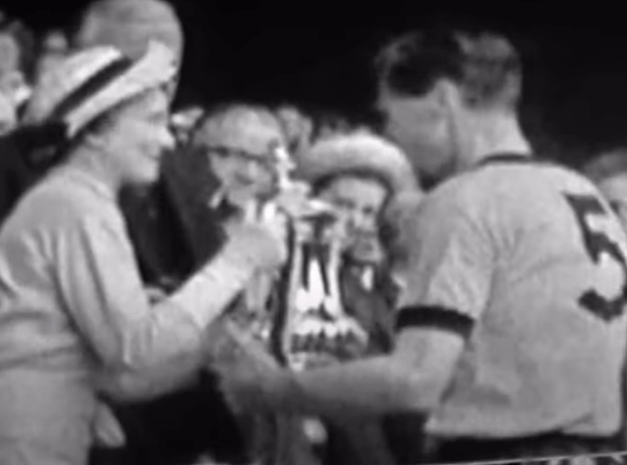
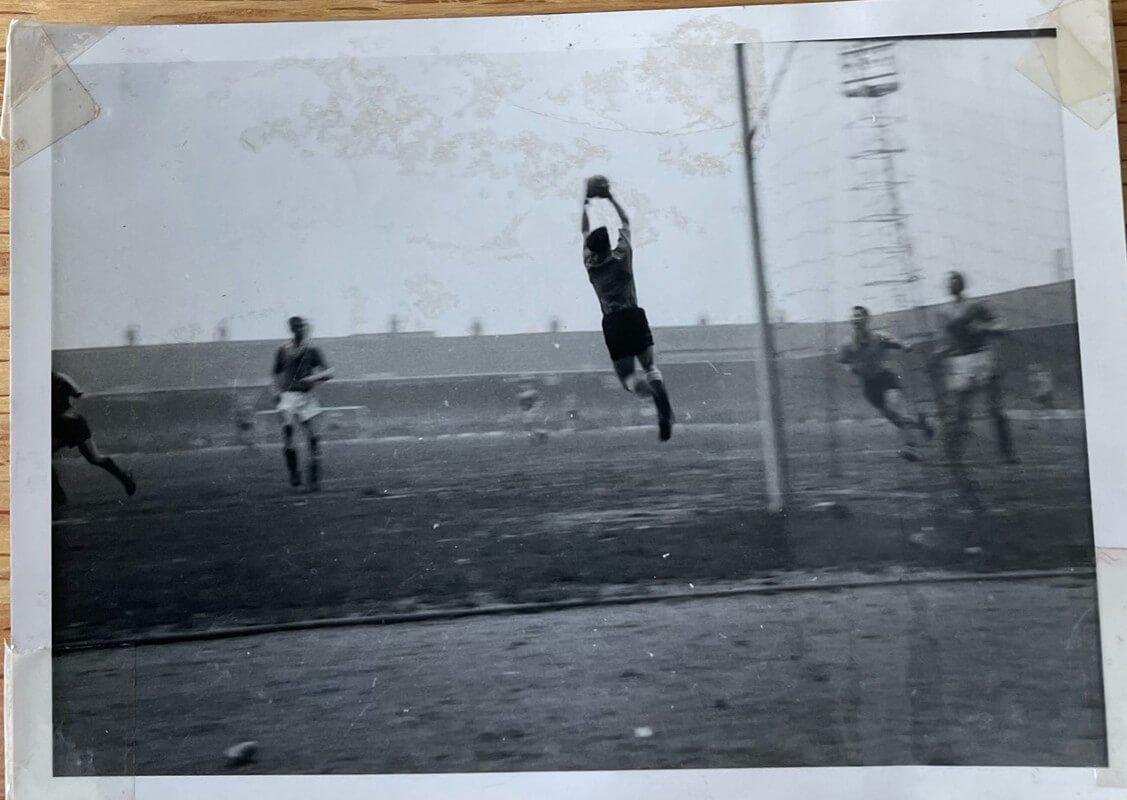
There is a kind of connection there as they beat us in the quarter-final - one of those great Leicester cup runs that has long been forgotten because of what happened in 1961 and 1963. This was a photo our old mate Bernie took at that quarter-final: Leicester 1 Wolves 2.
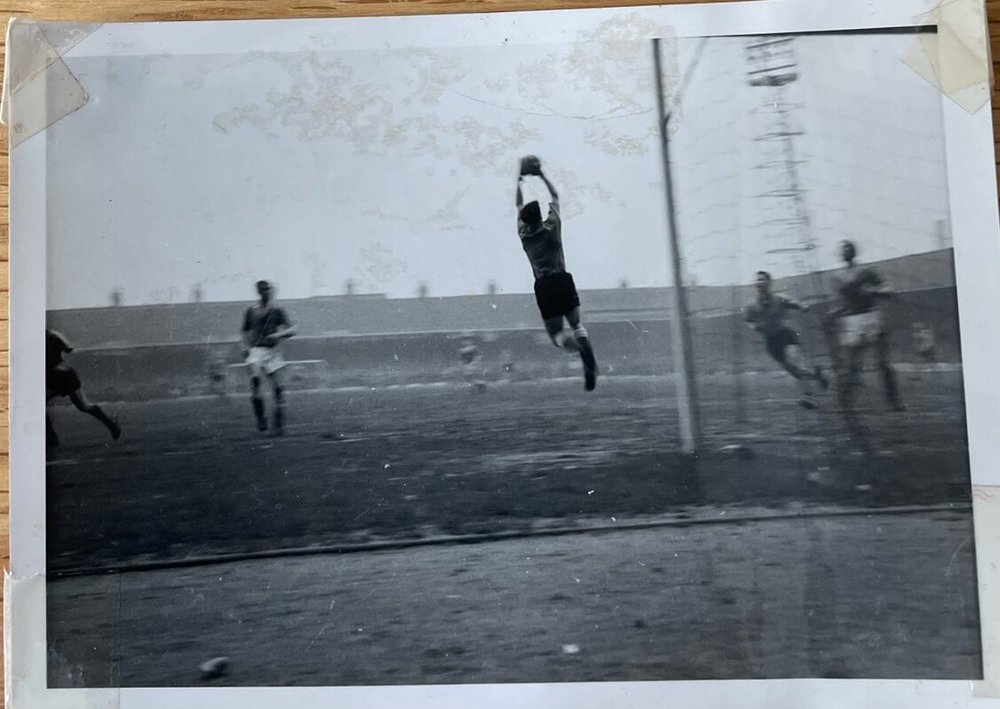
And that looks like the same Bill Slater to the keeper's right.
-
Well - I missed a massive one there.
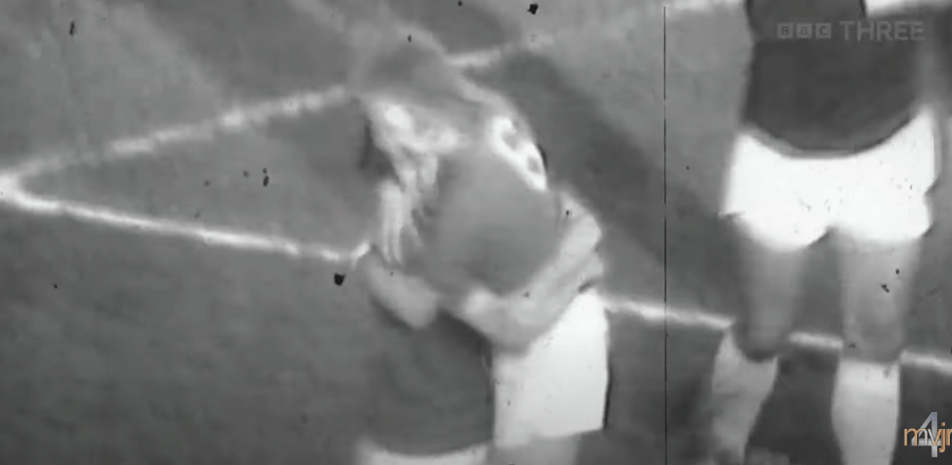
It's the black and white picture that makes it difficult to spot - but the number 6 is definitely Peter McGillicuddy of Leatherhead. He's just put them ahead at Filbert Street. They then went two up and had a great chance to make it three. We came back to win 3-2 and avoid a giant-killing even bigger than Wycombe, Harlow, Walsall and all the others.
The game was in 1975 so I don't know why it's black and white.
That player on the right is Graham Cross.
Here's the highlights of that amazing game
-
And here's one more -
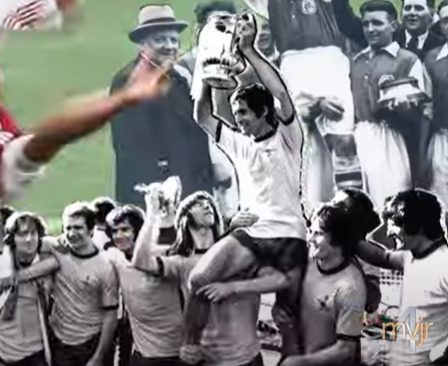
If I'd captured a bit more of the shot of Arsenal's celebrations in 1971 you'd have seen not just Frank McLintock, but also, on the left, the two teammates that he brought to Filbert Street when he became manager in 1977 - George Armstrong and Eddie Kelly.
-
Part Two - Keith Weller v Lenny Glover
January 25th 1969
If we're trying to discover the lost songs of Leicester City's FA Cup history, the next time we faced Millwall in the competition provides some intriguing possibilities.
It was thirty five years later, but it was almost an exact repeat of 1934. Fourth Round day in the capital with the roars of the crowds once again coming from the North (Arsenal v Charlton and Spurs v Wolves), the West (Fulham v West Brom) and south of the river (Millwall v Leicester City).
Anyone standng on top of a tall building in central London that day might have picked up traces of that noise coming from all directions.
Well, believe it or not, we know that someone was doing exactly that.
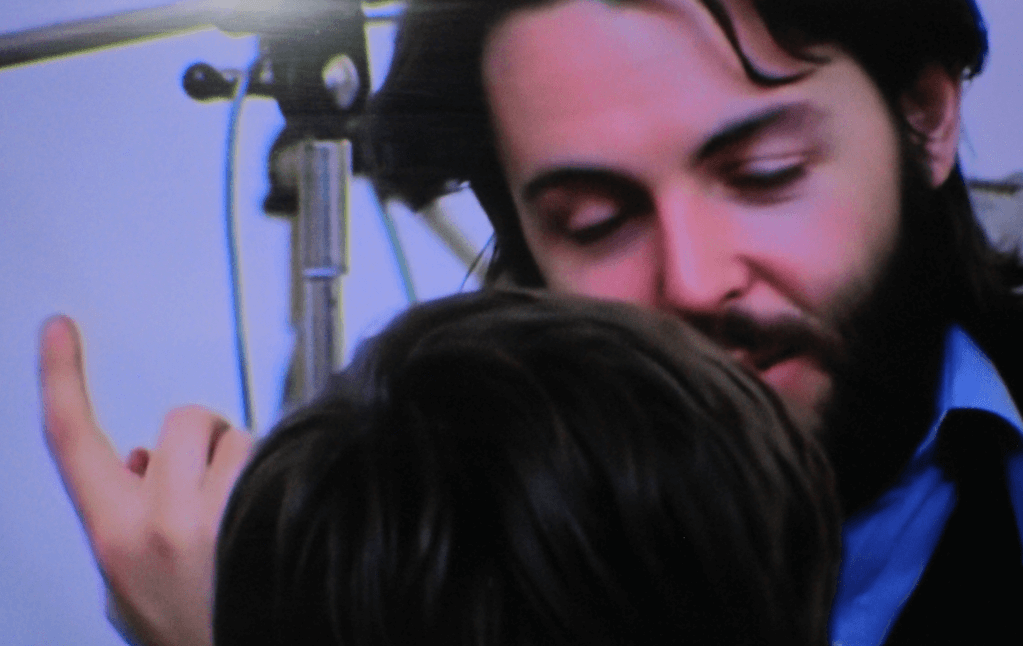
In that wonderful eight-hour documentary Get Back, we see The Beatles rehearsing new tracks and arguing endlessly about where they might perform them for the climax of the film. It was on that Saturday, January 25th, that the producers suddenly came up with a solution, and suggested it to Paul McCartney:
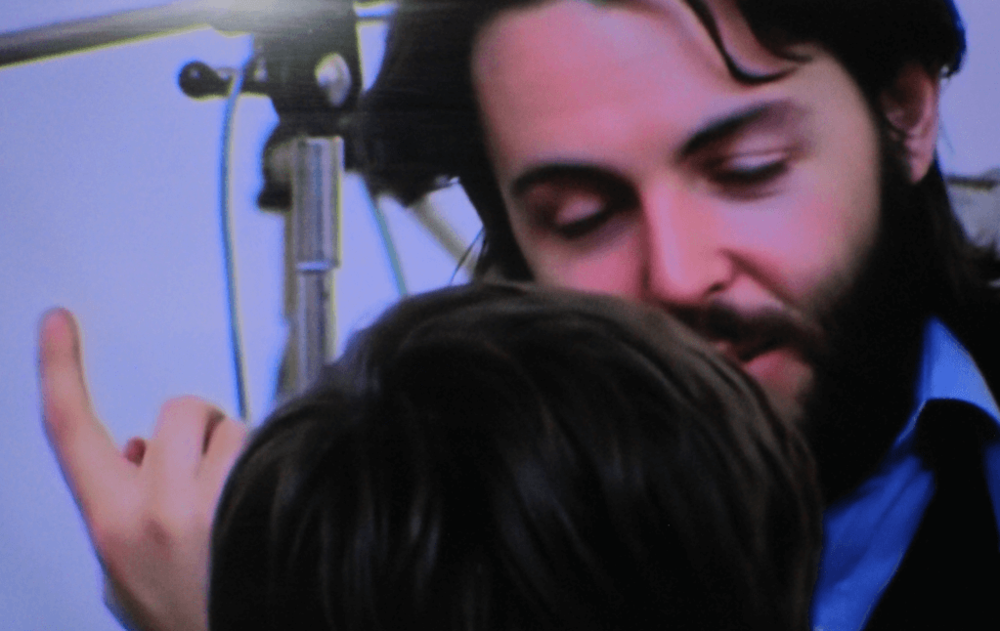
That's the moment - Paul pointing upwards to the location that Glyn Johns has just suggested - the roof of the Savile Row studios.
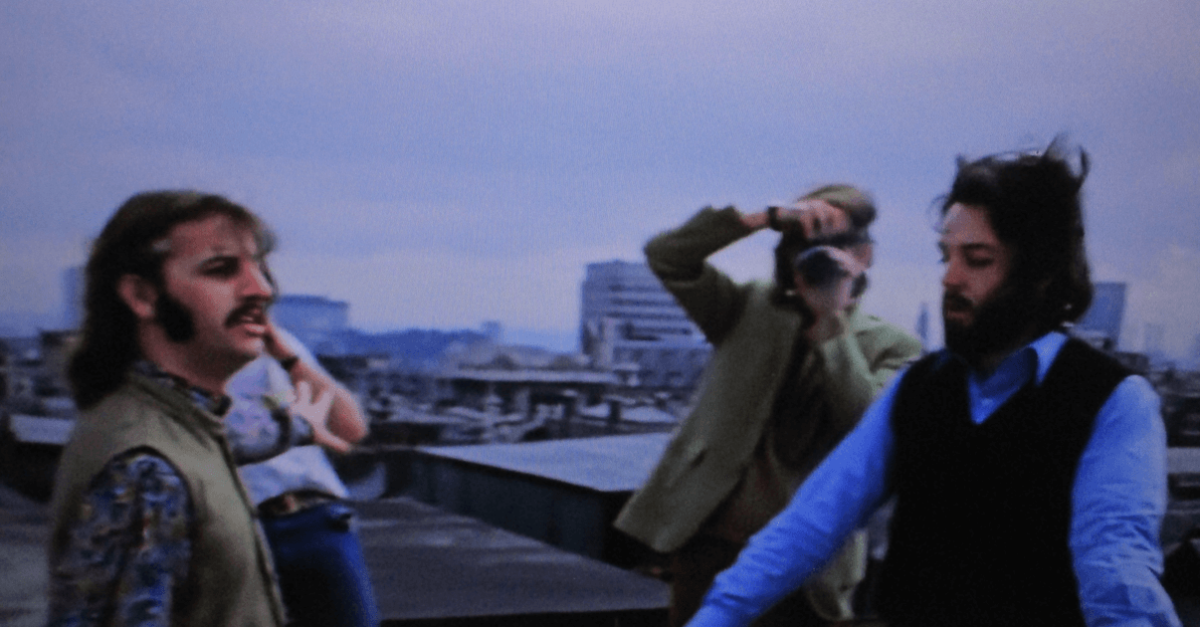
A few minutes later, Paul, Ringo and several members of the film crew head upstairs and out into the cold January air for a reccy:
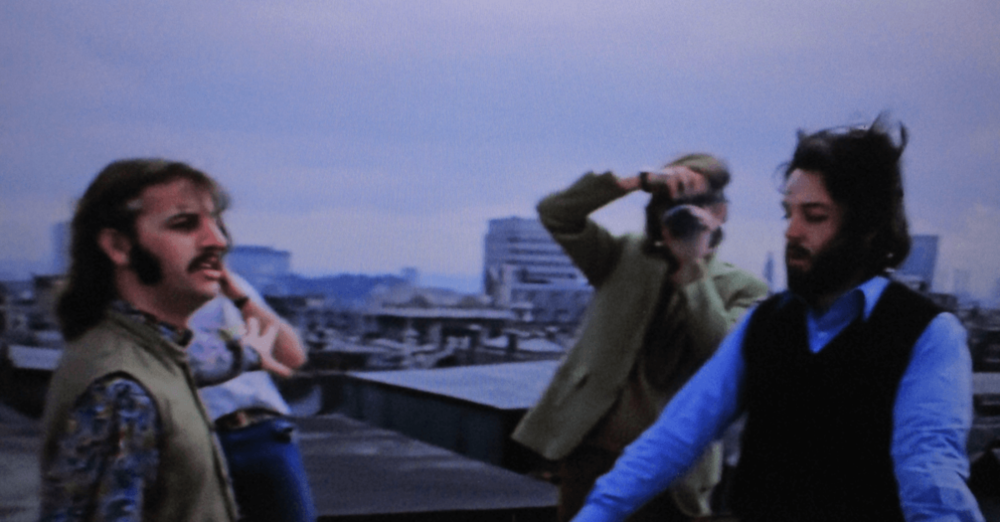
From other clues in the documentary we know that they went up on the roof between 3pm and 4pm, shortly before it got dark.
And this is where we call up the ghost of 'Magic Alex' - the 'scientist' who claimed he could manufacture ingenious devices such as 'electric paint', 'hovering houses', 'voice-activated phones' and an 'artificial sun'. Every time he put forward an idea, John Lennon said 'Yeah - that's great!', and thanks to John's gullibility, he was on the Beatles' payroll for several years.
There's a scene in the documentary where the band finally realise that the 'recording studio' he'd been constructing was nothing but a pile a junk, and that 'Magic' Alex was in fact a complete conman (something George Martin had known all along),
What we really needed was for Alex to set to work on a machine that could capture those crowd sounds floating across the London skies.
Actually, fifty years on, some of his ideas have become reality. We do have voice-activated phones. And we also have incredibly sophisticated audio capture devices.
The Get Back documentary was only possible because advances in technology finally allowed Peter Jackson to overcome a long-standing problem - how to separate the conversation in the studio from the sounds of the instruments and other background noise. Jackson's new box of tricks could not only do that, it could also distinguish between the different voices, providing a separate audio track for each member of the group. It was the same technology that allowed John Lennon's vocals to be extracted so cleanly from his 1978 demo tape, and used so effectively in the single they released in November, Now and Then.
Perhaps we really could feed the machine the footage from the roof on that Saturday afternoon and have it pick up distant crowd noise from Highbury, White Hart Lane, Craven Cottage and The Den, separating the accents into cockney, black country (Wolves, West Brom) and broad Leicester, giving us a playlist we could call 'Footy Chants, 1969'.
Some time in the future there will be an interactive version of the documentary, with viewers able to manipulate each audio track on a separate fader, creating thier own personalized, FA Cup-themed backing track. (John Lennon is nodding his head enthusiastically, saying 'Yeah -- let's do it!')
Back on the football field, we were being tormented that day by a 22 year-old Millwall winger called Keith Weller. He was the main threat to our defence, but he couldn't get past our 19 year-old keeper - Peter Shilton.
We won the game 1-0, the goal coming from Lenny Glover, twenty minutes into the game. You can see it here from two different angles:
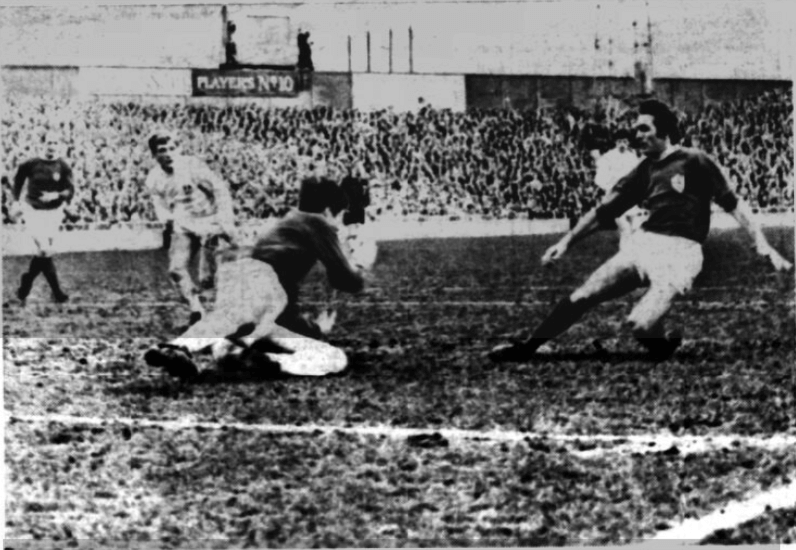
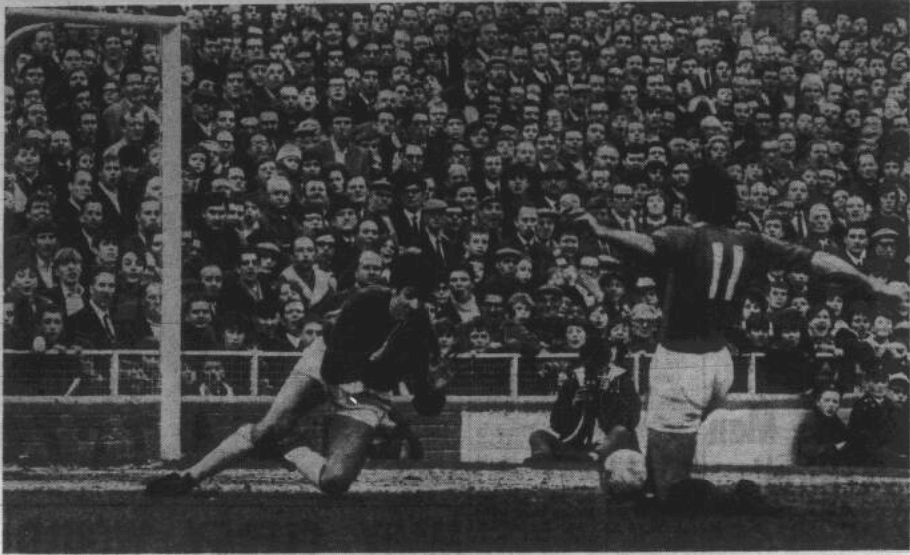
Somewhere in that sea of heads we might find 11 year-old Danny Baker and his dad, Spud (and maybe the odd Leicester fan, too. Impossible? It was a different era. See below.)
The goal no doubt triggered a hearty chorus of 'Lenny, Lenny Glover, Lenny Glover on the wi-ing'.
That victory led to a Fifth Round saga that lasted through the whole of February. We were drawn at home to Liverpool - a tie which was postponed six times due to the icy weather. With Bill Shankly insisting on being present for every pitch inspection, he and Leicester boss Frank O'Farrell became great friends.
When the game finally took place on March 1st, it finished 0-0, and everyone thought we had no chance in the replay.
This is where we introduce another musical legend (well, in Leicester he is anyway) - future Showaddywaddy lead singer Dave Bartram. Still a schoolboy, he traveled up to the replay and stood on the Kop, surrounded of course by scousers. I wonder what his reaction was when:
1) Lenny Glover raced down the wing, beat Chris Lawler and crossed perfecly for Andy Lochhead to head home.
2) Peter Shilton saved Tommy Smith's penalty.
3) The final whistle blew and we'd held on for a famous victory.
After the game, Leicester fans' coaches were smashed up as they stopped at traffic lights near the ground.
We then won 1-0 win at Mansfield Town in Round Six, so once again a win at Millwall was a staging post on the way to the semi-finals - this time at Hillsborough against Cup-holders West Brom.
Times had changed. The demographic of our traveling support had narrowed, with fewer women, fewer rosettes and rattles, and no accordions.
This was a favourite from the Leicester City songbook of the time:
We are the boys in the blue and white
We love to sing and we love to fight
So let's dance (duh-duh-duh-duh du duh-duh-duh-duh) (It's the Chris Montez hit from 1962 - no doubt 'Let's Dance' being switched to 'Let's Fight')
That semi-final was also postponed for a week, as the pitch was in such awful condition. When it finally took place we knew that if we made it to our fourth final our opponents would be Manchester City. That's how it turned out, with Allan Clarke's late winner.
We made it four Wembley defeats out of four, of course, but that young Millwall winger we encountered in Round Four would soon be heading to Filbert Street and providng us with memorable FA Cup moments throughout the following decade.
Part Three is on its way soon.

Neville, King of the Midlands, Saved the Best Till Last
in History
Posted
A few more things to add about Neville:
1) Geoff Peters has provided some great tributes. An older post of his has also been shared this week:
I wonder if this was the advert that Geoff responded to? Leicester Mercury, September 22nd 1988:
2) I hadn't realised just how much freelance journalism Neville had done after leaving the Coventry Evening Telegraph in 1987 to set up his own agency. For a few years after that he was reporting on Leicester City for the same paper, and also writing a column for the Sports Argus on East Midlands football. His name would sometimes appear in the London editions of Sunday papers, writing a report on a game he had been commentating on for Radio Leicester, but having to frame it for fans of a London club. For example:
3) Interesting one from November 1995 from the Birmingham Weekly Mercury:
4) I mentioned the Radio Leicester commentary box with the steamed up windows in the old Main Stand. I think it was here:
But I'm not sure. There's two other similar looking boxes there - can anyone confirm which it was?