

kushiro
-
Posts
1,914 -
Joined
-
Last visited
-
Days Won
15
Everything posted by kushiro
-
Confession time: I've been playing away. Gordon was kind enough to speak to me on several occasions over the past few weeks. Having researched the careers of him and his father, I knew that there was an awful lot to talk about - and I wanted to ask him in detail about every chapter of the story. I also wanted to post a review on the forums of every club that Gordon and Jimmy had played for or managed - yes, even Coventry City. It's weird - there are some forums that I found very difficult to sign up to - not sure if it's because I have an overseas address. I started getting paranoid, thinking there was some great security system, preventing fans of different clubs registering on other forums - like the powers-that-be are terrified of what might happen if we all started working together for the rights of the supporter instead of just hating each other all the time. But as I say, that's just my paranoia. Thanks to some sterling assistance from @Plastik Man I managed to sign up to all the different forums. For each club, the piece is written from a different perspective. Here they are - it was great to get comments about Gordon's career from fans of all those clubs . The Liverpool one is the best, I think: Liverpool: Gordon 1960-67 The Quiet Man Speaks At Last (redandwhitekop.com) Blackpool: Gordon 1967-70 https://avftt.co.uk/index.php?threads/gordon-milne.48639/ Preston: Jimmy 1932-1968, Gordon 1955-1960 https://www.pne-online.net/forum/index.php?threads/from-father-to-son-the-key-moments-in-four-decades-of-drama.3439029/ Coventry: Gordon 1972-1982 https://www.skybluestalk.co.uk/threads/gordon-milne-highlights-of-a-remarkable-career.155165/ There's also Wigan, Morecambe and Dundee United - but I think you get the picture.
-
On the weekend before his autobiography 'Shankly, My Dad and Me' was published I spoke to Gordon about his career: ************************************ It's great to speak to you, Gordon. You've been a big part of my family's life. My father was from Liverpool and he used to watch you at Anfield in the early 60s. Then he moved to Leicester, where I was born, and I used to watch your team at Filbert Street in the 80s - from the Main Stand Enclosure, about twenty yards from your dugout. Ah - you weren't one of that group who used to barrack me all the time? Not me, no! But actually, right next to where I stood there was this group of old Leicester characters who spent the whole game making wisecracks. They were pretty funny. Wait a minute, I'll send you a picture. Do you recognize them? I don't think they were the ones who barracked you. They didn't have that mean streak - they were just having a laugh. The guy in the cap looks familiar! I read that your first visit to Filbert Street was back in the 50s when your dad was trainer at Preston, and they came down to play Leicester. You said you were in the Double Decker. Yeah - the reason I know that is I remember my dad running on to treat someone at that end - the Double Decker end - and he passed behind the goal on the way back, and he was getting abuse from the fans behind the goal. I always remember that. As a player at Preston back in the 1930s, your father was nearly chosen for Scotland, then the war intervened. You later played for England. When you were growing up in Preston, did you feel Scottish or English? Without a question. Scottish. It’s funny this. Before the war, my Auntie Grace came down to live with my parents in Preston. So there were four in the household, and three were Scottish. All my aunties and uncles were Scottish and most were football daft. The only noise I heard was Scottish noise. When that England-Scotland fixture was played my relatives were on the phone from Dundee saying we’re gonna do this and we’re gonna do that. When your father was the trainer at Preston, he was chosen to do the same job for the Football League XI, wasn't he? And at that time those fixtures were quite prestigious - they were like a trial for the full England team. Did that make it easier for you when you were selected for England, that he'd already kind of moved away from that purely Scottish identity? We should have had had this conversation 12 months ago, I could have put this in the book! Yes, he was very proud of being selected as trainer. I still have the photo of that game. Looking back now he missed the 1938 final through injury, then the war came along, then he studied physiotherapy and got the qualification he needed, then came the Football League job and taking Preston to the Cup Final in '54. So your father was trainer at Preston, and you started your career there, but then you felt you needed to move away from him. You didn’t want any of those complications. You wanted to stand on your own. When I was there with my father I was only part-time. For two years I was doing my apprenticeship. There would be odd occasions when I trained with the first team but that would be very rare. I felt the pressure then. Then I went into the army for two years. I knew that when I went full time I didn’t want to be in that scenario. It didn’t seem right for my dad and for me. I think it’s quite natural. When you were a manager later, did you ask his advice? I don't know if it was a different generation but the relationships of fathers to sons were - you just get on with it, learn from your mistakes. Trying to have long conversations with your father was a bit unusual. When we were younger, he’d been in the police force and had been through the war. I wouldn’t say fear, but it was respect. He was not an easy act to follow - there was always that in the background. Tell us about that extraordinary moment when you and your wife Edith first met. It was me and David Kerry, another young Preston player. We were playing tennis one night - two young footballers so we think we’re the bees’ knees, poncing around. We saw these two girls playing on another court, and as you do, we were having a look and saying ‘They look alright!’ and their names were Edith and Barbara. It led to two weddings. David and Barbara were still together until a few years ago when he sadly passed away. Reading interviews with you in the late 60s you said that your favourite game for Liverpool was Leicester away in 1964, in the League. When the bogey was finally laid. When people saw that Easter programme, no-one gave us a chance. We were going for the title - Shanks' first title - and United and who else was it, in the race? (Spurs and Everton) - and we had Spurs away on Good Friday, Leicester away the next day then Spurs again at home on Monday. No-one gave us a chance. I picked up an injury at Spurs and it was touch-and-go for Leicester. We were in the Grand Hotel in Leicester on Friday night and Bob Paisley was trying to get me fit. In those days you played a lot when you weren't 100%. It was 'Let's see how it goes, do your best'. And I played, and we won 2-0, then we beat Spurs again on the Monday. With Leicester, people called them our bogey team, and there was that semi-final where we absolutely battered them but coudn't score past Gordon Banks. But really it wasn't a surprise that Leicester had those good results against us. They were a great side at the time. When you made your England debut against Brazil, you almost scored in the first twenty seconds when that shot was saved. What a start that would've been. My son says it was a back pass! (A reminder of that moment): You didn't make it into the final squad in ‘66, but you had so many great players competing for those positions in the mid-60s - Venables, Ball, Peters, Tony Kay of Everton... Tony Kay to me personally was my biggest rival. He had the same style as me. He got into trouble later, didn't he. In 1966 I knew I wasn't at the level I had been. I got that injury before the Cup Final and it took me a long time to recover. Other players were emerging and I was standing still or going backwards a bit. I never felt I’d let myself down in an England shirt, but the recovery period after the injury – it took me longer to get back to where I was. What was more surprising was that Peter Thompson didn't make it. In my eyes, Peter was flying at that time. There was that drive back to Liverpool from Lilleshall after the squad was announced, with five Liverpool players in the car. Roger, Cally, Gerry Byrne - they were in, then me and Peter who were out. A report came on the car radio about the squad and Roger turns it off. After that, we hardly said a word. Then there was Jimmy Greaves. I wasn’t in the squad but for Jimmy it was worse. He was in the squad, and when he didn’t make the final, that killed him. Do you remember where you were for the Final? I watched it, but I can’t remember where I was. That could be the reason – not wanting to watch it, in a way. So sick that you’re not there. You missed out then but I don’t think there’s any doubt that, as a manager, you had more success than any of those who were chosen in Ramsey’s final 22. You could look at Alan Ball maybe, and Jack Charlton of course, but in terms of trophies, no-one can rival you. It’s never even crossed my mind that. Now that you mention it, it’s interesting. I can’t wish for any more from my career. Of course, there were disappointments, but the longevity of it all is something I look back on with pride. Even the time at Coventry City. I mean, there were no trophies, but keeping them in Division One for nine seasons has to be counted as a success. Well, that was the mandate. Produce kids, sell them and stay in Division One. It was a mandate you couldn’t really publicize to the fans because they don’t want to hear that. They want to hear that you’re going to go to the Cup Final and win the League. I think one of those seasons, 1977/78, was really fascinating. It’s the year Forest shocked everyone by winning the League, but midway through the season you were right up there, in the title race, and playing thrilling, attacking football. You know, I didn’t put this in the book but there was a TV programme then, when Cloughie received some award. I was sitting watching and he said, “This shouldn’t be coming to me” - you know how he talks - “It should be going to that young man in Coventry”. Wow. Yeah. Our form at the time was surprising because at the beginning of the season, when the newspapers chose the two teams to go down, one of them was always Coventry City. So that was an achievement, as you say, in a different way. It's interesting that in all those nine years at Coventry - all in the top flight - not a single player got an England call-up. The first time that happened was when you moved to Leicester and Bobby Robson picked Gary Lineker. Gary writes about how he remembers you giving him a phone call while he was watching the World Snooker. I remember that call, yes. It was nice to pass on some good news, rather than giving someone a bollocking. Leicester Chairman Terry Shipman had appointed you, right? I got to know Terry when I was at Coventry. I liked him. He was a good guy and a good chairman. He was Leicester through and through. I was lucky with the people closest to me – Terry Shipman and secretary Alan Bennett. At some clubs for some reason you don’t get on with them and you’re vulnerable in those situations. Alan Bennett was so important, like Eddie Plumley before at Coventry. When you’ve got a good guy they’re worth their weight in gold. He was a real cornerstone for me in the tough times. There's a great bit in the book where you talk about your first training session at Coventry, with senior players just going through the motions, 'testing out the new boss', as you put it. You stopped the session and said 'If you're going to mess me about, then it'll be very easy for me to mess you about'. Though 'mess' wasn't the word you used, was it? It was something stronger. When you arrived at Leicester it was simiilar - not as dramatic, but you had to deal with the established players. The main thing was there were players getting towards the end of their careers and they needed moving on. Eddie Kelly would have been one of those, and Youngie - Alan Young. The team needed freshening up. It wasn’t my team, it was Jock’s. Eddie and Youngie were very good players for Jock but it needed to change. In my own career things happened so quickly and I didn’t have time to moan or not moan or whatever. Some players adapt to that quicker than others. Obviously I’m not going to be their favourite manager if I’m thinking of moving them on or not playing them. Things didn't start too well at Filbert Street, did they? We were worried about relegation to the Third Division. We were on that run and going nowhere. I was thinking 'If you don’t get this together you’re going to lose your job'. The mood wasn’t great, and playing at home was a problem – you were probably there yourself. The fans weren’t confident and if something went wrong it was exaggerated. Talking about relegation, here's a quiz question for you. How many times were either you or your father relegated, either as a player or a manager, in your whole careers? Let me see. I don't think I was ever relegated, was I? And my father...? He wasn't either. Neither of you were ever relegated across that seventy year period. Gee Whizz. It's pretty impressive. That's another first you've told me. After that bad start though, in the second half of that season you went on a great run and got promotion. Was the Gerry Daly signing the turning point? That was important, yeah. I went back to Coventry and signed him. He just responded. He was a talented player. With other clubs, if he didn’t fancy it on a particular day he might go missing but he never did that for me. He took on a responsible role and he enjoyed himself. He had licence to play to his strengths and he brought so much to the team. After Leicester you went to Besiktas in Turkey and had that incredible success. Three titles in a row, and in the third one you went the whole season unbeaten. We had five or six players - maybe more - that I’d have struggled to keep now. Great players. There wasn’t that movement of players out of Turkey then. A lot of them could have played in other European countries, but I didn’t have that headache. It created loyalty for the club and the country. They were passionate about the club and about Turkey. When you had that 'invincibles' season, Milan did the same didn't they, in Serie A, in the same season. Yes. Again, this isn't in the book but Turkish TV set it up for me to go and meet Fabio Capello at Milan because of that. He had Rijkaard, Gullit and Van Basten and all the others. Capello wasn't that interested, I don't think, but there was a photo op - we shook hands. It was a press thing really. ****************** There was a lot more we talked about, including more about his Leicester City years of course, but it was covering much the same ground as his book so I haven't repeated it here. If you want the full story: Gordon Milne: Shankly, My Dad and Me: Amazon.co.uk: Gordon Milne, Steve Younger, Gary Lineker, Mark Lawrenson: 9781801506540: Books There was one thing in his book that left me feeling relieved - he shared my dislike of Malcolm Macdonald. I was a bit worried I'd been too hard on Supermac in the piece I wrote about the 82/83 promotion race (see below) - but Macdonald is just about the only person in the whole book that Gordon had a bad word for. This was the piece if you didn't see it in the autumn:
-
This is a pretty good interview, with loads of Leicester talk.
-

Franz Beckenbauer Is Coming To Filbert Street
kushiro replied to kushiro's topic in Leicester City Forum
A few more bits and pieces: 1) Some fascinating reflections on that Leicester City v Dortmund game from Dave Gibson here: Former Players Remember: Richie Norman & Davie Gibson (lcfc.com) 2) After Bayern told Leicester they wouldn't be able to come to Filbert Street, they won that CWC SF and faced Rangers in the Final. That took place in Nuremberg, six days after Celtic became the first British club to win the European Cup. Had Rangers won it would have been a truly amazing Glasgow double - but Bayern beat Rangers 1-0. 3) You can see the trophy they won that night in this amazing picture: The European Cup, the Cup Winners Cup, the UEFA Cup, the FIFA World Cup, the European Nations Cup, The Intercontinental Cup, the Meisterschale (Bundesliga), and the DFB Pokal (German Cup). No Jules Rimet, though. -
Franz Beckenbauer Is Coming To Filbert Street
kushiro replied to kushiro's topic in Leicester City Forum
Beckenbauer's first game for West Germany was quite an occasion. They very nearly didn't make it to the 1966 World Cup. Sweden held them to a draw in Berlin in the qualifiers, then in the return the Swedes were winning 1-0 and the Germans were heading out - before Werner Kramer and Uwe Seeler scored. That game in Stockholm was Beckenbauer's debut. You can see him (number four) celebrating Seeler's winner. -
Franz Beckenbauer Is Coming To Filbert Street
kushiro replied to kushiro's topic in Leicester City Forum
Hate to lower the tone after that fine post from @fuchsntf but I liked seeing Uwe Seeler at number 100 in that list. Not just because he was a great player but also because that was the Leicester players' nickname for Mercury football writer Bill Anderson back in the day. Can't think why. -
That's what Leicester fans would have thought on February 20th 1967 when they read in the Mercury that the club had arranged a prestige friendly against Bayern Munich for April 18th that year. Gerd Muller and Sepp Maier were also in the Bayern team, but they came to prominence later. The star was Beckenbauer, who'd had a sensational World Cup: Leicester had their own World Cup star of course - Gordon Banks. But between that Mercury announcement and the fixture on April 18th there would be dramatic developments. 17 year old Peter Shilton told manager Matt Gillies that if he didn't get a first team place soon he'd have to look for another club. 'And when I say soon, I'm not talking months. I'm talking days'. On April 17th, the day before the game against the German side, Gillies agreed to sell Banks to Stoke City. But actually, by that time, the identity of that 'German side' had changed too. This is the cover of the wonderful kicker magazine from March 13th that year: The headline is 'Die Bayern im Halbfinale' - and you don't need a degree in German to work out what that means. The picture shows Gerd Muller in action against Rapid Vienna in the quarter-finals of the European Cup Winners Cup. Muller got the winner as they beat the Austrians 2-1 on aggregate to make those Halbfinale, where they would face Standard Liege in April. That meant the Leicester fixture had to be canceled. A replacement for Bayern was hurriedly found - and it was arguably even more attractive opposition - Borussia Dortmund, who had four of West Germany's World Cup Final XI in their squad, and were the holders of the Cup Winners Cup after beating Liverpool in the Final shortly before the World Cup kicked off. So Beckenbauer never made it to Filbert Street. On the day of the game, this famous picture appeared in the Mercury: Shilton was officially our number one for the first time that night, and he kept a clean sheet as we won 6-0. Here are the teams and scorers: Those details are from the Mercury, and on the front page of the paper that day came stunning news. The great German leader Konrad Adenauer was dead. Now you may not know who he is, but in a poll of Germans in 2003, he was voted the Greatest German Who Ever Lived. Don't scoff. When you see the list of people he beat it is a pretty amazing accolade: Unsere Besten - Wikipedia Did you spot who the highest placed footballer was, at 36?
- 16 replies
-
- 16
-

-
Just a bump for those who didn't see this before. 10.30 tonight I think.
-
The World's Oldest (and Greatest) Cup Competition
kushiro replied to kushiro's topic in Leicester City Forum
So the last part. February 18th 2017 After winning the League, lots of us thought we might have a good chance of the other one the following season. When we got past Everton and Derby, then drew Millwall away in the last 16, expectations grew still further. They were in the third tier at the time. Only problem was, the FA Cup as our third priority. We had a fight on our hands to prevent that title glory being tainted by instant relegation, and there was also the small matter of the Champions League knockout stages. The away leg v Sevilla was four days after the Millwall game. So we played a second string XI, and were beaten by a goal ten seconds from the end of normal time, despite them being down to ten men. Things were looking desperate for Ranieri and that game in Spain on the Wednesday was his last. So here's a summary: -
The World's Oldest (and Greatest) Cup Competition
kushiro replied to kushiro's topic in Leicester City Forum
Part Four January 5th 1991 David Pleat's job was on the line when we headed for The Den for a Third Round tie in 1991. He was supposed to be taking us back to the top flight, but here we were midway through the season fighting to stay out of Division Three. Part of the 'magic' of the FA Cup is that it can transform a team's season and a manager's fortunes. A year earlier, Alex Ferguson was about to be sacked when Man U won at Forest in Round Three then went all the way to Wembley and lifted the Cup. Now, with ten minutes left at The Den, Pleat must have hoped he was about to be thrown a similar lifeline. We had taken the lead with an early Tony James goal and Millwall didn't look like getting an equaliser. Then Paul Ramsey was sent off after a clash with Keith Stevens - his second red card in two weeks. In the remaining ten minutes, Teddy Sheringham equalised and Stevens got the winner. Steve Walsh was then sent off in injury time - his second red card of the season. Pleat was furious. In the dressing room, he blamed Ramsey for the defeat. Walsh spoke up, defending Ramsey, and 'harsh words were exchanged between the three of them', as Walsh later recalled. On the coach back to Leicester, no-one spoke to him or Ramsey. Three days later, the behaviour of the two players was placed into sharper focus when Gary Lineker, now at Spurs, received the FIFA Fairplay Award for going through his whole career without getting booked. Pleat was wondering how to deal with them - 'both players may find themselves out the door' wrote Bill Anderson in the Mercury. But instead it was Pleat whose days were numbered. At the end of the month he was sacked. It was the end of an era at Filbert Street. Chairman Terry Shipman stood down too, replaced by Martin George, and so what you might call the 'Shipman era' - with Terry and his father Len - came to an end after 50 years. We looked no more like potential Cup winners now than we had back then. The defeat at Millwall was our SIXTH Third Round exit in succession. Here's the action from The Den, with the red cards judiciously omitted on the season review video: -
Test Thread - Post whatever you like as practice
kushiro replied to WigstonWanderer's topic in Forum Support
-
The World's Oldest (and Greatest) Cup Competition
kushiro replied to kushiro's topic in Leicester City Forum
Right, on with Part Three. February 19th 1985 After beating Burton Albion and Carlisle United, we were drawn away to Millwall in Round Five, the game taking place on a Tuesday night. When the players walked into the away dressing room at The Den, there was a collective groan. 'Oh no - the dreaded green kit!' Sponsors Ind Coope had wanted us to wear green so it matched their brand colour, but we seemed to lose every game we played in it. Things didn't get any better at Millwall - we lost 2-0. That's Lions boss George Graham with goalscorers John Fashanu and Alan McLeary. Graham, looking forward to the quarter-final after the game, said: 'This means there will be more talk of the team, rather than the hooligans'. It was a sad night for Gary Lineker, who missed several chances, with Everton boss Howard Kendall watching from the stand. And it was also, in retrospect, a very sad night for football. If we had won, the notorious Luton v Millwall game in the next round would never have taken place: (Who knows - if we had managed a draw and Millwall had come to Filbert Street for a replay, maybe these infamous scenes would have been played out in Leicester, with the seats being ripped out of the East Stand). Danny Baker was there that night, and this is what he said about in the book Behind Closed Doors that he and Lineker wrote: It's difficult to say just how different things might have been if we'd won at The Den and those scenes had not been shown on the TV news for several days in succession after the game. within everyone saying 'something has to be done!'. The timing was interesting. The year-long miners' strike had just finished, and Margaret Thatcher now had the scalp of Arthur Scargill to add to that of General Galtieri. Now, after the scenes at Luton, she summoned the football authorities to Downing Street and told them her govenment was going to introduce ID cards. Football fans were her new enemy (and that's exactly the word used by political commentators at the time). Had it not been for the Luton game, who knows - Heysel, or some other instance of crowd violence may have been the trigger for the ID cards policy. Of course, it took the Hillsborough tragedy (1989) and the Taylor Report (1990) for the idea to finally bite the dust, just as it was about to be signed into law. That meant that the following year, when we next drew Millwall in the Cup, supporters could pass through the turnstiles in the traditional fashion (33 years on, there's still a lively debate around these issues, as recent threads on this forum demonstrate). That 1991 tie is coming up next, in Part Four. -
Test Thread - Post whatever you like as practice
kushiro replied to WigstonWanderer's topic in Forum Support
-
The World's Oldest (and Greatest) Cup Competition
kushiro replied to kushiro's topic in Leicester City Forum
Let me pretend I really meant 'Oldest Cup competition still going' . Thomas Youdan, the guy who sponsored the competition, sounds like a fascinating figure. Youdan Cup - Wikipedia -
The World's Oldest (and Greatest) Cup Competition
kushiro replied to kushiro's topic in Leicester City Forum
Just before Part Three, here's what happened after that Liverpool replay in 1969: The guy in the picture is 'Mr. R.Wyatt, engineering superintendent at the Midland Red garage in Wigston'. -
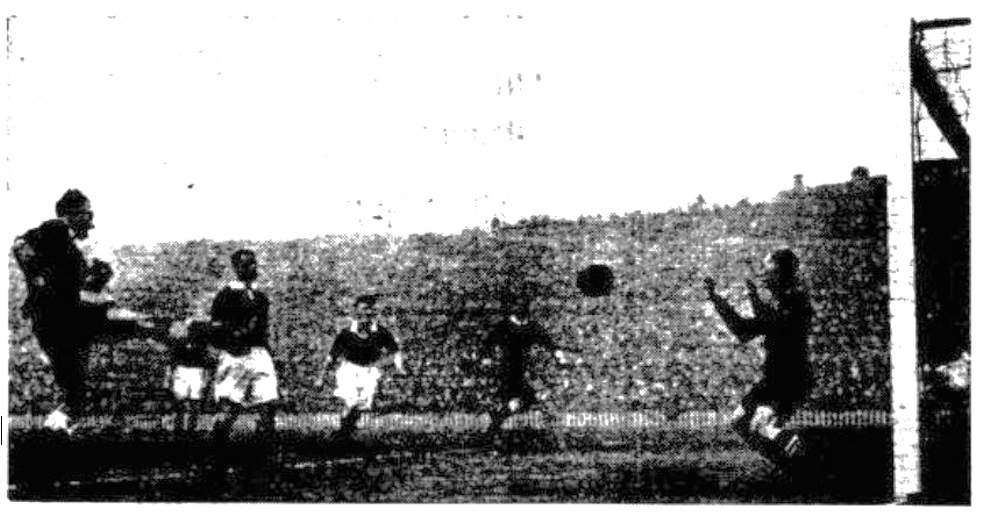 The FA Cup - the one everyone wants to win. That's how it used to be anyway - certainly until the 1960s, and for many people, for a long time after that. Nothing compared to that excitement - the anticipation building through the week, the whole city gripped by Cup fever. Not just for semi-finals and finals, but every step along the way. To show how things have changed over the years, let's take a look back at five moments in time - from 1934, 1969, 1985, 1991 and 2017. Notice anything about those dates? Have another look. They're the years we played Millwall in the Cup. Five truly remarkable occasions that I'll use to tell not only the history of this fixture, but also the history of the competition itself. It's been great fun digging out these stories. I hope you enjoy it. Part One: Channy's Swansong December 17th 1932 Manager Peter Hodge knew that the moment had arrived. It wasn't easy to bring down the curtain on a great career, but it was his job to make these calls. 'I'm going to put you in the Reserves this weekend, Channy'. Arthur Chandler was 37. The following day, as the first team were drawing 2-2 with Birmingham City at Filbert Street, he was playing for the 'stiffs' at Highbury. Quite a comedown for our record goalscorer. And that was before the match started. When he walked off at the end, Arsenal had won 10-1. The bitter irony of that scoreline would not have escaped him. It was a reversal of the most celebrated game of his career, when the sixth swan flew over Filbert Street, beckoning him to knock in another goal. 'That's football', he thought. 'It builds you up. It knocks you down.' But he hadn't hit rock bottom yet. The following week, the Reserves were playing again. Channy's name wasn't on the teamsheet. Hodge told him he was being 'rested'. Leicester City fans saw no more of Channy that season. A series of stand in centre-forwards were tried as Hodge and his scouts searched far and wide for a man who could fill the great man's boots. Monday January 15th 1934 Over a year later, and Chandler was still on City's books. Now 38, he was playing at Filbert Street in another Reserve game - against Millwall. At the same time, at FA headquarters in London, the draw for the Fourth Round of the FA Cup was taking place. The afternoon was to unfold in a quite remarkable way. The Reserves went goal crazy, Channy scoring twice as Millwall trailed 8-1 at half time. When the players came in for the break, they heard news of the Cup draw. The very first team out of the bag was - Millwall. The second - Leicester City. The clubs would be meeting in a senior fixture for the first time ever. In the second half, Channy scored again to complete his hat-trick, and it finished 10-1. Yes - double figures again. This was the headline in the Evening Mail: It was an omen. There would be another riot twelve days later. After watching that performance, manager Peter Hodge decided to restore his veteran centre-forward to the first team. We hadn't yet found a satisfactory replacement, and the following Saturday, for the League game at White Hart Lane, Channy was back at number 9. We came away with a shock 1-0 victory. This is how the news was received in the city centre: In Leicester on Saturday night there was but one topic of conversation. In the Market Place, a loud cheer was raised by the stallholders as soon as the result was known. News sellers could not conceal their appreciation of the fillip this fine win would give the sports edition sales. Tram conductors, and even inspectors, had to say their little piece about it while passengers were being carried past their destinations because of the fascinating nature of the subject. (From the Leicester Chronicle). Channy stayed in the team for the next match - the Cup tie at The Den. January 27th Millwall were a League below Leicester - in Division Two - but boss Bill McCracken was feeling confident. He told a Leicester Evening Mail reporter that City's 'stylish' football would not stand up to the 'robust stuff' that Millwall use in the Cup. In the reporter's judgement, however, 'McCracken may find that Leicester are not so 'ladylike' as they have been described on so many occasions. The restoration of Chandler to the attack at Spurs has added the necessary punch'. At Leicester Station on Saturday morning there wasn't enough space on the Football Special, and 'late arrivals joined trains from Nottingham carrying Forest fans to their tie at Stamford Bridge. When that train pulled in there was a lot of good natured banter, followed by mutual expressions of goodwill'. The players had traveled on an earlier train, and as it passed through north London there was another omen: After arriving at Marylebone, they continued 'by motor'. The man from the Leicester Chronicle described the rest of the journey: 'We sped past Marble Arch, crossed the Thames and skirted The Oval to the strains of haunting melodies, as Sandy McLaren (the Leicester keeper) acted as choir leader'. At The Den, the thing that really struck that reporter was the roar of the Millwall fans. Their shouts of "Come on Lions!" were so loud 'they must have been heard some distance away'. On days like this, noise from outlying grounds would often carry as far as central London, and this was one of those unique occasions that only the early rounds of the FA Cup could provide. With bigger gates, heightened passions, and the luck of the draw giving the big London teams home ties, the skies were filled with noise from all directions - Stamford Bridge (that Chelsea v Forest game), Highbury (Arsenal v Crystal Palace), White Hart Lane (Tottenham v West Ham) and here, south of the river, where the cries of thousands of Leicester fans were added to the mix. Millwall started the game brightly, but then came the key breakthrough. There's no Pathe news footage of Sep Smith's goal, but it was described so well at the time that we can visualise exactly what happened: Millwall equalised, but then we went into overdrive. At half-time we were 4-1 up, playing 'cool, methodical, on-the-floor football'. Channy, Arthur Maw from 35 yards, then Danny Liddle were the scorers. Here's Channy's goal: That kit we we're wearing was red shirts with black shorts. After the break Channy and Arthur Lochhead made it 6-1, before Millwall quickly got two back. It was 6-3 after 63 minutes, which is how it ended. That word was back in the headlines: As the team arrived back in Leicester, 1,000 fans were there to greet them, the biggest cheer reserved for Channy. In the next round we played Birmingham City at St. Andrews. Look at the picture below, taken at the Queen's Hotel in Coventry where the team stopped on the way home, and see if you can guess the outcome of the game: The man with the beaming smile in the middle of the back row is Arthur Chandler, 38 years young, whose goals gave us a 2-1 win and took us into the quarter-finals. Here's one of his goals: Next was another tough away tie - at Preston, who had Bill Shankly and Jimmy Milne in their half back line. We came away with another fantastic result. This was the only goal of the game: 'Furnival', the famous cartoonist of the Lancashire Evening Post, saw it like this: The man who had been written off by everyone was now the talk of the nation, on a sensational scoring streak, wth key goals at The Den, St.Andrews and now Deepdale putting us in sight of our first ever trip to Wembley. The semi-final draw paired us with Portsmouth, with St. Andrews again the venue. It was the biggest game in the 50 year history of the club, and there were 12,000 at Leicester Station that morning. 'Not since Armistice Day in 1918 had there been such scenes of jubilaiton' said the Evening Mail, which had some wonderful pictures. This is what Leicester fans looked like back then: And this was the players' wives on the way to the game, Channy's wife one from the right: And there was one more woman heading for St. Andrews. With her advancing years, she had been unsure whether she should make the journey. But when she woke up that morning in London she knew she just had to be there. She hurried to Paddington Station and boarded a train for Birmingham. Had she told her son she was coming, she would have been given a comfortable seat alongside those wives in the Main Stand, but she didn't want her impulsive decision to disturb his preparation. She paid her money and stood on the packed terraces. How much of the action Mrs. Chandler, Arthur's mother, was able to see we don't know, but we can be sure that when he ran out that day, she'd have been the proudest person in the 66,000 crowd. Here he is in action, white shirt and black shorts, Pompey in red shirts and white shorts. Sadly, we lost 4-1. Channy's glorious swansong would not be ending at Wembley. But before leaving this story, there's another song we need to mention. Remember those 'haunting melodies' of the players' choir as they passed through London on the way to The Den? On the day of the semi-final, captain Roger Heywood told us more: There had been too much seriousness in the team. We decided to form a kind of choral society, with Sandy McLaren as leader, and Channy and Hughie Adcock, with his child impersonations, contributing the harmony. There was one number that they sang at every stage of that Cup run. Not 'Sweet Caroline', but 'Sweet Adeline' - a massive hit in the early decades of the century. Here are the lyrics: Sweet Adeline My Adeline At night, dear heart For you I pine In all my dreams Your fair face beams You're the flower of my heart Sweet Adeline Here's a comic version from a 1930 cartoon: It's also been in The Simpsons: In an alternative history, we went all the way in 1934, and City fans sang the song at Wembley as we lifted the trophy. It was the same when the Cup was paraded through the streets of Leicester, helping to establish it firmly in everyone's minds as the club's very own theme tune, a tradition that has continued to this day. If only. Oh well, perhaps the @Union FS lads, who've always had a keen sense of history, could polish their barber-shop harmonies and resurrect it on Saturday. That's the first part of the story. Part Two coming right up.
 -
Test Thread - Post whatever you like as practice
kushiro replied to WigstonWanderer's topic in Forum Support
-
The World's Oldest (and Greatest) Cup Competition
kushiro replied to kushiro's topic in Leicester City Forum
Part Two - Keith Weller v Lenny Glover January 25th 1969 If we're trying to discover the lost songs of Leicester City's FA Cup history, the next time we faced Millwall in the competition provides some intriguing possibilities. It was thirty five years later, but it was almost an exact repeat of 1934. Fourth Round day in the capital with the roars of the crowds once again coming from the North (Arsenal v Charlton and Spurs v Wolves), the West (Fulham v West Brom) and south of the river (Millwall v Leicester City). Anyone standng on top of a tall building in central London that day might have picked up traces of that noise coming from all directions. Well, believe it or not, we know that someone was doing exactly that. In that wonderful eight-hour documentary Get Back, we see The Beatles rehearsing new tracks and arguing endlessly about where they might perform them for the climax of the film. It was on that Saturday, January 25th, that the producers suddenly came up with a solution, and suggested it to Paul McCartney: That's the moment - Paul pointing upwards to the location that Glyn Johns has just suggested - the roof of the Savile Row studios. A few minutes later, Paul, Ringo and several members of the film crew head upstairs and out into the cold January air for a reccy: From other clues in the documentary we know that they went up on the roof between 3pm and 4pm, shortly before it got dark. And this is where we call up the ghost of 'Magic Alex' - the 'scientist' who claimed he could manufacture ingenious devices such as 'electric paint', 'hovering houses', 'voice-activated phones' and an 'artificial sun'. Every time he put forward an idea, John Lennon said 'Yeah - that's great!', and thanks to John's gullibility, he was on the Beatles' payroll for several years. There's a scene in the documentary where the band finally realise that the 'recording studio' he'd been constructing was nothing but a pile a junk, and that 'Magic' Alex was in fact a complete conman (something George Martin had known all along), What we really needed was for Alex to set to work on a machine that could capture those crowd sounds floating across the London skies. Actually, fifty years on, some of his ideas have become reality. We do have voice-activated phones. And we also have incredibly sophisticated audio capture devices. The Get Back documentary was only possible because advances in technology finally allowed Peter Jackson to overcome a long-standing problem - how to separate the conversation in the studio from the sounds of the instruments and other background noise. Jackson's new box of tricks could not only do that, it could also distinguish between the different voices, providing a separate audio track for each member of the group. It was the same technology that allowed John Lennon's vocals to be extracted so cleanly from his 1978 demo tape, and used so effectively in the single they released in November, Now and Then. Perhaps we really could feed the machine the footage from the roof on that Saturday afternoon and have it pick up distant crowd noise from Highbury, White Hart Lane, Craven Cottage and The Den, separating the accents into cockney, black country (Wolves, West Brom) and broad Leicester, giving us a playlist we could call 'Footy Chants, 1969'. Some time in the future there will be an interactive version of the documentary, with viewers able to manipulate each audio track on a separate fader, creating thier own personalized, FA Cup-themed backing track. (John Lennon is nodding his head enthusiastically, saying 'Yeah -- let's do it!') Back on the football field, we were being tormented that day by a 22 year-old Millwall winger called Keith Weller. He was the main threat to our defence, but he couldn't get past our 19 year-old keeper - Peter Shilton. We won the game 1-0, the goal coming from Lenny Glover, twenty minutes into the game. You can see it here from two different angles: Somewhere in that sea of heads we might find 11 year-old Danny Baker and his dad, Spud (and maybe the odd Leicester fan, too. Impossible? It was a different era. See below.) The goal no doubt triggered a hearty chorus of 'Lenny, Lenny Glover, Lenny Glover on the wi-ing'. That victory led to a Fifth Round saga that lasted through the whole of February. We were drawn at home to Liverpool - a tie which was postponed six times due to the icy weather. With Bill Shankly insisting on being present for every pitch inspection, he and Leicester boss Frank O'Farrell became great friends. When the game finally took place on March 1st, it finished 0-0, and everyone thought we had no chance in the replay. This is where we introduce another musical legend (well, in Leicester he is anyway) - future Showaddywaddy lead singer Dave Bartram. Still a schoolboy, he traveled up to the replay and stood on the Kop, surrounded of course by scousers. I wonder what his reaction was when: 1) Lenny Glover raced down the wing, beat Chris Lawler and crossed perfecly for Andy Lochhead to head home. 2) Peter Shilton saved Tommy Smith's penalty. 3) The final whistle blew and we'd held on for a famous victory. After the game, Leicester fans' coaches were smashed up as they stopped at traffic lights near the ground. We then won 1-0 win at Mansfield Town in Round Six, so once again a win at Millwall was a staging post on the way to the semi-finals - this time at Hillsborough against Cup-holders West Brom. Times had changed. The demographic of our traveling support had narrowed, with fewer women, fewer rosettes and rattles, and no accordions. This was a favourite from the Leicester City songbook of the time: We are the boys in the blue and white We love to sing and we love to fight So let's dance (duh-duh-duh-duh du duh-duh-duh-duh) (It's the Chris Montez hit from 1962 - no doubt 'Let's Dance' being switched to 'Let's Fight') That semi-final was also postponed for a week, as the pitch was in such awful condition. When it finally took place we knew that if we made it to our fourth final our opponents would be Manchester City. That's how it turned out, with Allan Clarke's late winner. We made it four Wembley defeats out of four, of course, but that young Millwall winger we encountered in Round Four would soon be heading to Filbert Street and providng us with memorable FA Cup moments throughout the following decade. Part Three is on its way soon.- 12 replies
-
- 12
-
-

-
The FA Cup - the one everyone wants to win. That's how it used to be anyway - certainly until the 1960s, and for many people, for a long time after that. Nothing compared to that excitement - the anticipation building through the week, the whole city gripped by Cup fever. Not just for semi-finals and finals, but every step along the way. To show how things have changed over the years, let's take a look back at five moments in time - from 1934, 1969, 1985, 1991 and 2017. Notice anything about those dates? Have another look. They're the years we played Millwall in the Cup. Five truly remarkable occasions that I'll use to tell not only the history of this fixture, but also the history of the competition itself. It's been great fun digging out these stories. I hope you enjoy it. Part One: Channy's Swansong December 17th 1932 Manager Peter Hodge knew that the moment had arrived. It wasn't easy to bring down the curtain on a great career, but it was his job to make these calls. 'I'm going to put you in the Reserves this weekend, Channy'. Arthur Chandler was 37. The following day, as the first team were drawing 2-2 with Birmingham City at Filbert Street, he was playing for the 'stiffs' at Highbury. Quite a comedown for our record goalscorer. And that was before the match started. When he walked off at the end, Arsenal had won 10-1. The bitter irony of that scoreline would not have escaped him. It was a reversal of the most celebrated game of his career, when the sixth swan flew over Filbert Street, beckoning him to knock in another goal. 'That's football', he thought. 'It builds you up. It knocks you down.' But he hadn't hit rock bottom yet. The following week, the Reserves were playing again. Channy's name wasn't on the teamsheet. Hodge told him he was being 'rested'. Leicester City fans saw no more of Channy that season. A series of stand in centre-forwards were tried as Hodge and his scouts searched far and wide for a man who could fill the great man's boots. Monday January 15th 1934 Over a year later, and Chandler was still on City's books. Now 38, he was playing at Filbert Street in another Reserve game - against Millwall. At the same time, at FA headquarters in London, the draw for the Fourth Round of the FA Cup was taking place. The afternoon was to unfold in a quite remarkable way. The Reserves went goal crazy, Channy scoring twice as Millwall trailed 8-1 at half time. When the players came in for the break, they heard news of the Cup draw. The very first team out of the bag was - Millwall. The second - Leicester City. The clubs would be meeting in a senior fixture for the first time ever. In the second half, Channy scored again to complete his hat-trick, and it finished 10-1. Yes - double figures again. This was the headline in the Evening Mail: It was an omen. There would be another riot twelve days later. After watching that performance, manager Peter Hodge decided to restore his veteran centre-forward to the first team. We hadn't yet found a satisfactory replacement, and the following Saturday, for the League game at White Hart Lane, Channy was back at number 9. We came away with a shock 1-0 victory. This is how the news was received in the city centre: In Leicester on Saturday night there was but one topic of conversation. In the Market Place, a loud cheer was raised by the stallholders as soon as the result was known. News sellers could not conceal their appreciation of the fillip this fine win would give the sports edition sales. Tram conductors, and even inspectors, had to say their little piece about it while passengers were being carried past their destinations because of the fascinating nature of the subject. (From the Leicester Chronicle). Channy stayed in the team for the next match - the Cup tie at The Den. January 27th Millwall were a League below Leicester - in Division Two - but boss Bill McCracken was feeling confident. He told a Leicester Evening Mail reporter that City's 'stylish' football would not stand up to the 'robust stuff' that Millwall use in the Cup. In the reporter's judgement, however, 'McCracken may find that Leicester are not so 'ladylike' as they have been described on so many occasions. The restoration of Chandler to the attack at Spurs has added the necessary punch'. At Leicester Station on Saturday morning there wasn't enough space on the Football Special, and 'late arrivals joined trains from Nottingham carrying Forest fans to their tie at Stamford Bridge. When that train pulled in there was a lot of good natured banter, followed by mutual expressions of goodwill'. The players had traveled on an earlier train, and as it passed through north London there was another omen: After arriving at Marylebone, they continued 'by motor'. The man from the Leicester Chronicle described the rest of the journey: 'We sped past Marble Arch, crossed the Thames and skirted The Oval to the strains of haunting melodies, as Sandy McLaren (the Leicester keeper) acted as choir leader'. At The Den, the thing that really struck that reporter was the roar of the Millwall fans. Their shouts of "Come on Lions!" were so loud 'they must have been heard some distance away'. On days like this, noise from outlying grounds would often carry as far as central London, and this was one of those unique occasions that only the early rounds of the FA Cup could provide. With bigger gates, heightened passions, and the luck of the draw giving the big London teams home ties, the skies were filled with noise from all directions - Stamford Bridge (that Chelsea v Forest game), Highbury (Arsenal v Crystal Palace), White Hart Lane (Tottenham v West Ham) and here, south of the river, where the cries of thousands of Leicester fans were added to the mix. Millwall started the game brightly, but then came the key breakthrough. There's no Pathe news footage of Sep Smith's goal, but it was described so well at the time that we can visualise exactly what happened: Millwall equalised, but then we went into overdrive. At half-time we were 4-1 up, playing 'cool, methodical, on-the-floor football'. Channy, Arthur Maw from 35 yards, then Danny Liddle were the scorers. Here's Channy's goal: That kit we we're wearing was red shirts with black shorts. After the break Channy and Arthur Lochhead made it 6-1, before Millwall quickly got two back. It was 6-3 after 63 minutes, which is how it ended. That word was back in the headlines: As the team arrived back in Leicester, 1,000 fans were there to greet them, the biggest cheer reserved for Channy. In the next round we played Birmingham City at St. Andrews. Look at the picture below, taken at the Queen's Hotel in Coventry where the team stopped on the way home, and see if you can guess the outcome of the game: The man with the beaming smile in the middle of the back row is Arthur Chandler, 38 years young, whose goals gave us a 2-1 win and took us into the quarter-finals. Here's one of his goals: Next was another tough away tie - at Preston, who had Bill Shankly and Jimmy Milne in their half back line. We came away with another fantastic result. This was the only goal of the game: 'Furnival', the famous cartoonist of the Lancashire Evening Post, saw it like this: The man who had been written off by everyone was now the talk of the nation, on a sensational scoring streak, wth key goals at The Den, St.Andrews and now Deepdale putting us in sight of our first ever trip to Wembley. The semi-final draw paired us with Portsmouth, with St. Andrews again the venue. It was the biggest game in the 50 year history of the club, and there were 12,000 at Leicester Station that morning. 'Not since Armistice Day in 1918 had there been such scenes of jubilaiton' said the Evening Mail, which had some wonderful pictures. This is what Leicester fans looked like back then: And this was the players' wives on the way to the game, Channy's wife one from the right: And there was one more woman heading for St. Andrews. With her advancing years, she had been unsure whether she should make the journey. But when she woke up that morning in London she knew she just had to be there. She hurried to Paddington Station and boarded a train for Birmingham. Had she told her son she was coming, she would have been given a comfortable seat alongside those wives in the Main Stand, but she didn't want her impulsive decision to disturb his preparation. She paid her money and stood on the packed terraces. How much of the action Mrs. Chandler, Arthur's mother, was able to see we don't know, but we can be sure that when he ran out that day, she'd have been the proudest person in the 66,000 crowd. Here he is in action, white shirt and black shorts, Pompey in red shirts and white shorts. Sadly, we lost 4-1. Channy's glorious swansong would not be ending at Wembley. But before leaving this story, there's another song we need to mention. Remember those 'haunting melodies' of the players' choir as they passed through London on the way to The Den? On the day of the semi-final, captain Roger Heywood told us more: There had been too much seriousness in the team. We decided to form a kind of choral society, with Sandy McLaren as leader, and Channy and Hughie Adcock, with his child impersonations, contributing the harmony. There was one number that they sang at every stage of that Cup run. Not 'Sweet Caroline', but 'Sweet Adeline' - a massive hit in the early decades of the century. Here are the lyrics: Sweet Adeline My Adeline At night, dear heart For you I pine In all my dreams Your fair face beams You're the flower of my heart Sweet Adeline Here's a comic version from a 1930 cartoon: It's also been in The Simpsons: In an alternative history, we went all the way in 1934, and City fans sang the song at Wembley as we lifted the trophy. It was the same when the Cup was paraded through the streets of Leicester, helping to establish it firmly in everyone's minds as the club's very own theme tune, a tradition that has continued to this day. If only. Oh well, perhaps the @Union FS lads, who've always had a keen sense of history, could polish their barber-shop harmonies and resurrect it on Saturday. That's the first part of the story. Part Two coming right up.
- 12 replies
-
- 15
-
-
-
Some of you might already know this but one record we do hold is: In the second tier, we have the lowest points total of any side that has made the play-offs In 2012/13, we got 68 points - an average of less than 1.5 per game. Of all the teams that have made the play-offs since they were introduced in 1986, that is the fewest. If it hadn't been for Deeney we might even have gone up. But of course it was all part of the masterplan. Had we been promoted then, the following three years would have been very different.
-
Yeah - I was thinking something very similar - seeing how our record matches Liverpool's after 28 games. The fact that it was no longer possible to equal their total, as you say, meant I left it out. But as you mention, the Bristol City comparison could be interesting.
-
Tom Jenkins' Photos of the Year is always a highlight of the Xmas period. These are better than ever. One photo from Goodison Park doesn't bring back such good memories though: Tom Jenkins’s best sport photographs of 2023 | Sport | The Guardian But then I thought there might be a photo from another Everton game a few years earlier, and he didn't let me down: Tom Jenkins’ best sports photos of 2016 | Sport | The Guardian
-
Many thanks to those who've been doing a fine job providing updates on our progress towards a possible points record - especially @Les-TA-Jon and @FOXSE. It really would be the icing on the cake if we managed it. But I'm here to muddy the waters a little. If we got 107 points, could we really call it the best ever? The second tier has had 46 games since 1988, and it's Reading's record of 106 points from 2005/06 that is usually cited as our target. But before that, the Football League Second Division had been in existence for almost 100 years. There were fewer games, but if we're talking about the 'best ever', is it OK to ignore all that history? First, to get our bearings, let's look at Leicester City history and rank our twelve promotion seasons in order of points per game: * The seasons before 1981 are adjusted to three points for a win. ** In those two seasons with the lowest points per game we went up via the play-offs.. That column on the right is a pretty remarkable list of names - and it underlines the importance of taking the long view. A conversation about our greatest promotion season wouldn't be very interesting if we left out all reference to Milne / Wallace / Halliday / Hodge and the rest. Nigel Pearson's sitting pretty at the top of that list, but now let's see how his team compares to other sides in the modern era: So he's in third place. Now we come to what I think is the most interesting table. Let's add the period which covers most of the twentieth century - 1919 to 1988 - when there were four fewer games. The ones added are in yellow: That Spurs season was the perfect response to Henry Norris, the Arsenal director who somehow convinced the Football League that when competition resumed after the war the Gunners, not Spurs, should be in Division One. To overhaul that Spurs record in terms of points per game this season we'd need to get to 112 . But what about pre-1919? Between 1905 and 1915 there were 38 games, and there were two outstanding Second Division teams in that period. Add those and the table looks like this: To overhaul Bristol City we'd need 117 points. And if we go right back to the start, there's another season we need to mention. In 1893/94, Liverpool went through the whole season unbeaten - won 22, drew 6 and lost 0 - a total of only 28 games, but invincible is what they were. If we include that in the all-time ranking it goes straight in at number one - 2,571 points per game. To overhaul that we'd need 119 points (at the moment our maximum possible is 125). So which target is the most relevant? Reading's 106 points will continue to be highlighted in the media and on here, and there are many reasons why that's a good thing: * It's easy to understand, and it is indeed the highest ever points total, not just in the second tier, but in all professional football in England. * The number of games per season has changed. It's obviously more impressive to keep winning game after game over a longer period. * The thirty-five year time frame is a pretty substantial chunk of football history - it's just as valid a stat as the Jamie Vardy eleven game scoring streak. But the purpose of this thread is to place this season in the context of the whole span of Football League history. We know that Vardy's run isn't the all time top flight record (that's Jimmy Dunne of Sheffield United in 1931/32). And if we keep this amazing run going, let's be aware of the great teams of the past in whose footsteps we would be following. To help us do that, let's round this off with a short story about that Liverpool team in 1893/94. In their final match of the season, needing to avoid defeat to earn that 'invincibles' tag, it looked like they might blow it. Burslem Port Vale went one up (just like we did against Arsenal's Invincibles in the last game of 2003/04) . Then this happened: Liverpool got their equaliser after the most extraordinary scrimmage seen on an Association field – bar-none. Mackay, the visiting custodian, was just in the act of clearing a long shot when all the home forwards closed upon him. In a twinkling there was no less than twenty one men engaged in a “scrum” that would have put the average Rugby park in the cool shade. McOwen in the home goal was the only man who did not take any part in it. This terrible struggle which was threatening serious injury to the players lasted over two minutes, and finally, Liverpool rushed it through. The most surprising thing about it was that there was only one man injured. This was poor Mackay, the goalkeeper, who had lost several teeth, while his nose will probably never assume its original shape again. I seem to recall Arsenal's equaliser in 2004 coming in similar fashion. Liverpool won 2-1 (ditto Arsenal v Leicester) but amazingly, going through the season unbeaten didn't earn them the right to promotion. To do that they first had to win a 'Test match' - a play-off against the team who finished bottom of Divisin One - Newton Heath (forerunners of Man United). Liverpool won 2-0 and went up, while on the same day Leicester Fosse won 3-2 at Grantham Rovers in the Midland League. That was quite a momentous occasion for us, too. Our last ever game as a non-League club. At the Football League AGM we were voted in, and so on September 1st 1894 we proudly walked out at Abbey Park, Grimsby for our first game in the promised land - Football League Division Two.
- 9 replies
-
- 31
-
-
-
And the final word goes to Barrie Pierpoint, whose father was so keen to distance himself from the UK's most famous executioner. Despite being in the news so much in the 1990s, Barrie does not have his own wikipedia page. I tried to Google 'Barrie Pierpoint wikipedia', and guess what the the first result was: Merry Christmas everyone.
-
Well, this story has become a bit like an Advent Calendar, with a new perspective to open up every day. It's surprising that it's so difficult to find details of this tale elsewehere. You often read that Dr.Colahan was from Leicester, but it's very rare to find mention of his role in capital trials, or the circumstances of Roly's death. Roly's fellow sailor that day, who tried to save his life, was called Oswald Fisher. I posted a brief excerpt above from the article in the Galway Express in which he told what happened on Lough Corrib. Oswald was actually the son of the paper's editor, so the story was told, and published, in some detail. It's worth posting the whole thing: