

kushiro
-
Posts
1,914 -
Joined
-
Last visited
-
Days Won
15
Everything posted by kushiro
-
This is a great video:
-
Every Irish Catholic has won us silverware (MON and FOF - and that other fellow)
-
Barry Glendenning's choice for flop of the season:
-
I'm enjoying the contributions from our Saints visitor. Just to point out though that there are Southampton fans who see things differently: https://www.saintsweb.co.uk/topic/60165-russell-martin/?do=findComment&comment=3431174
-

Test Thread - Post whatever you like as practice
kushiro replied to WigstonWanderer's topic in Forum Support
https://www.saintsweb.co.uk/topic/60165-russell-martin/?do=findComment&comment=3431174 -
200 goals in 500 games - beautiful round numbers. And the last man to score that many for the club reached a landmark in similarly striking fashion. On October 22nd 1955, Arthur Rowley needed one more to reach a career total of 200 League goals. We were at Fulham that day - the club we signed him from. His elder brother Jack was on exactly the same number - 199 - as his Plymouth Argyle side headed for Barnsley. Most of Jack's goals had come during his time at Manchester United. Could the two of them possibly reach the landmark on the same day? In the 53rd minute at Craven Cottage, Willie Gardiner flicked on a header and Arthur latched on to it to fire home 'a magnificent left foot drive' for goal number 200. Just twelve minutes later, Jack scored for Argyle at Oakwell and it was a double celebration. Jack and Arthur
-
You may have heard that Manchester United are currently on their worst run in the League for 35 years - no wins in eight. That hasn't happened since the 1989/90 season and a run that marked a turning point in United's history - and one that held a special fascination for Leicester fans. We have to go back a further three years to set the context. It's August 17th 1985, and the season opens with the visit of Everton to Filbert Street. It's Gary Lineker's first game for his new club. Lineker was upstaged completely that day by Mark Bright, who hit two glorious long range goals in a 3-1 win. Lineker struggled to get into the game, closely marked by Russell Osman, as home fans chanted 'What a waste of money!' It looked like we'd found the man to fill the boots of our old hero, while Lineker would struggle in those early days at Goodison. At his home debut a few days later the Everton fans gave him a markedly lukewarm reception - pining for Andy Gray, the man he'd replaced. But those early signs were misleading. Bright's Leicester career was downhill all the way from then on, while just a year later, after 40 goals for Everton, the Golden Boot in Mexico, and a lucrative move to Barcelona, Lineker was on top of the world. On October 9th 1986 , Bright turned out in a Leicester shirt for the last time, scoring a hat-trick for the reserves in a 4-2 win at Manchester City. Crystal Palace chairman Ron Noades had been a regular visitor to our reserve games, and Bright's form convinced him that Selhurst Park was where he could resurrect his career. Bright was happy to get out. He'd been barracked by his own fans, the abuse often racial in nature, and he'd been ridiculed by some of his own team mates, who gave him the nickname 'Serginho' - the hapless Brazilian centre forward who repeatedly fell over his own feet at the World Cup in 1982. The same night as Bright was scoring those goals at Maine Road, Lineker was living it up, in the posh seats at a Rod Stewart concert in Barcelona. Three years later, and Lineker had joined Bright in London. He was at White Hart Lane, and scoring as freely as ever. Bright was flourishing too, forming a deadly striking partnership with Ian Wright that had taken Palace to promotion. And so we come to the autumn of 1989, Man U in the doldrums, and one of the most famous banners in the history of the game. United fan Pete Molyneux had seen enough. Alex Ferguson had been at the club three years, and not only had they won nothing, they were actually going backwards. Molyneux decided it was time to act. The wording of the banner was inspired by his Salford roots. "On Coronation Street, Bet Lynch would always say to Mike Baldwin 'Ta ra, cock'. It felt like we'd had three years of excuses and we were still crap. So it was 'Ta ra Fergie'. His original plan was to unfurl the banner on Ferguson’s third anniversary. "We were playing Forest, but there was a minute's silence for Remembrance Sunday so it didn't feel right and I kept it in a plastic bag by my feet. The next game was Chelsea and I didn't want to do it against one of our serious rivals". Two weeks later, on December 9th, the chance finally came. Crystal Palace were at Old Trafford, and United went in front early on. But when the visitors struck back to lead 2-1, Molyneux's banner was unfurled. "I was shaking', he said. "I loved the club and I was apprehensive people would turn on me. But the reaction was amazing. It was like a domino effect around the ground as people realised what the banner said, culminating in this crescendo of cheers and applause." Palace recorded a famous victory and boos greeted the final whistle. Here's the man who scored both Palace goals that day: A week later, with the pressure growing on Ferguson, Tottenham came to Old Trafford. On the coach going up the M6, Spurs players were watching a video of the club's greatest ever goals. Gary Lineker remarked to Paul Gascoigne that he'd never scored anything that might qualify for a compilation like that, and a thought was planted in his mind. I was living in Manchester at the time, and decided to head for Old Trafford to see the man I'd seen score so often at Filbert Street. I strolled up to the ground at about 2.30 and had absolutely no trouble getting in - paying cash at the turnstiles and taking a seat behind the goal at the Stretford End. With twenty minutes to go, it was still 0-0. Then Lineker picked the ball up wide on the left: It finished 1-0. Those games were numbers two and three in what became known as 'Black December'. United went the whole month without a victory, and then headed to the City Ground for an FA Cup tie. Everyone believed that if they lost, it really would be curtains for Ferguson. They won that game with a famous Mark Robins goal, and we know the rest. Bright and Lineker had done their best to change the course of history, but it wasn't quite enough. United have a chance to break their miserable run on Sunday, though if they beat Villa, it opens the way for Forest. Leicester fans at Bournemouth will be keeping an eye on the scores (and there might be a few banners on show too).
- 1 reply
-
- 2
-

-
From Shinji's instagram:
- 88 replies
-
- 12
-
-
Not sure whether Shinji came over from Japan or from Germany, where he's working with Mainz. Great to see him wherever he came from:
- 88 replies
-
- 15
-
-
-
Just now:
-
Yep - at both ends of his career. Debut for them aged 15 - at Sileby. I wonder if Bernie was there.
-
Fair comment!
-
No' B' caps, but he was very close to a call-up to the full squad in 1964. There were two withdrawals from the squad for the post-season tour of South America, both wing-halves like Cross. Alf Ramsey called up two replacements from the U-23 squad that was touring Eastern Europe. There were three wing halves in that squad, but Cross was the odd man out. He stayed with the youngsters, then went home to Leicester and a fairly successful summer with the bat, including a half century against the Australians at Grace Road.
-
Ask any Leicester fan to name the greatest ever FA Cup Final goal and you'll get the same answer every time. But which is the best apart from that one? Ricky Villa for Spurs? Di Matteo in 1997? Gerrard against West Ham? Ricky Villa's is probably the most celebrated of them all. But there's one that rarely gets a mention - because very few people have ever seen it properly. We first reached the final in 1949 against Wolves. No doubt you know the story - Wolves go two up, Mal Griffiths pulls one back, Ken Chisholm's 'equalizer' is ruled out by a very tight offside call, then Wolves make it 3-1. That third was scored by Sammy Smyth, and it was a fine individual goal, with most reports saying he beat three men in his run. But look at footage of that final and you don't see how good it was. Enter '1949 FA Cup Final' into youtube and there are two Pathe News videos, but neither of them show the whole move. The official Leicester City history video is the same, and not even the official Wolves history shows Smyth's goal in its full glory. So does the full footage actually exist? The game was on TV, though nobody in Leicester could watch it. At that time BBC transmitters only covered limited areas of the country. There are stories of Leicester fans who couldn't get tickets for the match traveling long distances to watch the game in an area that did have coverage. This was the cover of the Cup Final Radio Times: Coverage started at 2.30, to include the pre-match community singing: Smyth's goal from that coverage was included in an end of year round up of the sporting year - and thankfully, you can see it in this obscure video, which has barely 1,000 views: So Smyth actually beats four men in his run. None of those Leicester players put in what could be described as a decent challenge - they look absolutely exhausted after over an hour on the heavy Wembley turf. But when Ricky Villa scored his goal, the Man City defence were just as ragged: So perhaps we can say that the two greatest FA Cup Final goals both featured Leicester City - 72 years apart. We came so close in 1949. Here's how the great Alan Hoby summarised it in the Sunday Express: It was no good. Against the book, against a mounting roll of injury, heartbreak and the blackest odds ever stacked against a Cup Final side, Leicester strove with every thigh and sinew to pull off the soccer miracle of the century. They failed - gallantly, gloriously, great-heartedly - but they failed. Yet, and I know I am challenging a critical clamour in Wolverhampton when I write this, they might so easily have won. For me, the flashpoint of this match came a quarter of an hour after the interval. Wolves are leading two one. Enter the "bulldozer" - 24-year-old burly, black-haired Ken Chisholm, Leicester's Scots inside left. Before the game, Chisholm had sent a wire to his pal, sick star Don Revie, in hospital. It read 'we are all thinking of you will do our best to win if it is possible'. In the 15th minute of that second half, Chisholm very nearly kept that promise. He slammed the ball into the net and hopped, skipped and jumped away with joy. It was 2-2, or so it seemed to the delirious Scot in that fleeting exciting moment. But as he looked round, he saw the referee pointing with his hand for an offside kick against Leicester. There could scarcely have been a yard in it, and I stand on my oath in saying that if Leicester had equalized in that tense dramatic moment they could easily have gone on to win.
-
Test Thread - Post whatever you like as practice
kushiro replied to WigstonWanderer's topic in Forum Support
-
City of Leicester & Leicestershire - The Good and Historical Stuff
kushiro replied to davieG's topic in General Chat
This is from 1969: You might like this: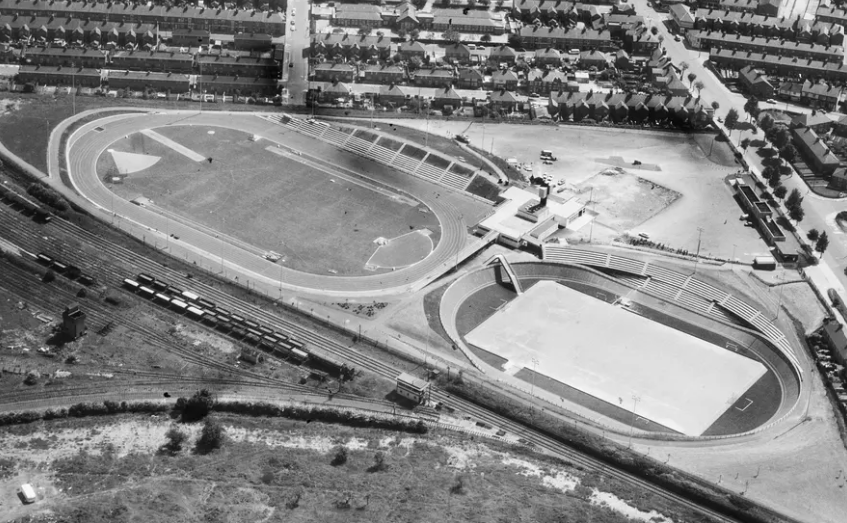
-
Too right. This is how wikipedia covers his Leicester career: He spent most of his career playing for Leicester City originally as an inside forward, then later as a centre-half and occasionally a right half. At Leicester he holds the record for the most appearances for the club with 600 between 1961 and 1975. That's it. Some Oasis B-sides have 5,000 words devoted to them, and our all time record appearance maker has that. It's a travesty.
-
It's happened twice before - a player reaching the landmark of 500 games for Leicester City. If Sunday is anything like the first two, we could be in for a treat. Adam Black May 6th 1933 Things looked really bleak with three games to go. We were 22nd in Division One, propping up the table. The remaining games, numbers 498, 499 and 500 in the career of full back Adam Black, would decide our fate. Apart from three penalties, Black hadn't scored a single goal in his whole career. But against Sunderland at Filbert Street, match number 498, he launched a long ball towards the opponents' goal from inside his own half - and watched in disbelief along with 20,000 others as the keeper misjudged the bounce and it landed in the net. We won 4-2 and still had hope. A win at Birmingham the following Saturday meant it was suddenly in our own hands. Two points on the last day at home to West Brom and we would be safe. It was going well. Just after half time we were leading 3-2. That's when the skies darkened, the heavens opened and a thunderstorm of biblical proportions descended. 'Hundreds of spectators ran from the exposed portions of the ground on the Popular Side in their efforts to get as quickly as possible to the covered enclosure, and while they were doing so the ball was kicked in their direction and became lost in the running crowd. The game was held up until police had moved the crowd back and recovered he ball. Another stoppage occurred two minutes later when a considerable number of youths at the Filbert Street end poured on to the pitch in a body right in front of Pearson, the West Brom goalkeeper'. 'For the remainder of the game, the antics of the players provided a constant source of merriment to the crowd, with the play accompanied by endless roars of laughter. To secure a semblance of a foothold was well-nigh an impossibility. Murphy must have created a record for the longest ever slide. With his arms and legs upraised, he traveled for about eight yards, and W.G. Richardson, in turning to shoot, fell and whirled round like a spinning top. The referee slid over and dropped his whistle. He delved around for it in the water and when he found it, it was so clogged with mud that he had to leave the pitch and get a replacement'. 'The game was farcical, but out of it loomed the one fact which decided the issue. Leicester's control of the ball was remarkable, and at the height of the storm, they scored three in ten minutes'. When the sixth goal went in, the skies brightened and a double rainbow appeared over the ground. 6-2 was the final score and we could look forward to another season of top flight football. This was how the Mercury cartoonist saw it: I've never seen a double rainbow quite like that before. Graham Cross April 20th 1973 Forty years on and guess what - another relegation fight. With four games to go we were 19th as we headed for Selhurst Park. Malcolm Allison's Crystal Palace were one of the three teams below us. The Daily Express sent their star man Desmond Hackett to cover the game, and he began his report as follows: 'Palace were outplayed and outclassed by an almost leisurely Leicester City'. We nearly took the lead after just five minutes, when 'Peter Shilton lashed out an almighty drop kick and the startled Palace keeper John Jackson almost fumbled the ball into his own goal'. This was the game's key moment: 'A move started by able veteran Graham Cross finished with Weller, indisputably man of the match, scoring with a low grazing shot': Palace did have chances, but Shilts kept them out. 'He was like a monkey', Allison said after the match, 'leaping around the goal'. This is from the Merc: With that victory we were safe. A couple of months later, Adam Black was pictured in the Mercury at his newsagents on Wilberforce Road, still going strong at 75: Did you spot the pattern? When a Leicester player makes his 500th appearance, we win and stay up. So it's simple. Beat Ipswich on Sunday, then find that the Premier League have, after all, dished out the ultimate punishment to Manchester City.
- 19 replies
-
- 49
-
-

-
Trophy Presentation Friday May 8th 1925 De Montfort Hall, Leicester Four days before our first major piece of silverware was presented, we played one final game, a friendly at Port Vale in aid of the North Staffordshire Infirmary. Arthur Chandler suggested that the match be played under the new offside rule, due to be brought in next season. The referee agreed, and Channy enjoyed the greater freedom this allowed, scoring a hat-trick as we won 5-3. Johnny Duncan, after his horrific injury on Saturday, was there to watch, his arm in a sling. Friday's celebrations began with a dinner at the Assembly Rooms on Hotel Street. The brochure from the occasion is currently held by the National Football Museum in Manchester: Then it was on to the De Montfort Hall, where a 'Cup tie crowd' awaited, the hall 'crowded to its utmost capacity'. The appearance of the players was greeted with such an outburst of applause as would have made a Prime Minister blush. The Band of the City of Leicester Working Men’s Institute, which has played so well at every match during the season, was in attendance. Mr. McKenna, President of the Football League, In handing the shield to chairman Mr. Rice, remarked that whilst congratulating him, the best wish he could give him was that he would never win it again (cheers). McKenna then presented medals to the players, who were seated on the platform, in the following order: Duncan, Bamber, Godderidge, Black, Hooper, Newton, Carrigan, Adcock, Chandler, Carr, Wadsworth. Club Vice-Chairman Mr. W.H. Squires then thanked the Football League for their 'valuable and almost priceless help they had received after the war when the club had to be reconstructed and was in real danger'. The crowd then demanded speeches from the players, and though reluctant, Duncan and Chandler both got up to say a few words, each expressing the hope that another trophy would be heading to Filbert Street the following season. Here's the photo taken after the presentation - Johnny Duncan's sling clearly visible. To his left is John McKenna: You can't see the Shield so clearly there, so here it is in its full glory: In the Mercury the following day, a review of the evening's events appeared. It's the best piece of writing of the whole season, appropriately, right at the end. It shows us that, four decades before the Beatles played at the De Mont, the venue had witnessed another form of mania: A pretty typist stands on her feet, throws her hat in the air, stamps her feet and yells hysterically at an embarrassed figure standing on the platform. All around, tier on tier, there are packed rows of cheering people, men and women, boys and girls. Only a soccer crowd can cheer like that. At first it was a polite soccer crowd, a little self-conscious at hearing its voice bounded by walls and roof. Then it forgot everything but the man on the platform. It forgot everything except that now was the time to combine all the cheers of the season into one, and hand it to the hero. It forgot, too, to stop. Sometimes there would be a little lull in the storm, and then the tumult would roll over the hall again. The shoe hand sat next to the solicitor, the miner sat next to the magnate. On the stage the players hid themselves behind an imposing array of directors, wearing blue flowers stolen from the dinner table. Hovering about was Peter Hodge - nobody calls him 'Mr.' - a grey-haired but young looking Scotsman with a sense of humour showing in his eyes. A 'jewel' of a manger he was called, and he looked it. A modest, methodical man mothering the players as they received their medals like a fond parent at a school prize-giving. Then the players. It was for this moment that the crowd had been waiting, holding their biggest cheer until Hodge signals to Duncan. Then the deluge. Cries of "Johnnie" from everywhere. The real Filbert Street yell enclosed in the De Montfort Hall. The season's cheers in two minutes. "Johnnie", one arm in a sling, smiling face, putting his free hand first in then out of his pocket in an agony of embarrassment. Awkward he is as he waits for the cheers to die down, then he receives the little medal. Later he made a speech, not a good speech, but one that was flattered by Chandler's exact imitation. And so through all the players, with a 'Keep them out!' to Godderidge, and a 'Shoot!' to Chandler. All of them painfully embarrassed, trying to be nonchalant. The most self-possessed was trainer Dave Gardner. He came forward as if he'd spent his life being decorated. A great night of cheering, a fitting end to a season that deserves to be cheered'. -------------------------------------------------------------------------------------------------- FIN --------------------------------------------------------------------------------------------
-
Just before the report from the big celebration at the De Montfort Hall, here's something from the golden jubilee History of the Football League, published in 1938, which had photos of all divisional champions across those first 50 years. These were the 1924/25 teams: The book was written by Charles Sutcliffe, one of the Football League representatives who would be at the trophy presentation at the De Mont. The report from that memorable occasion will round off this story.
-
There are two groups of people in the history of the club which have a lot in common. The lads who originally got together in a shed in 1884 with an idea of setting up a football club - and Union FS. It seems like the same spirit to me. There's certainly more connection there than with the people who run the club now.
-
There's a lot more to say about this weekend. It was the final day of the season, and as well as Leicester clinching the Division Two title, several other issues were settled. As expected, Manchester United didn't collapse at Barnsley - the defence that had conceded only 23 goals all season once again shut out the opposition, and the goalless draw left them in second place, two points ahead of Derby, who finished third again. United were promoted having scored just 57 goals, 33 fewer than us. Our total of 90 was the highest in the Football League, and we also had the top two individual scorers in Division Two - Arthur Chandler with 32 and Johnny Duncan with 30. Next best was Port Vale's Kirkham with 26. As you can see, Crystal Palace and Coventry were relegated - an unhappy first season at Selhurt Park for Palace. Nottingham Forest and Preston were relegated from Division One, while Darlington and Swansea won the Division Three North and South titles (only one was promoted from each). The Nottingham-based Football Post has been providing great coverage of our progress this season, and this weekend they had this photo and cartoon: Although this Second Division title goes down in history as our first ever trophy, there's one other occasion that should be mentioned. In 1890, Leicester Fosse won the Leicestersire Senior Cup. It's not included in our list of honours now, but at the time, it was quite significant. Before we joined the Midland League in 1891, it was the most important competition we entered. It began in 1888, and the first two winners were Sheepshed (shortly before the town removed an 'e' from its name) and Loughborough. The following year we won it, beating Coalville after a replay, and we could finally call ourselves the best team in the county. Whether any memorabilia relating to that triumph was still on display at Filbert Street in 1925 is unclear. But one man would never forget it. Here's Jimmy Johnson, who played in that game, with the match ball (photo taken in 1934); Thanks to those who've been following this. I've been putting it on Bentley's Roof too and on the two sites combined there have been several hundred following it every week. It's also had a good response from Blackpool fans (the only club who did the double over us this season): https://avftt.co.uk/index.php?threads/the-only-team-that-could-beat-the-champions.61017/ All the content on this thread will remain easily accssible in the history section that @Mark is currrently doing a great job updating. There are two ways to access each report. If you go to the main 1924/25 season page you'll see a little icon on the right of each match that takes you to the relevant place. And if you select a certain game from that season you'll see a link which simply says 'click here to view match report'. I've been contemplating a continuation of this project through seasons 1925/26 to 1929/30, calling it 'The Golden Age'. It's more likely though that I'll resurrect it just for one season - 1928/29, when we finished second in the League. There's one final post to come this season, which will cover this:
-
League Match No. 42 / 42 Saturday May 2nd 1925 Leicester City v Stockport County The reviews of our promotion campaign all highlighted two key moments back in the autumn which turned things around after a shaky start. One was Johnny Duncan's return to his favourite inside-right position, the other was manager Peter Hodge handing him the captaincy. He was the man of the season. And he would be the man of this final day. Our regular XI was back together again, and also making a welcome return was our scoring touch. Early on, Chandler made a 'thrilling effort to go through on his own' before being blocked, then after half an hour we took the lead. Adcock played a simple ball to Duncan who 'trapped it, sidestepped keeper Molyneux and sent it into the net amid great cheering'. Six minutes later Channy set off again. 'Running strongly from midfield, he slipped past all opposition and, maintaining perfect control over the ball, scored with a wonderful left-foot drive from 20 yards'. After 63 minutes, 'Duncan put the game beyond doubt, finishing off a Wadsworth - Chandler move with a left-foot shot'. Then ten minutes from time, 'delightful work between Carr and Adcock' led to Carr adding a fourth. After so much tension and grinding out of results in recent weeks, it was a relaxed afternoon. We rediscovered our fluency and played like the best team in the Division. But then just before the end and our confirmation as champions, the atmosphere suddenly changed. Duncan tried a shot in the area and fell under the challenge of a Stockport defender. His right arm took the weight of his fall, and he lay still on the ground. Concerned teammates gathered around and he was carried off, 'clearly in great pain', and taken straight to the Royal Infirmary. He had 'dislocated both bones in his elbow' and doctors placed him under general anaesthetic. The final whistle blew, and the celebrations could begin. Once again the crowd surged onto the pitch, but as Channy admitted later, 'we felt a little miserable that Johnny wasn't there with us'. The band played 'See The Conquering Hero Comes', then the players appeared on the balcony at the front of the Main Stand to renewed cheers, just as doctors were piecing our captain's shattered arm back together. Standing next to Channy is Lord Mayor Herbert Simpson When Duncan came round later, nurses were amazed by his first words. 'George, over here!', he mumbled as he slowly came to his senses. He was still in the thick of the action, expecting a pass from George Carr. When he left hospital later that evening there was a large crowd there to greet him. As the Mercury reported, 'the City captain then headed for a nursing home to see Mrs. John Duncan and their little baby girl, who will be told in due course that she came into the world when her father was leading the City proudly on to the Championship'. Somehow, events at Filbert Street were not the biggest news in Leicestershire sport that day. The national papers were full of the exploits of County batsman Jack King, who had recently turned 54. Today was the opening day of the cricket season, and Leicestershire started against Sussex at Hove. We batted first and after losing early wickets, Jack came to the crease and calmed things down. Four hours later he had reached his century. He was the oldest man ever to score a first class hundred - apart from W.G. Grace. Jack was already fourteen years old when Leicester Fosse were formed back in 1884. Four decades on, we finally had our first trophy, which would be presented the following Friday at the De Montfort Hall. As Kernel in the Football Post, reflecting on the season, put it, 'the hosiery town had its best team in the whole of its history, and its achievements in League and Cup gained for the club a place in the football world hitherto undreamt of'.
-
'VAR only ours' - United (That's an anagram)