
SpacedX
-
Posts
8,356 -
Joined
-
Last visited
-
Days Won
5
Everything posted by SpacedX
-

Stockport (A) | Sat 12-Sep | 15:00 KO - Pre Match
SpacedX replied to Foxes96's topic in Leicester City Forum

-
-
The two Steven Bergwijn goals in extra time set a new Premier League feat as Spurs were 2-1 behind at 94 minutes, 52 seconds - the latest time a team has been behind before winning a Premier League match. This was the biggest capitulation/most spectacular collapse under Rodgers and I think the most humiliating result in our recent history.
-
^ Blimey, the guy that kept coins in one of these... ...a giant Coca Cola bottle to fund Jihad. When I was at uni in the 90s Al Mujahiroun were on campus distributing anti semitic, homophobic and misogynistic literature. I informed the students union and I shit you not, they took my name and course, subsequently reporting me to faculty for racism.

-
I can't say that I've noticed that?
-
Ah, the cringeworthy rising inflection - seemed to start gaining prevalence around the time of all those shite imported Australian soaps and peaked about ten years ago.
-
Speak up a bit.
-
It wouldn't be medication unless there is hip and elbow dysplasia or arthritis actually diagnosed, rather supplements which many vets recommend for the breed as a preventative measure between the age of 5 - 7 years old. If you have an English pedigree, they are statistically more prone to hip dysplasia than elbow dysplasia, though they carry a well-known genetic predisposition to both. Arguably, because they tend to be bulkier than American labs, that can exacerbate the condition. As I'm sure you are aware, it's crucial to control your lab's weight. I've seen so many owners using supplements whilst remaining completely oblivious to the fact that they are overfeeding their dogs. Also, avoid flingers or hurling a ball long distances because when they get up to full pelt and then wheel around it can be very damaging. I know that they do this naturally when they zoomie, but repetitively playing ball games which are anything above short distance and tosses can be very damaging, as can flights of stairs.
-
Will Rodgers State Park, Beverly Hills, LA - came with George Michael's recommendation who used to frequent them often.


-
At least our spectacular fall from grace under King Power meant that the stupid cringeworthy 'Vichai's Dream' song is now in the bin for good. But then our fanbase is so staggeringly dim I think we are the only ones in the entire football league to still be singing that shit "we love you" chant.
-
Worst transfer windows in our history
SpacedX replied to fleckneymike's topic in Leicester City Forum
Without doubt, it's this. Although amongst the worst business we've done as the club was with Coventry City, inexplicably exchanging Jim Melrose for Tommy English. -
Burton Albion Pre-Match Thread (Sat 22 Aug 15:00)
SpacedX replied to FoxesTalker's topic in Leicester City Forum
I fear that this could be yet another case of managerial cronyism/favouritism obscuring selection joining the lengthy list of managers here that are unable to recognise their best starting XI. -
Why do most of these clowns insist on dressing like ninjas or SWAT team members? What's with the stupid balaclavas? Also, attired solely in black really doesn't help in terms of visibility to other road users. Perhaps in some cases the giant Deliveroo or Just Eat bag strapped to their backs does?
-
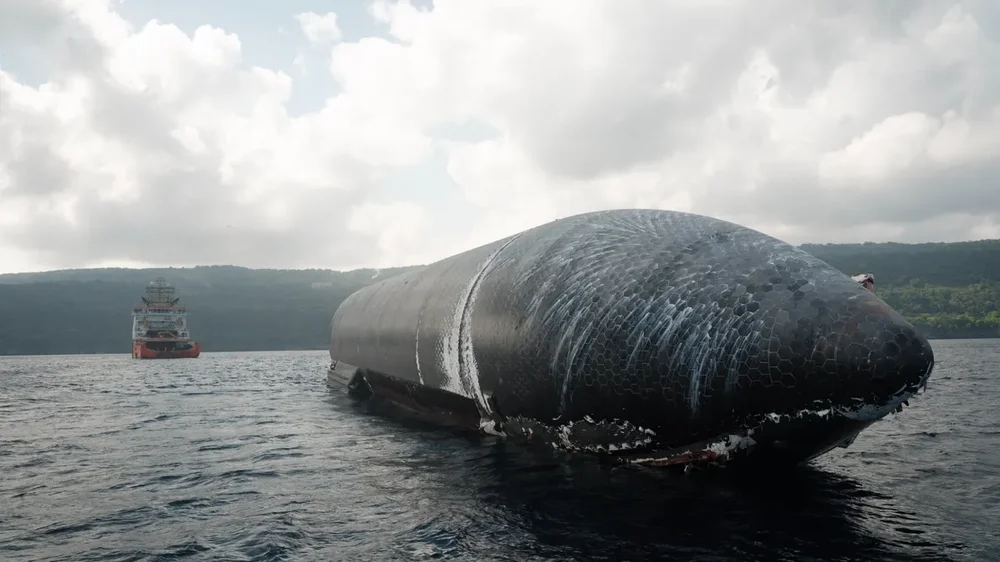
So in spite of rough seas over the last 24 days, flight 13's starship 40 is still afloat and is being towed off Christmas Island for recovery awaiting engineering analysis and return to Starbase in Texas. It resembles a stricken carcass of a stranded baleen whale.
-
No, it's called making irrational, hyperbolic, sensationalised and baseless statements on a football forum. That was certainly not my intention and my apologies if you perceive it that way. Right about what precisely?
-
I this actually serious or satire? I'm leaning towards the latter. It's simply that often when you post I find it hard to differentiate. "Consequences" - they said the same about stormshadow. A significant part of "consequences" for the UK, has historically involved buzzing our airspace with TU-95 Bears and mass disinformation campaigns manufactured by troll farms in St Petersburg. In the main, further Russian aggression toward the UK would likely involve malicious cyber operations. The National Cyber Security Centre (NCSC) identifies Russian state intelligence and aligned proxy groups as an acute, ongoing threat responsible for sustained digital pressure against British infrastructure, democratic institutions, and networks. I wouldn't rule out sabotage of sub sea infrastructure either.
-
Concerning at the back. Had Ness not produced that hilarious miss of Bamford like proportions, County would have won this 2-1. On the plus side, I'm seeing commitment and application that has been woefully absent for the last two seasons.
-
Please may you come and water my star jasmine and my bay trees? I've broken my ankle.
-
Nonsense. He's simply pandering to his scientifically illiterate, uneducated MAGA supporters and their susceptibility to dumb online conspiracy theories. His rhetoric on this topic has intensified to appeal to certain voter bases that lack the will or the intelligence to independently verify his claims. Incorporating these dipshit theories into federal policy platforms serves as a populist political strategy to galvanise support from anti-establishment and vaccine-hesitant groups. Medical organisations like the American Academy of Pediatrics have recently condemned the messaging, warning that reducing vaccine schedules decreases follow-through compliance, directly contributing to severe public health risks such as the current worst U.S. measles outbreaks in 35 years. By 2019 it had all but been eliminated in the US. Vaccination is the only known prevention for measles, and there is no specific treatment to date. Governments around the world are running campaigns urging parents to make sure their children receive their due vaccinations whilst the Trump administration and their anti-science deregulation agenda is yet another purposeful stride towards the stone age.
-
It has to be one of the dumbest conspiracy theories out there doesn't it. It originated with the misidentification of aircraft contrails, which, it was alleged are evidence of a nefarious government/NWO spraying programme for reasons that they can't agree on ranging from depopulation, (that's effective then), to mind control. More recently, in an attempt to gain credence and credibility, the grifters that continue to perpetrate this horseshit point to everything from geoengineering (stratospheric aerosol injection), to cloud seeding/weather modification in spite of the fact that neither would be conducted at the altitudes that contrails are observed nor would there be lasting and discernable trails. They also invoke actual historical experiments by governments dispersing chemicals over populated areas by air and at ground level to measure dispersion rates and to simulate a biological attack. Quite why the believers in this nonsense think that releasing chemicals from six miles above their empty heads would be an effective or efficient way to accomplish their aims, or how any aircraft on the planet would have the requisite MTOW to carry the necessary payload of chemicals to deposit a 150 mile trail, that can somehow expand and increase in mass just like...well no shit, condensed atmospheric water vapour, is beyond me. Conspiracy theorists often point to ballast barrels used on test flight aircraft to transfer water to shift the centre of gravity as evidence of chemtrail airplanes, fuel dumping, aerodynamic contrails on landing as pilots supposedly forgetting to turn their sprayers off, and even smoking APUs as chemtrails being accidently turned on on the ground. This is hilarious... The vinegar part beggars belief.
-
Aircraft contrails are actually classified by the World Meteorological Society as artificial clouds under the category homogenitus or anthropogenic clouds. This is because they are formed by the water in aircraft exhaust, although this is only the trigger mechanism. They expand, increase in mass and spread due to the same natural processes as a cirrus cloud which is basically what they are so therefore not rain bearing. There is of course cloud seeding but this obviously does not produce or create clouds. It is intended to introduce additional hygroscopic nucleation typically via silver iodide flares rack mounted to the wings of light aircraft to be released into extant cumulus clouds - those already conducive to precipitation - and thereby induce or divert rainfall. It can also employ burn sticks, rockets and even anti-aircraft guns (the shells contain the seeding material instead of high explosives), as the Chinese used during the 2008 Beijing Summer Olympics. Although cloud seeding is practiced worldwide, not only by state, but private enterprises, the science and efficacy behind it is dubious and there is heaps of conspiracy theory shit about it online. One of the most ridiculous claims is that the Lynmouth Flood disaster of 1952 was caused by cloud seeding. While the UK government did run a short-lived 1950s weather modification trial called Project Cumulus, cloud seeding can only marginally increase precipitation from existing clouds and cannot manufacture massive, catastrophic weather systems such as the low that hit Exmoor that produced nine inches of rain in 24 hours. Human intervention cannot scale up to produce the tens of millions of tonnes of water that devastated the village on the 15–16 August 1952. Besides, the cloud seeding experiments that week were in the East of England, not the South West. It was also practised during the Vietnam War primarily to deluge the Ho-Chi-Mihn trail. Operation Popeye as it was called was of debatable success which was hard to measure due to the fact that it coincided with particularly heavy seasonal monsoons. The UAE’s National Center of Meteorology runs an active cloud-seeding program which they claim can enhance existing rainfall by up to 10% to 30%. However, again, it cannot create rain out of clear skies. We know that climate change is shifting weather patterns in the Arabian Peninsula and these alleged successes are more likely due to more intense rainfall exacerbated by the latter when it does arrive.
-
It seems that part of a SpaceX Falcon 9 rocket that launched a pair of lunar landers slammed into the moon as predicted after drifting off course for the past year, Although the 5,400-mph collision had yet to be officially confirmed, space tracking indicates it was inevitable that the leftover rocket segment impacted the lunar surface. In the 1970s from Apollo 13 onward, NASA deliberately crashed the third stage of the Saturn 5 (S-IVB) into the moon (rather than place it into a heliocentric orbit like in earlier missions) in order to generate moonquakes measured by seismometers and to learn more about the composition of the moon. However, today's crash was not intentional. A combination of solar activity and gravity accidentally put it on a collision course with the moon. J002E3 is a mysterious space object discovered by amateur astronomer Bill Yeung on September 3, 2002. Initially mistaken for a new natural mini-moon of Earth, scientists figured out it was actually a man-made piece of space junk - the S-IVB third stage of the Saturn V rocket from the 1969 Apollo 12 moon mission through spectrographic tests which showed its paint matched the white titanium dioxide paint used on Saturn V rockets. "SEC to aux!" I wonder if it still bears a scorch mark?